Review
Agricultural Extension for Resilient Smallholder Farming Systems: Mapping Evidence across Climate, Market, and Livelihood Shocks
Md Nazirul Islam Sarker 1,2
1 School of Public Administration, Xi’an University of Finance and Economics, Xi’an 710100, China; sarker@xaufe.edu.cn
2 Miyan Research Institute, International University of Business Agriculture and Technology, Dhaka 1230, Bangladesh
|
Citation: Sarker, M. N. I. (2026). https://doi.org/10.59978/ar04030014 Received: 28 June 2026 Revised: 25 July 2026 Accepted: 11 August 2026 Published: 21 August 2026
Copyright: © 2026 by the author. Licensee SCC Press, Kowloon, Hong Kong S.A.R., China. This article is an open access article distributed under the terms and conditions of the Creative Commons Attribution (CC BY) license. |


Abstract:
Smallholder farming systems are increasingly exposed to interacting climate, market, and livelihood shocks that threaten production, food security, income stability, and long-term adaptive capacity. This study conducted a PRISMA-ScR-guided scoping review to examine how agricultural extension supports resilient smallholder farming systems across climate, market, livelihood, and compound shocks. Following PRISMA-ScR screening, 58 studies met the eligibility and relevance criteria and were retained for qualitative synthesis. Framework-based thematic analysis was used to examine shock domains, extension modalities, resilience-building mechanisms, resilience capacities, farming and livelihood outcomes, equity dimensions, and evidence gaps. The findings show that the evidence base is strongly concentrated on climate shocks, including drought, rainfall variability, floods, heat stress, pest pressure, water stress, and crop failure. Market and livelihood shocks are less systematically examined, although they appear through input‒price increases, unstable markets, food insecurity, income loss, labor constraints, and gendered vulnerability. Extension was reported as supporting resilience through linked mechanisms of risk awareness, knowledge translation, social learning, access to inputs and services, market linkage, institutional brokerage, and empowerment. The strongest evidence concerns adaptive capacity and practice change, whereas absorptive and transformative capacities remain less consistently measured. The review proposes agricultural extension as a resilient infrastructure: a social and institutional system that connects farmers to knowledge, resources, markets, institutions, and collective learning. Future research should focus on mechanism-based, equity-sensitive, longitudinal, and compound-shock analyses, while policies should strengthen pluralistic extension systems that integrate climate, market, financial, digital, and livelihood advisory support.Keywords:
rural advisory services; climate-smart agriculture; smallholder resilience; adaptive capacity; livelihood diversification; climate information services1. Introduction
Smallholder farming systems continue to play a key role in food security, rural livelihoods, and poverty reduction, especially in low- and middle-income countries (LMICs). However, these systems are now increasingly subjected to compounding and interacting climate, market, and livelihood shocks that jeopardize production, income stability, food security, and adaptive capacity. Climate variability, drought, flooding, heat stress, pest infestations, fluctuations in input costs, market disruptions, and livelihood insecurity do not necessarily occur independently of one another but instead interact with structural limitations, including insufficient land, fragile infrastructure, limited access to credit, gender inequality and differential advisory services (Ado et al., 2019; Davis et al., 2021; P. A. Williams et al., 2018). Thus, smallholder resilience is not just about the capacity to adopt improved technology. It also requires the ability to foresee risk, withstand shocks, modify farming and livelihood strategies, and adapt vulnerable systems when established practices are no longer viable.
Agricultural extension plays an important role in this resilience agenda. Extension was once viewed mainly as technology transfer, but it is now increasingly understood as a pluralistic system of knowledge exchange, advisory support, institutional brokerage, and capacity building. It facilitates the linkage between farmers and climate information, agronomic knowledge, market opportunities, input suppliers, credit, insurance, farmer groups, and public agencies. Recent research has indicated that farmer field schools, farmer-to-farmer extension, climate information services, digital advisory services, and participatory learning methodologies can enhance the implementation of climate-smart practices, promote anticipatory decision-making, facilitate livelihood adaptation, and increase readiness for climate risks (Amadu, 2022; Antwi-Agyei et al., 2014; Nkiaka et al., 2019; Pienaah et al., 2024; Porciello et al., 2022; Staub & Clarkson, 2021). However, the effectiveness of extension depends not only on information delivery but also on trust, timeliness, local relevance, resource access, social inclusion, and farmers’ capacity to act on advice.
Recent studies have improved the understanding of climate-resilient crops, climate-smart agriculture, smallholder vulnerability reduction, livelihood diversification, and smallholder adaptive capacity (Abegunde et al., 2019; Acevedo et al., 2020; Mohammed et al., 2021; T. G. Williams et al., 2020). However, there are significant constraints. First, there is a lack of systematic analysis of market shocks, livelihood shocks, and compound risks, and much of the evidence is focused on climate adaptation and technology adoption. This is problematic because climate risks frequently turn into livelihood crises due to market volatility, debt, food‒price hikes, a lack of labor and access to services (Davis et al., 2021; Kuhl, 2018). Second, extension is often treated as an explanatory variable for adoption rather than as a resilience-enabling system that operates through risk communication, knowledge translation, social learning, institutional brokerage, market linkage, and empowerment. Third, there is a lack of consistency in measuring the outcomes of resilience. Awareness, participation, or adoption are frequently cited as indicators of resilience, but they are not always indicators of better food security, income stability, recovery capacity, or transformative change.
These gaps warrant a systematic mapping of the contribution of agricultural extension to resilient smallholder farming systems in the context of shocks. A scoping review is suitable in this case, as the evidence is broad, interdisciplinary, and methodologically diverse. This study aims to map the literature on agricultural extension and smallholder resilience, specifically focusing on the context of shocks related to climate, markets, and livelihoods, guided by the PRISMA-ScR guidelines. Instead of providing an estimate of one impact, the review identifies the key categories of shocks analyzed, forms of extension, pathways to resilience, and pathways to assessing resilience. The review is guided by five research questions:
RQ1. What climate, market, and livelihood shocks are addressed in studies linking agricultural extension with smallholder resilience?
RQ2. What extension models, advisory tools, and delivery mechanisms are used to support resilient smallholder farming systems?
RQ3. Through what mechanisms does agricultural extension contribute to absorptive, adaptive, and transformative resilience capacities?
RQ4. What indicators are used to assess resilience outcomes in the extension literature?
RQ5. What conceptual, methodological, geographical, and equity-related gaps remain?
By addressing these questions, this study maps the current evidence and identifies key implications for research, policy, and agricultural extension practice. This study makes three contributions. First, it reframes agricultural extension as resilient infrastructure rather than only as a technology-transfer mechanism. Second, it extends the analysis beyond climate-smart agriculture by incorporating market, livelihood, and compound shocks that shape smallholder vulnerability. Third, it links extension modalities to the three overarching resilience capacities—absorptive, adaptive, and transformative—while identifying farm-level, livelihood, and market adaptation as subdimensions of adaptive capacity and collective action as a cross-cutting mechanism.
2. Conceptual Background
2.1. Smallholder Farming Systems and Multidimensional Shocks
Smallholder farming systems are integrated household–farm–livelihood systems shaped by land, labor, markets, ecology, social relations, and institutions (Marsden et al., 2023; Tripathi et al., 2021). Their resilience also relies on food security, income stability, asset protection, and access to services (Cohn et al., 2017; P. A. Williams et al., 2018). Smallholders are confronted with three primary shock domains and their compound or cascading combinations. Drought, flooding, cyclones, heat stress, rainfall variability, pest pressure, crop failure, and water stress are climate shocks that affect smallholder farming systems (Acevedo et al., 2020; Nkiaka et al., 2019). Market shocks encompass market access constraints, price volatility, increases in input costs, disruption in the value chain, postharvest losses, and volatile demand (Davis et al., 2021; Kuhl, 2018). Livelihood shocks include food insecurity, income loss, migration pressure, labor shortages, health shocks, conflict, and social vulnerability (Ado et al., 2019; Mohammed et al., 2021). These shocks can have a knock-on effect: drought can diminish yield, drive up food prices, deplete assets, exacerbate debts, and push people to diversify their livelihoods. Resilience must therefore be seen as a response to a combination of environmental, economic, and social pressures and not just climate risk.
2.2. Agricultural Extension as a Resilience-Enabling System
Increasingly, agricultural extension is considered a pluralistic, rather than a linear, system of advice and innovation. These include public agencies, NGOs, farmer groups, cooperatives, private actors, digital platforms, climate-service providers, and community facilitators (Amadu, 2022; Porciello et al., 2022). Extension modalities include public advisory services, farmer field schools, farmer-to-farmer extension, climate information services, digital agro-advisory services, climate-smart agriculture training, value-chain extension, gender-responsive extension, participatory innovations, and livelihood and finance advisory support. Extension can function as a resilience-enabling system by helping farmers understand risk, learn, adapt, access markets, and mobilize institutional support (Nkiaka et al., 2019; Pienaah et al., 2024; Staub & Clarkson, 2021). However, extension contributes to resilience only when it is timely, trusted, locally relevant, inclusive, and connected to resources that farmers can use.
2.3. Resilience Capacities
This review adopts a three-capacity framework. Absorptive capacity is the capacity to absorb shocks, underpinned by early warning systems, emergency decision-making, savings, social safety nets, food stocks, and short-term risk management (Nkiaka et al., 2019; Tamru et al., 2025). Adaptive capacity is the capacity to adjust farming and livelihood activities, including crop diversification, water management, climate-smart agriculture, livelihood diversification, market access, and new knowledge (Abegunde et al., 2019; Acevedo et al., 2020). Transformative capacity is the capacity to change structural conditions that create vulnerability, such as institutional change, collective action, gender power dynamics, finance and markets, land-use planning, farmer organizations, and long-term innovation systems (Kuhl, 2018; T. G. Williams et al., 2020). While much existing research focuses on adaptive capacity, extension can help with all three capacities.
2.4. Proposed Analytical Framework
In this study, agricultural extension is conceptualized as resilient infrastructure: a social and institutional system that links smallholders to knowledge, services, markets, finance, institutions, and collective learning capacities needed to absorb, adapt to, and transform under climate, market, livelihood, and compound shocks. The analysis follows a pathway from shock exposure to extension intervention, resilience-building mechanism, resilience capacity, and farming or livelihood outcome. Climate information services (CISs) can enhance anticipatory decision-making and minimize crop loss or food insecurity due to climate shocks (Nkiaka et al., 2019; Warner et al., 2022). Value-chain extension can lead to better bargaining power, price awareness, market access, and income stability in times of market shock (Davis et al., 2021; Kuhl, 2018). Integrated advisory services in combination with credit, social protection and livelihood diversification can mitigate risks and increase adaptive or transformative capacity in relation to livelihood shocks, although this is not always the case (Ado et al., 2019; Mohammed et al., 2021). This framework takes the analysis from “Does extension lead to adoption?” to “How does extension work, under which shock conditions, for whom and with what resilience outcomes?”
The analytical framework followed in the review is summarized in Figure 1. It demonstrates how climate, market, livelihood, and compound or cascading shocks shape smallholder vulnerability; how pluralistic and integrated extension interventions respond to these interacting pressures; and how extension operates through risk awareness, knowledge translation, social learning, service access, market linkage, and empowerment. These mechanisms are likely to enhance absorptive, adaptive, and transformative capacities that in turn influence farming and livelihood outcomes.
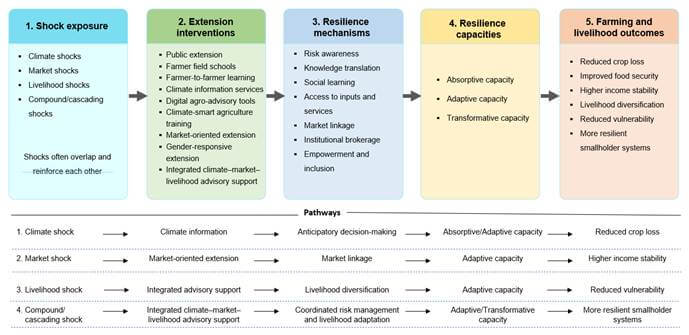
Figure 1. Conceptual framework of agricultural extension pathways for resilient smallholder farming systems under climate, market, livelihood, and compound shocks.
3. Research Methodology
3.1. Research Design
A scoping review design, as suggested by the PRISMA-ScR (Preferred Reporting Items for Systematic reviews and Meta-Analyses extension for Scoping Reviews), was used. Given the wide, interdisciplinary, and methodologically heterogeneous literature on agricultural extension, measures of smallholder resilience, and multidimensional shocks, a scoping review was suitable. This approach enables the study to map the range of evidence, clarify key concepts, identify dominant modalities of extension delivery, synthesize mechanisms of resilience, and identify gaps regarding shocks to climate, market, and livelihoods, which is not possible in an effectiveness review or meta-analysis (Arksey & O’Malley, 2005; Levac et al., 2010; Peters et al., 2020; Tricco et al., 2018). The review was performed in five steps: research questions, searching for relevant literature, selecting studies, charting the data, and summarizing or synthesizing the findings.
Table 1. Research protocol.
|
Item |
Description |
|
Research problem |
To examine how agricultural extension supports resilient smallholder farming systems across climate, market, and livelihood shocks. |
|
Review approach |
Scoping review using PRISMA-ScR guidance. |
|
Databases |
Web of Science Core Collection, Scopus, Google Scholar, and citation tracking. |
|
Search terms |
“agricultural extension,” “advisory service,” “farmer field school,” “climate information service,” “digital advisory,” “smallholder,” “resilience,” “adaptive capacity,” “climate shock,” “market shock,” “livelihood shock,” and related terms. |
|
Time frame |
Studies published from January 1, 2000, to May 31, 2026. |
|
Geographical scope |
Global, with attention to low- and middle-income smallholder farming contexts. |
|
Types of studies |
Empirical, mixed-methods, qualitative, quantitative, review, and conceptual studies relevant to extension and smallholder resilience. |
|
Inclusion criteria |
Peer-reviewed studies focused on smallholder farmers, agricultural extension or advisory services, and resilience-related responses to climate, market, livelihood, or compound shocks. |
|
Exclusion criteria |
Studies unrelated to smallholder agriculture, studies without an extension/advisory component, purely technical agronomic studies without farmer-facing relevance, nonagricultural resilience studies, and non-English publications. |
|
Data extraction |
Author, year, country, farming system, shock type, extension modality, resilience mechanism, resilience capacity, outcome indicators, method, and key findings. |
Table 1. Cont.
|
Item |
Description |
|
Analytical approach |
Framework-based thematic synthesis combining deductive and inductive coding. |
|
Quality/relevance appraisal |
Assessment of methodological transparency, conceptual relevance, clarity of extension intervention, clarity of resilience outcome, and attention to equity. |
3.2. Search Strategy
A multi-source search strategy was used to capture literature across agricultural extension, rural advisory services, climate adaptation, food security, livelihood diversification, and smallholder resilience. Searches were conducted in Web of Science Core Collection and Scopus and were supplemented by Google Scholar and citation tracking to identify highly relevant peer-reviewed studies not captured through database searches. The search covered studies published between 1 January 2000 and 31 May 2026. Search terms combined four concept blocks: agricultural extension and advisory systems; smallholder farming systems; resilience and adaptive capacities; and climate, market, livelihood, or compound shocks. Full database-specific search strings and search notes are provided in Supplementary Table S1.
3.3. Inclusion and Exclusion Criteria
Studies were included if they met four criteria. First, they focused on smallholder farmers, small-scale producers, family farmers, or rural farming households. Second, they examined farmer-facing agricultural extension, rural advisory services, farmer training, farmer field schools, farmer-to-farmer extension, climate information services, digital advisory tools, market-oriented extension, financial advisory support, livelihood advisory support, or another knowledge-support mechanism. Third, they addressed resilience, adaptation, coping, vulnerability reduction, food security, livelihood security, livelihood diversification, recovery, or adaptive capacity. Fourth, they considered climate, market, livelihood, or compound shocks affecting farming systems or rural livelihoods. Studies were excluded if they focused only on large-scale commercial agriculture, lacked a farmer-facing extension or advisory component, addressed technical agronomic performance without learning or advisory relevance, examined non-agricultural resilience, lacked methodological or conceptual detail, were non-English publications, or were editorials, opinion pieces, news items, or book reviews.
3.4. Study Selection Process
PRISMA-ScR procedures were used in the study selection process (Tricco et al., 2018). Titles and abstracts were screened for eligibility following duplicate removal. Records that appeared potentially relevant or uncertain at this stage were retained for full-text retrieval and review. The retrieved reports were then assessed to determine whether smallholder farming, extension or advisory support, and shock- or stress-related responses were substantively connected. In the full-text stage, reports were excluded when extension was only mentioned superficially or resilience was discussed without a specific advisory or knowledge-support component. The author conducted the primary screening and full-text eligibility assessment. To reduce selection bias, an independent assistant cross-checked screening decisions against the eligibility criteria. A PRISMA-ScR flow diagram was used to report the final screening process, which included identifying records, removing duplicates, screening records, assessing full texts, exclusions with reasons, and studies included in the synthesis.
3.5. Data Extraction
A structured data extraction form was created to ensure that the data collection process was consistent across studies. The extraction fields included bibliographic information, publication year, journal, country/region, farming system, study population, shock type, extension modality, delivery actor, study design, data source, resilience concept, resilience capacity, outcome indicators, equity focus, and reported limitations.
Three analytical dimensions were
highlighted: the nature of the shock considered, the modality of extension
explored, and the type of association between extension and resilience. This
enabled the review to go beyond a descriptive list of studies to consider the
nature of extension, when it works and when it does not, and what the outcomes
have been reported to be. The extracted data were cross-checked with the
assistance of an independent assistant to minimize errors and enhance
consistency. The full data-charting and extraction form is provided in
Supplementary Table S2.
3.6. Thematic Coding Procedure
Qualitative coding was conducted using a framework-based thematic approach that combined deductive and inductive coding. Deductive codes were derived from the research questions and analytical framework and covered seven domains: shock exposure, extension interventions, resilience mechanisms, resilience capacities, farming and livelihood outcomes, equity and contextual moderators, and evidence gaps. Inductive coding was subsequently used to identify recurring subthemes emerging from the included studies, including climate-information usability, farmer-led learning, digital exclusion, market-system linkages, gendered access to extension, livelihood diversification, and the use of adoption as a proxy for resilience. Coding decisions were cross-checked against the extracted study data and refined where necessary to maintain consistency across studies (Amadu, 2022; Azzarri & Nico, 2022; Nkiaka et al., 2019; Porciello et al., 2022; Staub & Clarkson, 2021; T. G. Williams et al., 2020). The complete thematic coding framework, including themes, subthemes, descriptions, and representative sources, is provided in Supplementary Table S4.
3.7. Data Analysis and Synthesis
The coded data were analyzed in two stages. First, descriptive analysis was used to summarize publication period, geographical distribution, research design, shock domain, extension modality, and reported outcomes. Second, the coded evidence was compared across studies to identify recurring extension–resilience pathways and variations by shock context, advisory approach, mechanism, equity dimension, and outcome. The findings were then organized according to absorptive, adaptive, and transformative resilience capacities and mapped across climate, market, livelihood, and compound shocks. No pooled effect estimates were calculated because the review included conceptually and methodologically heterogeneous evidence. The analysis therefore focused on mapping patterns, relationships, and evidence gaps rather than estimating comparative effectiveness, consistent with the purpose of a scoping review (Levac et al., 2010; Peters et al., 2020).
3.8. Quality and Relevance Appraisal
A formal risk-of-bias assessment was not required because this was a scoping review. However, a relevance and methodological-transparency appraisal was conducted to support the interpretation of the evidence base. Five criteria were used to assess each study: clarity of research design, clarity of the extension or advisory intervention, clarity of the resilience outcome, appropriateness of data and methods, and attention to context and equity. The appraisal was not used to exclude studies after eligibility screening; rather, it was used to interpret the strength, relevance, and limitations of the evidence.
This appraisal was necessary because several studies in this field use broad concepts such as adaptation, resilience, vulnerability, and climate-smart agriculture without clearly specifying the mechanisms through which extension supports resilience. The appraisal, therefore, helped distinguish studies that linked extension only to adoption or awareness from those that provided stronger evidence of extension-related pathways to absorptive, adaptive, transformative, or livelihood resilience (Supplementary Table S6).
3.9. Bias Resolution Process
To minimize selection, coding, and interpretation bias, several procedures were used. To capture literature from across agricultural extension, climate adaptation, rural development, food security, livelihood diversification, and resilience studies, Web of Science Core Collection and Scopus were searched, supplemented by Google Scholar and citation tracking. Second, the screening process was performed in two stages: first, the titles and abstracts were screened, and then the full texts were screened for eligibility. Third, a structured extraction form was adopted to standardize the data collection. Fourth, coding decisions were cross-checked with the assistance of an independent assistant. Any differences or uncertainties were resolved by returning to the extraction form, eligibility criteria, and analytical framework. Finally, both foundational and recent studies were incorporated to ensure a balance of conceptual depth and current evidence.
4. Results
4.1. Document Selection
The summarized PRISMA-ScR screening process is shown in Figure 2. The initial search of Web of Science Core Collection, Scopus, Google Scholar, and citation-tracking records identified 2,369 records. After removing 1,487 duplicate records, 882 records remained for title and abstract screening. At this stage, 704 records were excluded because they did not sufficiently relate to smallholder farming, agricultural extension or advisory services, resilience, climate, market, livelihood, or compound shock domains. The remaining 178 reports were assessed for full-text eligibility. Of these, 120 reports were excluded because they lacked a farmer-facing component, had an unclear resilience or shock linkage, provided limited methodological or conceptual detail, and/or focused on agronomic content without clear extension relevance. Consequently, 58 studies met the eligibility and relevance criteria and were included in the final qualitative synthesis. The characteristics of the 58 included studies are provided in Supplementary Table S3.
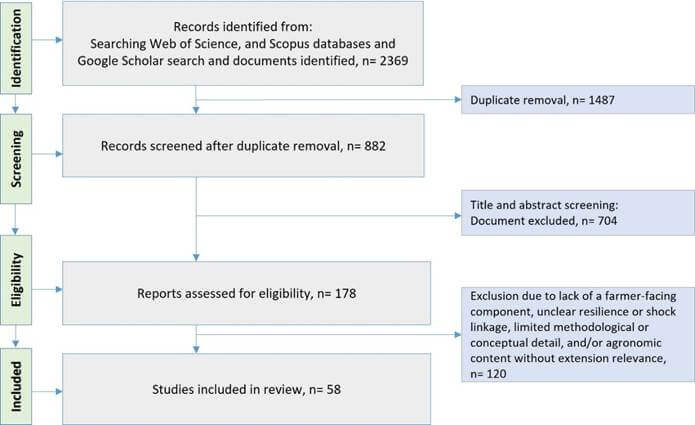
Figure 2. PRISMA-ScR flow diagram of study identification, screening, eligibility assessment, and inclusion.
4.2. Descriptive Profile of the Included Studies
The final evidence base comprised 58 studies published between 2008 and May 2026, with a clear concentration after 2018. Overall, 42 studies (72.4%) were published from 2019 onward, indicating the recent growth of scholarship linking agricultural extension with smallholder resilience. Regionally, the evidence was concentrated in Sub-Saharan Africa or Africa-focused studies (n = 29; 50.0%), followed by global or LMIC syntheses (n = 16; 27.6%), South or tropical Asia (n = 5; 8.6%), and limited Caribbean and other evidence. The geographical categories were mutually exclusive, with each publication assigned to one primary category according to its stated geographical scope. Studies focused principally on one or more African countries or on Africa as a region were classified as Sub-Saharan Africa/Africa-focused, whereas global or LMIC syntheses included evidence from multiple world regions without a predominant Africa-specific scope. Methodologically, 36 studies (62.1%) were primary empirical, participatory, or mapping studies; 15 studies (25.9%) were reviews or evidence syntheses; and 7 studies (12.1%) were conceptual or framework-oriented studies.
Climate shocks were the dominant
focus, appearing in 44 studies (75.9%), followed by livelihood-related shocks
or outcomes (n = 25; 43.1%), market, input, financial, or value-chain shocks (n
= 16; 27.6%), and compound or cascading shocks (n = 11; 19.0%). The main
extension modalities were climate-smart or adaptive agronomic extension (n =
18; 31.0%), climate information, weather, digital, or ICT advisory services (n
= 16; 27.6%), market, financial, value-chain, or livelihood advisory support (n
= 14; 24.1%), farmer-led or participatory extension (n = 12; 20.7%), and
gender-responsive or inclusive extension (n = 7; 12.1%). The most common
outcomes were adoption or adaptive practice change (n = 38; 65.5%), followed by
food security, income stability, or livelihood diversification (n = 24; 41.4%),
and vulnerability reduction, preparedness, recovery, or resilience measurement
(n = 15; 25.9%). These patterns show a recent but uneven evidence base, with
stronger attention to climate adaptation and practice change than to market
shocks, livelihood shocks, compound risks, equity, and long-term resilience (Table 2).
Table 2. Descriptive profile of the final included studies
|
Dimension |
Quantified pattern |
|
Final sample |
58 studies |
|
Publication period |
2008–2014: 2 (3.4%); 2015–2018: 14 (24.1%); 2019–2021: 15 (25.9%); 2022–2026: 27 (46.6%) |
|
Dominant regions |
Sub-Saharan Africa/Africa-focused: 29 (50.0%); global/LMIC syntheses: 16 (27.6%); South/tropical Asia: 5 (8.6%); other: 8 (13.8%) |
|
Study design |
Primary empirical/participatory/mapping: 36 (62.1%); review/evidence synthesis: 15 (25.9%); conceptual/framework-oriented: 7 (12.1%) |
|
Shock focus* |
Climate: 44 (75.9%); livelihood: 25 (43.1%); market/input/financial/value-chain: 16 (27.6%); compound/cascading: 11 (19.0%) |
|
Extension modality* |
Climate-smart/adaptive agronomic extension: 18 (31.0%); climate information/weather/digital advisory: 16 (27.6%); market/financial/livelihood advisory: 14 (24.1%); farmer-led/participatory extension: 12 (20.7%); gender-responsive/inclusive extension: 7 (12.1%) |
|
Main outcomes* |
Adoption/adaptive practice change: 38 (65.5%); food security/income/livelihood diversification: 24 (41.4%); vulnerability reduction/preparedness/recovery/resilience measurement: 15 (25.9%); equity/empowerment/transformative capacity: 10 (17.2%) |
Note: *Multiple coding was used where studies addressed more than one shock, modality, or outcome; therefore, percentages do not sum to 100%. Geographical categories were mutually exclusive, based on each study’s primary scope; global or LMIC syntheses were separated from Africa-focused studies.
4.3. Shock Domains Addressed in The Literature
The included studies addressed four
main shock domains: climate, market, livelihood, and compound or cascading
shocks (Table 3). Climate shocks dominated the evidence
base, particularly drought, rainfall variability, heat stress, flooding, water
stress, pest pressure, soil degradation, and crop failure. Extension responses
were mainly linked to climate-smart agriculture training, farmer field schools,
farmer extension facilitators, weather advisories, and climate information
services, which supported adaptive practice change in seed, soil, water, crop
diversification, conservation agriculture, and seasonal decision-making (Abegunde et al., 2019;
Acevedo et al., 2020; Nkiaka et al.,
2019; Pienaah & Luginaah, 2024; Wekesa et al., 2018). Market shocks were less directly
examined, although input-price increases, output-price instability, weak
bargaining power, restricted market access, postharvest losses, and value-chain
disruption were identified as important constraints on farmers’ ability to
implement extension recommendations (Davis et al., 2021; Kuhl, 2018; Lutta et al., 2024). Livelihood shocks, including food insecurity, income instability,
labor scarcity, migration pressure, health shocks, asset depletion, and
gendered vulnerability, were often treated as outcomes or background conditions
rather than as independent shock domains (Ado et al., 2019; Mohammed
et al., 2021; Murray et al., 2016; Ngigi
et al., 2021). Evidence on compound and cascading shocks remained limited,
even though several studies showed that climate, market, financial, and
livelihood pressures often interact, with drought or supply-chain disruption
translating into yield loss, food insecurity, debt, income decline, and
livelihood stress (Davis et al., 2021; Michalscheck et al., 2023; Panja et al., 2026). Overall, the literature remains strongly
climate-centered, while market, livelihood, and compound shocks are
underdeveloped despite their central role in shaping smallholder resilience.
Table 3. Shock domains addressed in the included literature.
|
Shock domain |
Main issues identified |
Extension-related response |
Main resilience outcome |
Representative studies |
|
Climate shocks |
Drought, rainfall variability, floods, heat stress, pests, water stress, crop failure, soil degradation. |
Climate-smart agriculture training, climate information services, farmer field schools, farmer extension facilitators, weather advisories. |
Adaptive practice change, reduced production risk, improved preparedness. |
(Abegunde et al., 2019; Acevedo et al., 2020; Nkiaka et al., 2019; Pienaah & Luginaah, 2024; Wekesa et al., 2018) |
|
Market shocks |
Input-price increases, output-price instability, weak bargaining power, market-access barriers, postharvest losses, value-chain disruption. |
Market-oriented extension, value-chain support, price information, financial advisory, credit and insurance linkage. |
Income stability, market adaptive capacity, improved bargaining, reduced economic vulnerability. |
(Davis et al., 2021; Goodwin et al., 2022; Kuhl, 2018; Lutta et al., 2024) |
|
Livelihood shocks |
Food insecurity, income loss, labor scarcity, migration pressure, health shocks, asset depletion, gendered vulnerability. |
Livelihood advisory support, diversification training, inclusive extension, farmer learning, financial and social-protection linkage. |
Livelihood diversification, food security, reduced vulnerability, stronger household coping capacity. |
(Ado et al., 2019; Mohammed et al., 2021; Murray et al., 2016; Ngigi et al., 2021) |
|
Compound and cascading shocks |
Interacting climate, market, and livelihood pressures; climate shocks becoming food, income, and debt crises. |
Integrated advisory systems combining climate, market, financial, and livelihood support. |
Cross-domain resilience, absorptive/adaptive capacity, reduced cascading vulnerability. |
(Davis et al., 2021; Michalscheck et al., 2023; Panja et al., 2026) |
4.4. Analytical Synthesis
The thematic evidence map linking shock type, extension modality, mechanism, resilience capacity, and outcome is provided in Supplementary Table S5.
4.4.1. Extension Interventions and Delivery Systems
The included studies depict agricultural extension as a pluralistic advisory system rather than a single public service. Extension was delivered through public agencies, community facilitators, farmer field schools, farmer-to-farmer learning, digital platforms, climate information services, value-chain actors, and gender-responsive advisory services. The modalities varied in purpose: some focused on promoting climate-smart practices, whereas others addressed climate-risk communication, market access, financial inclusion and livelihood diversification (Table 4).
Table 4. Extension interventions and delivery systems for smallholder resilience.
|
Subtheme |
Indicator |
Role in smallholder resilience |
Sources |
|
Public and community extension |
Government extension, local agents, and community facilitators |
Provides local advisory support and connects farmers to public programs and technical knowledge. |
(Amadu, 2022; Pienaah & Luginaah, 2024; Silici et al., 2021; Staub & Clarkson, 2021) |
|
Farmer field schools and participatory learning |
Group learning, demonstration, experimentation, and collective problem-solving |
Builds practical knowledge, peer confidence, and local experimentation capacity. |
(Kalidou et al., 2024; Pienaah & Luginaah, 2024; Silici et al., 2021; Tambo & Wünscher, 2017) |
|
Farmer-to-farmer extension |
Lead farmers, farmer facilitators, and horizontal knowledge diffusion |
Expands advisory reach and increases trust through peer-based learning. |
(Amadu, 2022; Staub & Clarkson, 2021; Tambo & Wünscher, 2017) |
|
Climate information and weather advisory services |
Forecasts, early warning, weather advisories, and climate-risk communication |
Supports anticipatory farm decisions and preparedness under climate variability. |
(Khatibu & Ngowi, 2025; Nkiaka et al., 2019; Tamru et al., 2025; Warner et al., 2022) |
|
Digital agro-advisory tools |
Mobile platforms, ICT-based advice, digital extension, and data-enabled recommendations |
Increases scale and speed of advisory delivery but depends on connectivity and digital literacy. |
(Haworth et al., 2018; Njuguna et al., 2025; Ofosu et al., 2025; Porciello et al., 2022; Singh et al., 2025) |
|
Climate-smart agriculture training |
Improved seeds, soil management, water management, and conservation agriculture |
Promotes adaptive practices that reduce climate-related production risk. |
(Abegunde et al., 2019; Descheemaeker et al., 2016; Makate et al., 2019; Thottadi & Singh, 2024; Wekesa et al., 2018) |
|
Market, financial, and livelihood advisory services |
Value-chain support, price information, credit, insurance, and livelihood advice |
Links resilience to income stability, market participation, and financial coping capacity. |
(Batung et al., 2023; Goodwin et al., 2022; Kuhl, 2018; Lutta et al., 2024; Singh et al., 2025) |
|
Gender-responsive and inclusive extension |
Targeted support for women, youth, poorer farmers, and marginalized groups |
Improves equity in access to knowledge, resources, and decision-making. |
(Azzarri & Nico, 2022; Cavatassi et al., 2025; Murray et al., 2016; Saran et al., 2024) |
The reviewed studies commonly associated extension with resilience when technical advice, learning, trust, resource access, and institutional linkages were combined. Farmer field schools and farmer-to-farmer models were frequently reported as useful where formal systems were weak, while digital tools were associated with wider advisory reach but could exclude farmers lacking connectivity, literacy, or access to a phone. The evidence thus indicates a pluralistic model, as opposed to a single-channel model, for resilient extension.
4.4.2. Resilience-Building Mechanisms
The analysis identified several mechanisms through which extension is linked to resilience. These mechanisms are risk awareness, knowledge translation, adaptive practice change, social learning, access to services, market linkage, institutional brokerage, and empowerment. Extension was most often linked to resilience when it helped farmers understand risks, experiment with practices, access services, and make decisions under uncertainty (Table 5).
Table 5. Reported resilience-building mechanisms associated with agricultural extension.
|
Subtheme |
Indicator |
Role in smallholder resilience |
Sources |
|
Risk awareness and anticipation |
Awareness of climate, market, and livelihood risks |
Enables earlier preparation and more informed seasonal decisions. |
(Cooper et al., 2008; Khatibu & Ngowi, 2025; Nkiaka et al., 2019; Staub & Clarkson, 2021; Warner et al., 2022) |
|
Knowledge translation |
Practical use of scientific, climate, technical, and market information |
Converts information into farm-level and livelihood decisions. |
(Kalidou et al., 2024; Lipper et al., 2022; Mapfumo et al., 2016; Silici et al., 2021) |
|
Adaptive practice change |
Adjustment of crops, water use, soil management, livestock, and livelihoods |
Supports practical adaptation under changing climate and market conditions. |
(Antwi & Antwi-Agyei, 2023; Jena et al., 2023; Makate et al., 2019; Vernooy, 2022; Wekesa et al., 2018) |
|
Social learning and peer diffusion |
Group learning, demonstrations, networks, and farmer exchange |
Builds trust, experimentation, and wider diffusion of resilient practices. |
(Amadu, 2022; Koczberski et al., 2018; Pienaah & Luginaah, 2024; Staub & Clarkson, 2021; Tambo & Wünscher, 2017) |
|
Access to inputs, finance, and services |
Linkage to seeds, fertilizer, credit, insurance, irrigation, and public support |
Enables farmers to act on extension advice rather than only receive information. |
(Acevedo et al., 2020; Batung et al., 2023; Goodwin et al., 2022; Kansiime & Mastenbroek, 2016; Wekesa et al., 2018) |
|
Market linkage and bargaining capacity |
Access to buyers, price information, value chains, and postharvest systems |
Strengthens income stability and market adaptive capacity. |
(Davis et al., 2021; Kuhl, 2018; Lutta et al., 2024; Mekonnen et al., 2024; Singh et al., 2025) |
|
Institutional brokerage and trust |
Linkage to institutions, farmer organizations, climate-service providers, and advisory systems |
Improves coordination and credibility of resilience support. |
(Azzarri & Nico, 2022; Cavatassi et al., 2025; Lidder et al., 2025; Saran et al., 2024; Warner et al., 2022) |
|
Empowerment and inclusion |
Agency, participation, collective voice, and decision-making capacity |
Strengthens the capacity of marginalized farmers to participate in resilience pathways. |
(Azzarri & Nico, 2022; Cavatassi et al., 2025; Lidder et al., 2025; Saran et al., 2024; T. G. Williams et al., 2020) |
These findings explain why extension should be understood as resilient infrastructure rather than as simple information transfer. Information supports resilience only when farmers can trust it, understand it, and access the material and institutional resources needed to act on it. The evidence was most consistently reported for knowledge translation and adaptive practice change, whereas institutional brokerage, empowerment, and market linkages were less frequently examined.
4.4.3. Resilience Capacities
The reviewed evidence was organized according to three overarching resilience capacities: absorptive, adaptive, and transformative. Adaptive capacity was the most frequently identified and included farm-level, livelihood, and market-related adjustments, such as climate-smart agriculture, crop and livelihood diversification, water management, market access, and farmer learning. Absorptive capacity included early warning, preparedness, financial coping, savings, food reserves, and short-term decision-making. Transformative capacity was less frequently measured and included institutional reform, empowerment, inclusive markets, farmer organizations, and long-term innovation. Collective action and group learning were treated as cross-cutting mechanisms that could support both adaptive and transformative capacities (Table 6).
Table 6. Resilience capacities supported by agricultural extension.
|
Subtheme |
Indicator |
Role in smallholder resilience |
Sources |
|
Absorptive capacity |
Preparedness, early warning, savings, food reserves, and short-term coping |
Helps households withstand shocks without immediate livelihood collapse. |
(Abid et al., 2020; Cooper et al., 2008; Michalscheck et al., 2023; Tamru et al., 2025) |
|
Adaptive capacity: farm-level adaptation |
Crop diversification, improved seeds, soil management, water management, and climate-smart practices |
Enables adjustment of production systems under climate stress. |
(Acevedo et al., 2020; Descheemaeker et al., 2016; Jena et al., 2023; Petersen-Rockney et al., 2021; Vernooy, 2022) |
|
Adaptive capacity: livelihood adaptation |
Livelihood diversification, mixed farming, livestock adjustment, and nonfarm income |
Reduces dependence on one crop, income source, or production system. |
(Ado et al., 2019; Antwi & Antwi-Agyei, 2023; McCord et al., 2015; Mohammed et al., 2021; Ngigi et al., 2021) |
|
Adaptive capacity: market adaptation |
Price information, value-chain participation, input access, and market adjustment |
Helps farmers respond to market volatility and stabilize income. |
(Davis et al., 2021; Kuhl, 2018; Lutta et al., 2024; Singh et al., 2025) |
|
Adaptive and transformative capacities: collective action |
Farmer organizations, group learning, cooperatives, and collective action |
Builds shared learning, bargaining power, institutional participation, and coordinated adaptation. |
(Kalidou et al., 2024; Koczberski et al., 2018; Pienaah & Luginaah, 2024; Staub & Clarkson, 2021; Tambo & Wünscher, 2017) |
|
Transformative capacity |
Institutional reform, gender empowerment, inclusive markets, and long-term innovation |
Addresses structural conditions that reproduce smallholder vulnerability. |
(Lidder et al., 2025; Mekonnen et al., 2024; Njuguna et al., 2025; T. G. Williams et al., 2020) |
Evidence linking extension to resilience was most consistently reported for adaptive capacity, including farm-level, livelihood, and market adaptation, whereas transformative capacity was less frequently examined. While many studies document the adoption of new technologies after extension contact, less research has investigated how extension influences underlying structural factors such as unequal market power, differential access to resources, poor institutions, and chronic livelihood insecurity. This restricts the extent of transformative claims that can be made on the basis of the current evidence base.
4.4.4. Farming and Livelihood Outcomes
The outcomes measured in the
included studies were adoption and productivity, food security, income
stability, livelihood diversification, reduced vulnerability, and resilience.
The adoption of adaptive practices was the most common outcome, especially in
climate-smart agriculture studies. However, resilience was not always evident
through adoption. Extension was found to be associated with better food
security, income stability, reduced production risk, diversified livelihoods
and multidimensional resilience indicators (Table 7).
Table 7. Farming and livelihood outcomes associated with extension.
|
Subtheme |
Indicator |
Role in smallholder resilience |
Sources |
|
Adoption of adaptive practices |
Use of climate-smart, conservation, agroecological, digital, or risk-reducing practices |
Indicates immediate behavioral response to extension, although not always durable resilience. |
(Acevedo et al., 2020; Jena et al., 2023; Makate et al., 2019; Tamru et al., 2025; Thottadi & Singh, 2024) |
|
Production and risk reduction |
Productivity, reduced crop loss, lower production risk, and stable farm performance |
Shows whether extension improves farming outcomes under stress. |
(Jena et al., 2023; Tamru et al., 2025; Thottadi & Singh, 2024; Wekesa et al., 2018) |
|
Food security |
Food availability, access, utilization, and stability |
Links extension to household welfare rather than only farm practice. |
(Ado et al., 2019; Kalidou et al., 2024; Koczberski et al., 2018; Mohammed et al., 2021; Wekesa et al., 2018) |
|
Income and livelihood stability |
Income security, poverty reduction, and diversified income sources |
Demonstrates whether advisory support strengthens livelihood resilience. |
(Ado et al., 2019; Batung et al., 2023; Jena et al., 2023; McCord et al., 2015; Ngigi et al., 2021) |
|
Reduced vulnerability |
Lower sensitivity, stronger coping capacity, and improved recovery |
Captures resilience beyond adoption and production indicators. |
(Endalew & Sen, 2020; Ramilan et al., 2022; P. A. Williams et al., 2018; T. G. Williams et al., 2020) |
|
Resilience measurement outcomes |
Resilience indices, vulnerability measures, adaptive-capacity scores, and livelihood-resilience indicators |
Provides a multidimensional assessment of resilience but varies across studies. |
(Douxchamps et al., 2017; Holland et al., 2017; Michalscheck et al., 2023; Ramilan et al., 2022; P. A. Williams et al., 2018) |
The evidence base still relies heavily on adoption as a proxy for resilience. This is analytically weak, as adoption does not necessarily imply a reduction in vulnerability or enhanced recovery and livelihood security. Future research should examine whether adopted practices produce long-term resilience outcomes, rather than measuring adoption alone.
4.4.5. Equity and Contextual Moderators
Equity and context strongly shape whether extension translates into resilience. Farmers' access to, understanding of, and implementation of advisory services are affected by gender, land access, asset ownership, digital literacy, institutional trust, agroecological context, and market access. The studies indicated that extension can be a means of reducing vulnerability if it reaches out to marginalized farmers, but it can also be a means of reproducing inequality if more resourced farmers are able to access and utilize advisory services (Table 8).
Table 8. Equity and contextual moderators of extension-resilience pathways.
|
Subtheme |
Indicator |
Role in smallholder resilience |
Sources |
|
Gendered access to extension |
Gender differences in information, land, labor, credit, and decision-making |
Shapes who benefit from advisory services and who remains excluded. |
(Azzarri & Nico, 2022; Cavatassi et al., 2025; Murray et al., 2016; Saran et al., 2024) |
|
Wealth, land, and asset inequality |
Farm size, assets, education, and resource access |
Determines whether farmers can act on extension recommendations. |
(Aschinger et al., 2023; Holland et al., 2017; Ramilan et al., 2022; T. G. Williams et al., 2020) |
|
Digital access and literacy |
Connectivity, phone ownership, digital literacy, language, and trust |
Conditions the effectiveness and inclusiveness of digital advisory systems. |
(Haworth et al., 2018; Njuguna et al., 2025; Ofosu et al., 2025; Porciello et al., 2022) |
|
Institutional trust and advisory quality |
Timeliness, credibility, local relevance, and actionability of advice |
Determines whether farmers use extension information in decision-making. |
(Khatibu & Ngowi, 2025; Nkiaka et al., 2019; Ofosu-Ampong et al., 2025; Warner et al., 2022) |
|
Agroecological and market context |
Local ecology, infrastructure, farming system, and market access |
Conditions under which extension strategies are feasible and effective. |
(Descheemaeker et al., 2016; Holland et al., 2017; Lutta et al., 2024; McCord et al., 2015; Petersen-Rockney et al., 2021; Warner et al., 2022) |
The key question here is that we should not take for granted the fact that extension is equally beneficial for all farmers. Advisory services might be more beneficial to farmers with better land, assets, education, connectivity, or market access than to poorer or marginalized farmers. This finding supports the need for gender-sensitive, resource-sensitive, and context-specific extension systems.
4.4.6. Evidence Gaps and Methodological Limitations
The last theme identified the key gaps in the current evidence base. The literature still focuses on climate adaptation, and relatively less attention has been given to market shocks, livelihood shocks and compound risks. Adoption, participation, or awareness are often used as proxies for resilience in many studies. Longitudinal and causal evidence remains scarce, and transformative capacity is often assumed rather than directly measured (Table 9).
Table 9. Evidence gaps and methodological limitations in the extension-resilience literature.
|
Subtheme |
Indicator |
Implication for the evidence base |
Sources |
|
Climate-adaptation bias |
Dominance of climate-smart agriculture and adaptation studies |
Understates the role of market and livelihood shocks in smallholder resilience. |
(Acevedo et al., 2020; Davis et al., 2021; P. A. Williams et al., 2018) |
|
Weak compound-shock analysis |
Limited analysis of interacting climate, market, and livelihood shocks |
Reduces understanding of how farmers experience overlapping risks. |
(Davis et al., 2021; Michalscheck et al., 2023; Panja et al., 2026) |
|
Overuse of adoption proxies |
Reliance on adoption, participation, or awareness indicators |
Risks overstating resilience outcomes without measuring welfare, recovery, or vulnerability reduction. |
(Acevedo et al., 2020; Silici et al., 2021; Thottadi & Singh, 2024) |
|
Limited longitudinal and causal evidence |
Few studies tracking extension effects over time |
Weakens claims about durable resilience-building pathways. |
(Douxchamps et al., 2017; Michalscheck et al., 2023; T. G. Williams et al., 2020) |
|
Undermeasured transformative capacity |
Limited measurement of institutional change, empowerment, market power, and structural transformation |
Restricts understanding of whether extension changes deeper causes of vulnerability. |
(Cavatassi et al., 2025; Kuhl, 2018; T. G. Williams et al., 2020) |
|
Limited equity-disaggregated evidence |
Weak disaggregation by gender, wealth, age, location, and social position |
Makes it difficult to assess who benefits from extension and who is excluded. |
(Azzarri & Nico, 2022; Cavatassi et al., 2025; T. G. Williams et al., 2020) |
While there is strong evidence in the literature of the ability of extension to support adaptive practice change, there is less evidence of the ability to create durable, inclusive, and transformative resilience. Future research should therefore shift from adoption-centered studies to mechanism-based, long-term, equity-sensitive, and compound-shock analyses of agricultural extension.
5. Discussion
5.1. Main Synthesis
This scoping review shows that agricultural extension supports resilient smallholder farming systems through several interconnected pathways rather than a single intervention logic. Across the 58 included studies, extension was most commonly associated with resilience through knowledge provision, climate-risk communication, farmer learning, access to inputs and services, market linkages, institutional brokerage, and empowerment. These mechanisms varied across climate, market, livelihood, and compound-shock contexts. Climate information services and weather advisories enable anticipatory decision-making; farmer field schools and farmer-to-farmer extension facilitate social learning and experimentation at the local level; market-oriented and financial advisory services help to gain access to value chains, credit and insurance; and inclusive extension approaches help determine who could access and use resilience support (Amadu, 2022; Kuhl, 2018; Nkiaka et al., 2019; Pienaah et al., 2024; Porciello et al., 2022).
The core conclusion is thus that extension facilitates resilience through the provision of information that helps farmers understand risk, mobilize resources, make adjustments, and coordinate responses in the face of uncertainty. This finding aligns with the literature on smallholder adaptation, which highlights the importance of knowledge systems, institutions, markets, assets, and social relations in addition to technical practices for resilience (Acevedo et al., 2020; Davis et al., 2021; P. A. Williams et al., 2018). The review also revealed that there is an uneven evidence base. The most substantiated evidence is on adaptive capacity and climate-smart practice change; the least substantiated evidence is on market shocks, livelihood shocks, compound risks, transformative capacity, and equity-disaggregated outcomes.
5.2. Moving Beyond Technology Adoption
One of the key takeaways from this review is that extension research needs to shift away from technology adoption, which is the most common measure of resilience. Several studies have focused on the adoption of CSA, improved varieties, soil and water conservation, crop diversification, and other adaptation practices by farmers. While these are important outcomes, they are not necessarily indicators of resilience. Adoption does not necessarily translate into reduced vulnerability, improved food security, better shock recovery, and/or structural livelihood change (Acevedo et al., 2020; Silici et al., 2021; Thottadi & Singh, 2024). From a livelihood-diversification perspective, this distinction is important. Farmers may adopt a promoted practice but remain vulnerable if they lack credit, irrigation, storage, labor, secure markets, insurance, social protection, or decision-making power. Conversely, resilience may be built through mixed farming, livestock adjustment, off-farm income, savings, market participation, social networks, and diversified livelihood strategies, even when adoption of a single promoted technology remains limited. Extension should therefore be evaluated through a broader capability lens: whether farmers are better able to absorb shocks, adapt livelihoods, stabilize income, protect food security, and avoid erosive coping.
Resilience requires a broader range of capacities. Farmers must be equipped with timely information, confidence in making decisions, financial resources, market access, social protection, institutional support, and the capacity to adapt to new climates and economic realities. Climate-smart agriculture training, for example, may increase knowledge and awareness, but farmers may still be unable to implement recommended practices if they lack credit, irrigation, quality inputs, storage capacity, or market access. Likewise, digital advisory messages are not always locally relevant, trusted, or actionable to improve resilience. This is important, as resilience is not a single practice but rather a capacity to manage uncertainty in multiple spheres of farm, household, market, and institutional life (Davis et al., 2021; Kuhl, 2018; Michalscheck et al., 2023).
In this way, the study suggests a shift from an adoption-based approach to a capability-oriented approach to extension. In this model, extension is measured not only by the actual rate of adoption of a technology promoted by extension but also by the capacity of the farmers to absorb, adapt, and transform. This is necessary to develop a more realistic view of the role of extension in resilient smallholder farming systems.
5.3. Extension as Resilient Infrastructure
Conceptually, this review frames agricultural extension as ‘resilient infrastructure.” This is not to say that extension is just a means of communication for technical information. Instead, extension is understood as a social and institutional system that helps farmers make sense of risk, mobilize resources, coordinate responses, learn collectively, and reorganize livelihoods after shocks. Extension systems, such as physical infrastructure, influence the resilience of rural communities to stress; however, extension systems influence them through knowledge, relationships, trust, institutions, and collective learning.
This framing is useful for understanding why pluralistic extension systems are relevant in shock-prone smallholder scenarios. Extension services, farmer groups, cooperatives, NGOs, private organisations, climate service providers and digital platforms all offer a variety of support. There is no single actor that can answer the entire spectrum of climate, market and livelihood risks. Farmer field schools and farmer-to-farmer approaches can enhance experimentation and farmer-to-farmer learning; climate information services can increase preparedness; market-oriented extensions can help farmers connect with value chains; financial advisory services can help farmers cope and invest; and inclusive extension approaches can reduce inequities in access to knowledge and resources (Amadu, 2022; Nkiaka et al., 2019; Pienaah et al., 2024; Staub & Clarkson, 2021).
Framing extension as resilient
infrastructure also highlights the importance of advisory quality. Extension
can only become resilience-enabling if it is credible, locally relevant,
timely, inclusive and linked to material resources. Advice alone, without
inputs, credit, markets or social support, can increase awareness without
fostering resilience. In contrast, good extension can serve as a link between
farmers and other systems that determine their ability to act on shocks.
5.4. Climate Bias in the Evidence Base
The evidence base is strongly climate-focused. The most common drought-, rainfall variability-, heat stress-, flood-, water stress-, crop failure-, pest pressure-, and climate-smart agriculture-related studies are highlighted. This focus is understandable, as climate change is a serious threat to smallholder farming systems, and many interventions have been geared toward adaptation and climate-smart agriculture (Abegunde et al., 2019; Acevedo et al., 2020; Wekesa et al., 2018). The review, however, indicates that the impacts of market shocks and livelihood shocks are underrepresented in the systematic attention given to the various shocks that may affect farmers’ ability to act on climate advice.
This climate bias poses a significant analytical constraint. Climate shocks are not usually the only factor that creates vulnerability for smallholders. Climate stress frequently translates into livelihood insecurity through the loss of yields, rising food prices, pressure on inputs, debt, a shortage of labor, and unreliable market access. Similarly, market volatility can have a negative effect on the sustainability of climate-responsive agriculture by decreasing farmers' ability to afford farm inputs, store their production, bargain with market prices, or invest in adaptation. Research on food-system shocks, market systems and value-chain resilience indicates that resilience requires interaction between the ecological and economic systems, not just adaptation at the farm level (Davis et al., 2021; Kuhl, 2018; Lutta et al., 2024).
The central implication is that extension research should examine the interconnections among climate, market, and livelihood shocks. Climate-smart extensions are important but not enough when they are not linked to price information, credit, insurance, input systems, postharvest support, social protection, or livelihood diversification. Future advisory services should therefore integrate climate, market, financial, and livelihood support.
5.5. Digital Extension: Opportunity and Risk
Digital extension appears to be a promising but uneven pathway for strengthening smallholder resilience. Using digital advisory tools can help scale, speed, and personalize agricultural advice. The use of mobile platforms, weather alerts, digital market information, and data-driven recommendations could provide farmers with timely information, particularly in regions where traditional extension services are lacking, thus supporting decision-making. Compared with traditional face-to-face extension, digital systems are especially relevant with respect to climate-risk communication, as they can provide faster and more efficient seasonal forecasts, weather warnings, and early warnings.
However, the review also shows that digital extension is neither inherently inclusive nor a stand-alone solution for resilience. Digital advisory platforms may fail to reach farmers who are less literate, less connected, have fewer smartphones, struggle with language, lack trust in digital platforms, or lack the capacity to respond to advice. This is particularly true for women farmers, less well-off families, older farmers, and remote communities. Therefore, digital extension may exacerbate existing inequalities if it is used as a substitute for human facilitation rather than as a complement to locally grounded advisory services (Azzarri & Nico, 2022; Ofosu-Ampong et al., 2025; Porciello et al., 2022).
A key policy lesson is that digital extension should be coupled with human intermediation. Digital information can be translated into locally relevant and actionable advice through the support of community facilitators, farmer groups, local extension agents, and peer groups. A blended model is more likely than a purely platform-based model to support resilience, particularly where trust, interpretation, and access to resources remain major challenges.
5.6. Gender and Social Inclusion
The review emphasizes the need to move from gender-sensitive extension toward gender-transformative extension. Gender-sensitive extension takes into account that women and men have different needs, constraints, and access to extension. Gender-transformative extension, however, is concerned with structural conditions and power dynamics that produce unequal resilience, such as unequal land access, limited mobility, unequal care responsibilities, unequal access to credit, unequal control over income, unequal participation in farmer groups, and unequal access to digital tools and formal farmer advisory services (Azzarri & Nico, 2022; Cavatassi et al., 2025; Murray et al., 2016).
This distinction matters, as extension has the potential to either diminish or magnify inequality. Advisory services may be unintentionally gender biased by aiming for household heads, land owners, smartphone users, or more market-connected farmers. In such cases, extension may increase average adoption while widening inequalities in resilience. Inclusive extension, on the other hand, has the potential to increase resilience by helping women gain access to knowledge, inputs, markets, organizations and decision-making spaces.
Social inclusion should therefore be treated as a core resilience criterion rather than as an additional project objective. Gender, wealth, age, landholding, location and digital access disaggregation of resilience outcomes are needed. In the absence of disaggregation, it is not possible to identify who is more resilient and who is still vulnerable. A first-class research program on extension and resilience therefore needs to consider distributional effects, as well as aggregate effects.
5.7. Toward a Mechanism-based Research Agenda
Future studies should prioritize mechanism-based research. While many studies report links between extension participation and adoption, awareness, or adaptive capacity, fewer explain how, under which conditions, and for which farmers extension supports resilience. A mechanism-based agenda would require studies to specify the type of extension, the expected resilience mechanism, the shock context, the resilience capacity measured, the target population, and the time horizon of effects.
This would enhance the theory and evidence. For example, climate information services may build absorptive capacity through anticipatory decision-making; farmer field schools may support social learning and experimentation; market-oriented extension may strengthen bargaining capacity and value-chain linkages; and gender-responsive extension may support empowerment and resource access. These are distinct systems and should not be used interchangeably. Similarly, there are indicators and time frames for absorptive, adaptive, and transformative capacities. Early warning could have a more facilitating role in short-term coping, and farmer organizations, market access, and gender empowerment could be more relevant in longer-term transformation.
Future studies should thus seek to answer six questions: what kind of extension is provided? How does it hope to foster resilience? What shocking situation does it cover? Which resilience capacity is being measured? Who benefits from improved resilience? Are consequences short-term, adaptive, or transformative? The answers to these questions would help to take the field beyond general statements of extension or resilience to more specific, cumulative, and policy-relevant evidence.
5.8. Policy Implications
The results have several implications for agricultural extension policy and program design. First, governments and development partners need to further develop pluralistic extension systems, which involve public extension, farmer organizations, NGOs, cooperatives, private actors, climate-service providers, and digital platforms. Resilience needs coordinated support, knowledge, markets, finance, and institutions—it is not something that can be delivered via a single advisory channel.
Second, there is a need for extension systems to include climate, market, and livelihood advisory services. Farmers should be informed about the availability of inputs, prices, storage, and credit; rains, pests, and agronomic practices; and markets and livelihood opportunities. This integration is particularly relevant during compound shocks, i.e., climatic stress, economic insecurity, and household vulnerability.
Third, investment in farmer field schools, farmer-to-farmer learning, and participatory innovation is important. These models enable trust, local experimentation, peer diffusion, and collective problem solving. They are especially useful in situations where the formal extension system is constrained in staffing and where localized knowledge rather than general knowledge is needed.
Fourth, last-mile climate information should be improved. Climate advisories need to be timely, location-specific, understandable, and actionable. Information needs should be connected to practical considerations, such as planting decisions, crop choice, water management, and pest response, as well as livelihood planning. Forecasts become more useful for resilience only when farmers can understand and act on them.
Fifth, extension should be coupled with credit, insurance, markets, and social protection. Adaptation recommendations that ignore financial and institutional barriers may shift responsibility to farmers without enabling them to adapt. Extension services should be combined with financial and market support to strengthen adaptive and absorptive capacities.
Sixth, extension needs to be gender-responsive, youth-inclusive, and sensitive to social inequalities. Extension programmes need to address barriers related to land access, mobility, unpaid care work, digital exclusion, credit, and participation in farmer groups. Inclusion should be assessed through substantive and distributional outcomes rather than participation numbers alone.
Finally, digital extension should be embedded within a blended advisory system. Digital tools can increase reach and speed; however, they need to be supplemented with facilitation, local organizations, and feedback systems. Strengthening local extension capacity for compound shocks requires not only better technologies but also stronger institutions, trusted intermediaries, and advisory systems that connect climate, market, and livelihood resilience.
6. Conclusion
This scoping review mapped evidence from 58 studies on how agricultural extension supports resilient smallholder farming systems under climate, market, livelihood, and compound shocks. The findings show that extension is linked to resilience through risk awareness, knowledge translation, social learning, access to inputs and services, market linkages, institutional brokerage, and empowerment. These pathways mainly support adaptive capacity, while evidence on absorptive and transformative capacities remains less developed.
The evidence base is strongest for climate adaptation, climate-smart agriculture, farmer learning, and adaptive practice change. Extension approaches such as farmer field schools, farmer-to-farmer learning, climate information services, digital advisory tools, and climate-smart agriculture training were commonly associated with improved decision-making and adaptive farm practices under climatic stress. However, market shocks, livelihood shocks, and compound risks remain less systematically examined, despite their importance in shaping smallholder vulnerability. Many studies also continue to use adoption, awareness, or participation as proxies for resilience, without sufficiently assessing food security, income stability, recovery capacity, vulnerability reduction, or long-term transformation.
Conceptually, this review frames agricultural extension as a resilient infrastructure: a social and institutional system that connects farmers with knowledge, resources, markets, institutions, and collective learning processes. This framing moves beyond the traditional view of extension as technology transfer and highlights the need for locally relevant, timely, inclusive, and resource-linked advisory systems. Digital extension can improve scale and speed, but it should complement rather than replace human facilitation, particularly where connectivity, literacy, language, trust, and gendered access remain unequal.
For policy and practice, extension systems should be pluralistic, inclusive, market-aware, and shock-responsive. Climate advisory services should be integrated with market information, credit, insurance, input access, social protection, livelihood diversification, and farmer-organization support. Gender-responsive and youth-inclusive extension should also move beyond participation targets to address structural barriers that shape unequal resilience outcomes.
This review has limitations. It included only English-language studies, relied mainly on peer-reviewed literature, and did not estimate pooled intervention effects. Future research should move from adoption-centered analysis toward mechanism-based, longitudinal, and equity-sensitive studies that examine which extension pathways work, under which shock conditions, for whom, and with what absorptive, adaptive, or transformative outcomes. Such evidence is essential for designing agricultural extension systems capable of supporting smallholder farmers under growing climate, market, and livelihood uncertainty.
Supplementary Materials: The following supporting information can be downloaded at: https://sccpress.com/ars/libraryFiles/downloadPublic/7. Table S1: Database-specific search strategy and supplementary search notes; Table S2: Data-charting and extraction form; Table S3: Characteristics of the 58 included studies; Table S4: Term sheet for thematic analysis of agricultural extension and smallholder resilience; Table S5: Thematic evidence map of extension-resilience pathways; Table S6: Methodological and relevance appraisal framework.
CRediT Author Statement: This is a single-author paper, and the author takes sole responsibility for all aspects of the work, including concept development, study design, data analysis, manuscript drafting, and revision.
Data Availability Statement: Not applicable.
Funding: This research received no external funding.
Conflicts of Interest: The author declares no conflicts of interest.
IRB Statement: Not applicable.
Informed Consent Statement: Not applicable.
Acknowledgments: The author acknowledges the support of Mr. AZM Shafiullah Prodhan, who assisted as an independent assistant in cross-checking screening, data extraction, and coding consistency.
Abbreviations
The following abbreviations are used in this manuscript:
|
CSA |
Climate-smart agriculture |
|
CIS |
Climate information services |
|
ICT |
Information and communication technology |
|
LMICs |
Low- and middle-income countries |
|
NGOs |
Non-governmental organizations |
References
Abegunde, V. O., Sibanda, M., & Obi, A. (2019). The dynamics of climate change adaptation in sub-Saharan Africa: A review of climate-smart agriculture among small-scale farmers. Climate, 7(11), 132. https://doi.org/10.3390/cli7110132
Abid, M., Ali, A., Rahut, D. B., Raza, M., & Mehdi, M.
(2020). Ex-ante and ex-post coping strategies for
climatic shocks and adaptation
determinants in rural Malawi. Climate Risk Management, 27,
100200. https://doi.org/10.1016/j.crm.2019.100200
Acevedo, M., Pixley, K., Zinyengere, N., Meng, S., Tufan, H., Cichy, K., Bizikova, L., Isaacs, K., Ghezzi-Kopel, K., & Porciello, J. (2020). A scoping review of adoption of climate-resilient crops by small-scale producers in low- and middle-income countries. Nature Plants, 6, 1231–1241. https://doi.org/10.1038/s41477-020-00783-z
Ado, A. M., Savadogo, P., & Abdoul-Azize, H. T. (2019). Livelihood strategies and household resilience to food insecurity: Insight from a farming community in Aguie district of Niger. Agriculture and Human Values, 36, 747–761. https://doi.org/10.1007/s10460-019-09951-0
Amadu, F. O. (2022). Farmer extension facilitators as a pathway for climate smart agriculture: Evidence from southern Malawi. Climate Policy, 22(9–10), 1097–1112. https://doi.org/10.1080/14693062.2022.2066060
Antwi-Agyei, P., Stringer, L. C., & Dougill, A. J. (2014). Livelihood adaptations to climate variability: Insights from farming households in Ghana. Regional Environmental Change, 14, 1615–1626. https://doi.org/10.1007/s10113-014-0597-9
Antwi, K., & Antwi-Agyei, P. (2023). Intra-gendered perceptions and adoption of climate-smart agriculture: Evidence from smallholder farmers in the Upper East Region of Ghana. Environmental Challenges, 12, 100736. https://doi.org/10.1016/j.envc.2023.100736
Arksey, H., & O’Malley, L. (2005). Scoping studies: Towards a methodological framework. International Journal of Social Research Methodology: Theory and Practice, 8(1), 19–32. https://doi.org/10.1080/1364557032000119616
Aschinger, R., Boillat, S., & Ifejika Speranza, C. (2023). Smallholder livelihood resilience to climate variability in South-Eastern Kenya, 2012–2015. Frontiers in Sustainable Food Systems, 7, 1070083. https://doi.org/10.3389/fsufs.2023.1070083
Azzarri, C., & Nico, G. (2022). Sex-disaggregated agricultural extension and weather variability in Africa south of the Sahara. World Development, 155, 105897. https://doi.org/10.1016/j.worlddev.2022.105897
Batung, E. S., Mohammed, K., Kansanga, M. M.,
Nyantakyi-Frimpong, H., & Luginaah, I. (2023). Credit access and perceived
climate change resilience of smallholder farmers in semi-arid northern Ghana. Environment,
Development and Sustainability, 25, 321–350.
https://doi.org/10.1007/s10668-021-02056-x
Cavatassi, R., Phillips, L. M., Maggio, G., Anteneh, Z., & Mabiso, A. (2025). Enhancing households’ livelihoods in agrifood systems: The role of women’s empowerment. Global Food Security, 45, 100856. https://doi.org/10.1016/j.gfs.2025.100856
Cohn, A. S., Newton, P., Gil, J. D. B., Kuhl,
L., Samberg, L., Ricciardi, V., Manly, J. R., & Northrop, S. (2017).
Smallholder agriculture and climate change. Annual Review of Environment and
Resources, 42, 347–375.
https://doi.org/10.1146/annurev-environ-102016-060946
Cooper, P. J. M., Dimes, J., Rao, K. P. C., Shapiro, B., Shiferaw, B., & Twomlow, S. (2008). Coping better with current climatic variability in the rain-fed farming systems of sub-Saharan Africa: An essential first step in adapting to future climate change? Agriculture, Ecosystems and Environment, 126(1–2), 24–35. https://doi.org/10.1016/j.agee.2008.01.007
Davis, K. F., Downs, S., & Gephart, J. A. (2021). Towards food supply chain resilience to environmental shocks. Nature Food, 2, 54–65. https://doi.org/10.1038/s43016-020-00196-3
Descheemaeker, K., Oosting, S. J., Homann-Kee Tui, S.,
Masikati, P., Falconnier, G. N., & Giller, K. E. (2016). Climate change
adaptation and mitigation in smallholder crop–livestock systems in sub-Saharan
Africa: A call for integrated impact assessments. Regional
Environmental Change, 16, 2331–2343. https://doi.org/10.1007/s10113-016-0957-8
Douxchamps, S., Debevec, L., Giordano, M., &
Barron, J. (2017). Monitoring and evaluation of climate resilience for
agricultural development – A review of currently available tools. World
Development Perspectives, 5, 10–23.
https://doi.org/10.1016/j.wdp.2017.02.001
Endalew, H. A., & Sen, S. (2020). Effects of climate shocks on Ethiopian rural households: An integrated livelihood vulnerability approach. Journal of Environmental Planning and Management, 64(3), 399–431. https://doi.org/10.1080/09640568.2020.1764840
Goodwin, D., Holman, I., Pardthaisong, L., Visessri, S., Ekkawatpanit, C., & Rey Vicario, D. (2022). What is the evidence linking financial assistance for drought-affected agriculture and resilience in tropical Asia? A systematic review. Regional Environmental Change, 22, 12. https://doi.org/10.1007/s10113-021-01867-y
Haworth, B. T., Biggs, E., Duncan, J., Wales, N., Boruff, B., & Bruce, E. (2018). Geographic information and communication technologies for supporting smallholder agriculture and climate resilience. Climate, 6(4), 97. https://doi.org/10.3390/cli6040097
Holland, M. B., Shamer, S. Z., Imbach, P., Zamora, J.
C., Medellin Moreno, C., Hidalgo, E. J. L., Donatti, C. I., Martínez-Rodríguez,
M. R., & Harvey, C. A. (2017). Mapping
adaptive capacity and smallholder agriculture: Applying expert knowledge at the
landscape scale.
Climatic Change, 141, 139–153. https://doi.org/10.1007/s10584-016-1810-2
Jena, P. R., Tanti, P. C., & Maharjan, K. L. (2023). Determinants of adoption of climate resilient practices and their impact on yield and household income. Journal of Agriculture and Food Research, 14, 100659. https://doi.org/10.1016/j.jafr.2023.100659
Kalidou, A. I., Qi, G., Ndimbo, G. K., & Wu, B. (2024). The value of indigenous knowledge for enhancing smallholders’ resilience to climate change and food insecurity: A case study of small-scale irrigation system in Niger. International Journal of Agricultural Sustainability, 22(1), 2406062. https://doi.org/10.1080/14735903.2024.2406062
Kansiime, M. K., & Mastenbroek, A. (2016). Enhancing resilience of farmer seed system to climate-induced stresses: Insights from a case study in West Nile region, Uganda. Journal of Rural Studies, 47, 220–230. https://doi.org/10.1016/j.jrurstud.2016.08.004
Khatibu, S., & Ngowi, E. (2025). Effectiveness of climate information services in Sub-Saharan Africa’s agricultural sector: A systematic review of what works, what doesn’t work, and why. Frontiers in Climate, 7, 1616691. https://doi.org/10.3389/fclim.2025.1616691
Koczberski, G., Curry, G. N., Bue, V., Germis, E.,
Nake, S., & Tilden, G. M. (2018). Diffusing risk and building resilience
through innovation: Reciprocal exchange relationships, livelihood vulnerability
and food security amongst smallholder farmers in Papua New Guinea.
Human Ecology, 46, 801–814. https://doi.org/10.1007/s10745-018-0032-9
Kuhl, L. (2018). Potential contributions of market-systems development initiatives for building climate resilience. World Development, 108, 131–144. https://doi.org/10.1016/j.worlddev.2018.02.036
Levac, D., Colquhoun, H., & O’Brien, K. K.
(2010). Scoping studies: Advancing the methodology. Implementation Science, 5, 69.
https://doi.org/10.1186/1748-5908-5-69
Lidder, P., Cattaneo, A., & Chaya, M. (2025). Innovation and technology for achieving resilient and inclusive rural transformation. Global Food Security, 44, 100827. https://doi.org/10.1016/j.gfs.2025.100827
Lipper, L., Puri, J., Cavatassi, R., & McCarthy, N. (2022). How does climate change affect the evidence we need for agricultural development? Agricultural Economics, 53(6), 911–923. https://doi.org/10.1111/agec.12732
Lutta, A., Kehbila, A., Mungo, C., Sunguti, E., Osano, P., & Kisang, O. (2024). Building climate-resilient value chains in arid and semi-arid regions: A VC-ARID approach for rangeland adaptation in Kenya. Environment, Development and Sustainability, 28, 6125–6148. https://doi.org/10.1007/s10668-024-05229-6
Makate, C., Makate, M., Mango, N., & Siziba, S. (2019). Increasing resilience of smallholder farmers to climate change through multiple adoption of proven climate-smart agriculture innovations. Lessons from Southern Africa. Journal of Environmental Management, 231, 858–868. https://doi.org/10.1016/j.jenvman.2018.10.069
Mapfumo, P., Mtambanengwe, F., & Chikowo, R.
(2016). Building on indigenous knowledge to strengthen the capacity of
smallholder farming communities to adapt to climate change and variability in
southern Africa. Climate and Development, 8(1), 72–82.
https://doi.org/10.1080/17565529.2014.998604
Marsden, A. R., Zander, K. K., & Lassa, J. A.
(2023). Smallholder farming during COVID-19: A systematic review concerning impacts,
adaptations, barriers, policy, and planning for future pandemics. Land, 12(2),
404. https://doi.org/10.3390/land12020404
McCord, P. F., Cox, M., Schmitt-Harsh, M., &
Evans, T. (2015). Crop diversification as a smallholder livelihood strategy
within semi-arid
agricultural systems near Mount Kenya. Land Use Policy, 42,
738–750. https://doi.org/10.1016/j.landusepol.2014.10.012
Mekonnen, S. A., Jalata, D. D., & Onyeaka, H.
(2024). Building resilience in Sub-Saharan Africa’s food systems:
Diversification, traceability, capacity building and technology for overcoming
challenges. Food and Energy Security, 13(4), e563.
https://doi.org/10.1002/fes3.563
Michalscheck, M., Kizito, F., Kotu, B. H., Avornyo, F. K., Timler, C., & Groot, J. C. J. (2023). Preparing for, coping with and bouncing back after shocks. A nuanced resilience assessment for smallholder farms and farmers in Northern Ghana. International Journal of Agricultural Sustainability, 21(1), 2241283. https://doi.org/10.1080/14735903.2023.2241283
Mohammed, K., Batung, E., Kansanga, M., Nyantakyi-Frimpong, H., & Luginaah, I. (2021). Livelihood diversification strategies and resilience to climate change in semi-arid northern Ghana. Climatic Change, 164, 53. https://doi.org/10.1007/s10584-021-03034-y
Murray, U., Gebremedhin, Z., Brychkova, G., &
Spillane, C. (2016). Smallholder farmers and climate smart agriculture:
Technology and labor-productivity constraints amongst women smallholders in
Malawi. Gender, Technology and Development, 20(2), 117–148.
https://doi.org/10.1177/0971852416640639
Ngigi, M. W., Mueller, U., & Birner, R. (2021). Livestock diversification for improved resilience and welfare outcomes under climate risks in Kenya. European Journal of Development Research, 33, 1625–1648. https://doi.org/10.1057/s41287-020-00308-6
Njuguna, E., Daum, T., Birner, R., & Mburu, J.
(2025). Silicon Savannah and
smallholder farming: How can digitalization contribute to sustainable
agricultural transformation in Africa? Agricultural Systems, 222,
104180.
https://doi.org/10.1016/j.agsy.2024.104180
Nkiaka, E., Taylor, A., Dougill, A. J., Antwi-Agyei, P., Fournier, N., Bosire, E. N., Konte, O., Lawal, K. A., Mutai, B., Mwangi, E., Ticehurst, H., Toure, A., & Warnaars, T. (2019). Identifying user needs for weather and climate services to enhance resilience to climate shocks in sub-Saharan Africa. Environmental Research Letters, 14(12), 123003. https://doi.org/10.1088/1748-9326/ab4dfe
Ofosu, A., Minh, T. T., & Birhanu, B. Z. (2025).
Unpacking innovation demands for climate-resilient mixed farming systems in
sub-Saharan Africa: A case of Northern Ghana. Journal of Agriculture, Food
Systems, and Community Development, 14(2), 461–482.
https://doi.org/10.5304/jafscd.2025.142.020
Ofosu-Ampong, K., Abera, W., Mesfin, T., & Abate, T. (2025). Digital agro-advisory tools in the global south: A behavioural analysis of impacts, and future directions. Discover Agriculture, 3, 40. https://doi.org/10.1007/s44279-025-00190-y
Panja, A., Garai, S., Maiti, S., Goswami, R., Zade, S., Veldandi, A., Gangopadhyay, D., & Sankhala, G. (2026). Mapping resilience pathway of smallholder farming community to cyclone-led climate disasters in coastal West Bengal, India. Global Environmental Change, 96, 103108. https://doi.org/10.1016/j.gloenvcha.2025.103108
Petersen-Rockney, M., Baur, P., Guzman, A., Bender, S. F., Calo, A., Castillo, F., De Master, K., Dumont, A., Esquivel, K., Kremen, C., LaChance, J., Mooshammer, M., Ory, J., Price, M. J., Socolar, Y., Stanley, P., Iles, A., & Bowles, T. (2021). Narrow and brittle or broad and nimble? Comparing adaptive capacity in simplifying and diversifying farming systems. Frontiers in Sustainable Food Systems, 5, 564900. https://doi.org/10.3389/fsufs.2021.564900
Peters, M. D. J., Marnie, C., Tricco, A. C.,
Pollock, D., Munn, Z., Alexander, L., McInerney, P., Godfrey, C. M., &
Khalil, H. (2020). Updated methodological guidance for the conduct of scoping
reviews. JBI Evidence Synthesis, 18(10), 2119–2126.
https://doi.org/10.11124/JBIES-20-00167
Pienaah, C. K. A., Antabe, R., Arku, G., & Luginaah, I. (2024). Farmer field schools, climate action plans and climate change resilience among smallholder farmers in Northern Ghana. Climatic Change, 177, 90. https://doi.org/10.1007/s10584-024-03755-w
Pienaah, C. K. A., & Luginaah, I. (2024). The impact of village savings and loan associations as a financial and climate resilience strategy for mitigating food insecurity in Northern Ghana. Risks, 12(4), 58. https://doi.org/10.3390/risks12040058
Porciello, J., Coggins, S., Mabaya, E., & Otunba-Payne, G. (2022). Digital agriculture services in low- and middle-income countries: A systematic scoping review. Global Food Security, 34, 100640. https://doi.org/10.1016/j.gfs.2022.100640
Ramilan, T., Kumar, S., Haileslassie, A.,
Craufurd, P., Scrimgeour, F., Kattarkandi, B., & Whitbread, A. (2022).
Quantifying farm household resilience and the implications of livelihood heterogeneity
in the semi-arid tropics of India. Agriculture, 12(4), 466.
https://doi.org/10.3390/agriculture12040466
Saran, A., Singh, S., Gupta, N., Walke, S. C., Rao, R., Simiyu, C., Malhotra, S., Mishra, A., Puskur, R., Masset, E., White, H., & Waddington, H. S. (2024). Interventions promoting resilience through climate smart agricultural practices for women farmers: A systematic review. Campbell Systematic Reviews, 20(3), e1426. https://doi.org/10.1002/cl2.1426
Silici, L., Rowe, A., Suppiramaniam, N., &
Knox, J. W. (2021). Building adaptive capacity of smallholder agriculture to
climate change: Evidence synthesis on learning outcomes. Environmental
Research Communications, 3(12), 122001.
https://doi.org/10.1088/2515-7620/ac44df
Singh, M., Ouedraogo, M., Jimenez, D., Talsma, T., Ouedraogo, A., Kagabo, D., Ramirez, J., & Laderach, P. (2025). Mapping the climate and agronomic digital advisory services landscape in West and Central Africa: A step towards making food systems productive and climate resilient. PLOS One, 20(12), e0338010. https://doi.org/10.1371/journal.pone.0338010
Staub, C. G., & Clarkson, G. (2021).
Farmer-led participatory extension leads Haitian farmers to anticipate
climate-related risks and adjust
livelihood strategies. Journal of Rural Studies, 81, 235–245. https://doi.org/10.1016/j.jrurstud.2020.10.029
Tambo, J. A., & Wünscher, T. (2017). Enhancing resilience to climate shocks through farmer innovation: Evidence from northern Ghana. Regional Environmental Change, 17, 1505–1514. https://doi.org/10.1007/s10113-017-1113-9
Tamru, S., Hansen, J., Zebiak, S., Tesfaye, A., Minten, B., Demissie, T., Radeny, M., Tesfaye, K., & Solomon, D. (2025). Climate information services enhance farmers’ resilience to climate change: Impacts on agricultural productivity. Climate Risk Management, 49, 100724. https://doi.org/10.1016/j.crm.2025.100724
Thottadi, B. P., & Singh, S. P. (2024).
Climate-smart agriculture (CSA) adaptation, adaptation determinants and
extension services synergies: A systematic review. Mitigation and Adaptation
Strategies for Global Change, 29, 22.
https://doi.org/10.1007/s11027-024-10113-9
Tricco, A. C., Lillie, E., Zarin, W., O’Brien, K.
K., Colquhoun, H., Levac, D., Moher, D., Peters, M. D. J., Horsley, T., Weeks,
L., Hempel, S., Akl, E. A., Chang, C., McGowan, J., Stewart, L., Hartling, L.,
Aldcroft, A., Wilson, M. G., Garritty, C., … Straus, S. E. (2018). PRISMA extension
for Scoping Reviews (PRISMA-ScR): Checklist and explanation. Annals of
Internal Medicine, 169(7), 467–473.
https://doi.org/10.7326/M18-0850
Tripathi, H. G., Smith, H. E., Sait, S. M., Sallu,
S. M., Whitfield, S., Jankielsohn, A., Kunin, W. E., Mazibuko, N., &
Nyhodo, B. (2021). Impacts of COVID-19 on diverse farm systems in Tanzania and
South Africa. Sustainability, 13(17), 9863.
https://doi.org/10.3390/su13179863
Vernooy, R. (2022). Does crop diversification lead to climate-related resilience? Improving the theory through insights on practice. Agroecology and Sustainable Food Systems, 46(6), 877–901. https://doi.org/10.1080/21683565.2022.2076184
Warner, D., Moonsammy, S., & Joseph, J. (2022). Factors that influence the use of climate information services for agriculture: A systematic review. Climate Services, 28, 100336. https://doi.org/10.1016/j.cliser.2022.100336
Wekesa, B. M., Ayuya, O. I., & Lagat, J. K.
(2018). Effect of climate-smart agricultural practices on household food
security in smallholder production systems: Micro-level evidence from Kenya. Agriculture
and Food Security, 7, 80.
https://doi.org/10.1186/s40066-018-0230-0
Williams, P. A., Crespo, O., Abu, M., &
Simpson, N. P. (2018). A systematic review of how vulnerability of smallholder
agricultural systems to changing climate is assessed in Africa. Environmental
Research Letters, 13(10), 103004.
https://doi.org/10.1088/1748-9326/aae026
Williams, T. G., Guikema, S. D., Brown, D. G.,
& Agrawal, A. (2020). Resilience and equity: Quantifying the distributional
effects of
resilience-enhancing strategies in a smallholder agricultural system. Agricultural
Systems, 182, 102832.
https://doi.org/10.1016/j.agsy.2020.102832