Review
Financial Inclusion for Agriculture and Rural Communities: A Bibliometric Analysis and Future Directions
Tam Nguyen Thi Thanh 1 , Giang Nguyen Thuc Huong 1,*
and Tuyen Nguyen Thanh 1,2
, Giang Nguyen Thuc Huong 1,*
and Tuyen Nguyen Thanh 1,2
1 School of Economics and Management, Hanoi University of Science and Technology, Hanoi 10000, Vietnam; tam.nguyenthithanh@hust.edu.vn
2 Institute for Transport and Logistics Management, Vienna University
of Economics and Business, Vienna 1020,
Austria; tuyen.nguyen.thanh@wu.ac.at
* Correspondence: giang.nguyenthuchuong@hust.edu.vn
|
Citation: Nguyen Thi Thanh, T., https://doi.org/10.59978/ar04030015 Received: 13 May 2026 Revised: 5 August 2026 Accepted: 12 August 2026 Published: 28 August 2026
Copyright: © 2026 by the authors. Licensee SCC Press, Kowloon, Hong Kong S.A.R., China. This article is an open access article distributed under the terms and conditions of the Creative Commons Attribution (CC BY) license. |


Abstract:
Despite the growing importance of financial inclusion for agricultural and rural development, the literature lacks a dedicated bibliometric synthesis of research in rural and agricultural contexts. Addressing this gap, this study provides a comprehensive bibliometric mapping of financial inclusion research in agriculture and rural areas. Using a PRISMA protocol for article identification and screening, we analyzed 197 Scopus-indexed articles (2000–2025) with VOSviewer through keyword co-occurrence analysis and thematic clustering. This approach enables us to map the field’s intellectual structure, identify five major research themes, and trace its evolution from a focus on traditional financial access to broader concerns with digital finance, entrepreneurship, gender equality, and sustainable rural development. Its main contribution lies in mapping the intellectual structure and evolution of financial inclusion in agriculture and rural areas, while identifying key research gaps and a future research agenda. Drawing on the thematic clusters identified in the bibliometric analysis, the study highlights policy priorities for improving the quality and effective use of financial services, developing context-specific financial products for agriculture and rural populations, investing in digital and institutional infrastructure, and promoting gender-responsive financial inclusion.Keywords:
financial inclusion; agriculture; rural; bibliometric analysis; PRISMA; VOSviewer1. Introduction
Financial inclusion has become a policy priority for governments and international organizations because of its economic and social importance (Neaime & Gaysset, 2018; Sarma & Pais, 2011). Since 2011, transaction account ownership and digital payment adoption have increased substantially. However, improved access has not always translated into active use or high-quality financial services. This gap is particularly evident in rural areas, where geographic isolation, limited connectivity, and seasonal income volatility continue to constrain financial inclusion (Demirgüç-Kunt et al., 2022). Within this context, digital transformation and smart technologies have emerged as important solutions, changing how financial services are produced and used. The COVID-19 pandemic further accelerated this trend by increasing the adoption of contactless and remote financial services, and it also exposed inequalities related to connectivity, digital literacy, documentation, and trust. Rural households face additional challenges, such as strict identity and address verification, costly and unreliable cash-in/cash-out infrastructure, limited local competition, and greater vulnerability to climate and commodity-price shocks. These issues represent a persistent “last-mile” problem that urban-centric solutions inadequately addressed.
The importance of financial inclusion in policy increased after the 2007–2008 global financial crisis, when the World Bank and the International Monetary Fund framed it as a pillar of sustainable growth and poverty reduction (World Bank, 2015). In October 2013, the World Bank launched the Universal Financial Access 2020 initiative to enable every adult to have a transaction account by 2020 (World Bank, 2021). In 2015, financial inclusion was recognized as a key enabler of the 2030 Agenda, with explicit links to 7 of the 17 Sustainable Development Goals (United Nations Secretary-General’s Special Advocate [UNSGSA], 2019). Since then, global challenges have intensified due to the COVID-19 pandemic and the Russia–Ukraine conflict. According to World Bank estimates, these crises pushed about 97 million additional people into extreme poverty in 2021, while around 163 million people lived on less than $5.50 per day (Sánchez-Páramo et al., 2021). Against this backdrop, financial inclusion has become increasingly important for supporting households and businesses, reducing poverty, and promoting inclusive economic growth.
Extensive academic research has examined the complex nature of financial inclusion using diverse theoretical lenses and empirical designs. This research shows that financial exclusion, especially among vulnerable groups, reduces savings, leads to inefficient credit allocation, and weakens risk management for households and businesses, ultimately hindering sustainable growth (Neaime & Gaysset, 2018; Sarma & Pais, 2011). With the continued growth of the literature, bibliometric techniques, including co-word analysis, co-citation analysis, and science mapping using VOSviewer, together with systematic reviews, have become valuable tools for organizing and synthesizing the evidence (Ahiase et al., 2024; Gallego-Losada et al., 2023).
Recent bibliometric mappings have advanced our understanding of the field but leave a specific gap that this study seeks to fill. Ahiase et al. (2024) and Gallego-Losada et al. (2023) map digital financial inclusion across all sectors, while Ghosh (2024) traces general financial inclusion trends around initiation, service delivery, and customer-centric design. Mushtaq et al. (2023) synthesize women-focused financial inclusion, and Khan et al. (2022) review the role of financial literacy. None of these reviews specifically examines rural and agricultural financial inclusion as a distinct research domain. Consequently, research themes shaped by the unique characteristics of rural livelihoods—such as seasonal cash flows, integrated savings-credit-insurance services, limited cash-in/cash-out infrastructure in thin markets, and climate-related vulnerabilities—remain insufficiently captured in existing bibliometric mappings. The human dimensions of financial inclusion, including gender disparities, digital trust, and household well-being, have received comparatively limited attention, despite their heightened relevance in rural and agricultural contexts.
To address this gap, the study is guided by three research questions: (RQ1): What is the intellectual structure of research on rural and agricultural financial inclusion published from 2000 to 2025, in terms of publication trends, leading countries, contributing journals, and most-cited works? (RQ2): What are the major thematic clusters in this body of literature, and how have they evolved over time? (RQ3): What research and policy priorities emerge from the identified thematic structure, particularly with respect to quality of use, provider viability, and equity in rural settings?
This research makes three specific contributions. First, this study provides a bibliometric review that examines rural and agricultural financial inclusion as a distinct research domain, highlighting themes that are often overlooked in broader financial inclusion reviews. Second, it goes beyond descriptive mapping by identifying five thematic clusters organized according to two complementary dimensions: geographic context and research focus. Each cluster is supported by representative keywords and key publications. Third, the bibliometric findings are translated into a future research agenda comprising three broad directions: enhancing the development impacts of financial inclusion, improving its responsiveness to the diverse needs of rural populations, and understanding the contextual determinants of financial inclusion outcomes. The findings also highlight four policy priorities: improving the quality and effective use of financial services, developing context-specific financial products for agriculture and rural populations, strengthening digital and institutional infrastructure, and promoting gender-responsive financial inclusion. Together, these contributions advance the conceptual understanding of rural and agricultural financial inclusion. In particular, this study highlights a dimension that has received limited attention in urban-focused financial inclusion research: the provider viability of delivering financial services in rural areas. The review shows that, although financial services may be available and adopted in rural markets, their long-term development is often constrained by provider viability in thin markets and by barriers to continued and safe use. Bringing this rural-specific perspective to the forefront offers a clearer conceptual lens for future research on financial inclusion in agricultural contexts. In addition, the findings provide practical implications by highlighting the need to tailor financial interventions to rural-specific challenges. They offer guidance for policymakers in designing targeted strategies to improve service quality, strengthen the resilience of rural households, promote inclusive growth, and support sustainable rural development.
The remainder of the paper is organized as follows. Section 2 presents the study’s conceptual foundation and reviews previous bibliometric research. Section 3 describes the bibliometric methodology and applies it to map the field’s evolution. Section 4 reports the findings by identifying the field’s intellectual structure and major research themes. Finally, Section 5 discusses the theoretical and practical implications of the findings, outlines future research directions, and concludes with the study’s limitations.
2. Literature Review
2.1. Conceptual Foundation
Financial inclusion refers to access to and use of formal financial services by individuals and households at an adequate quality and affordability (Demirgüç-Kunt et al., 2022). It is consistently linked to poverty reduction, income equality, savings behavior, productive investment, and gender empowerment (Neaime & Gaysset, 2018; Sarma & Pais, 2011). Financial exclusion, by contrast, tends to reinforce poverty traps and inequality among vulnerable populations and disadvantaged regions.
Rural financial markets face structural conditions that make inclusion particularly challenging. Rural households are exposed to seasonal cash flows, geographical isolation, climate and commodity-price shocks, and limited documentation (Adegbite & Machethe, 2020; Bali Swain & Nsabimana, 2024). These conditions generate the high transaction costs and information asymmetries that classical work in financial economics has long recognized as core frictions in rural credit markets, within which financial institutions must operate to reach excluded populations.
Digital financial inclusion (DFI) has emerged as an important response to these barriers. By leveraging mobile technologies, digital public infrastructure, and alternative data, DFI extends financial services to remote and underserved populations at lower cost than branch-based delivery, and supports new forms of credit scoring in the absence of formal collateral and credit histories, thereby lowering, though not eliminating, the transaction-cost and information barriers characteristic of rural financial markets (Jena, 2025; L. Zhang et al., 2023). Empirical works have examined the mechanisms through which DFI influences farm productivity, entrepreneurship, and household welfare, as well as barriers to sustained use (Bongomin et al., 2023; Wang & Fu, 2022; Wang & He, 2020).
A central concept in this review is the distinction between “access” and “quality of use.” Building on the three-dimensional framework of access, usage, and quality proposed in international financial inclusion research (Ardic et al., 2012), we define “access” as the ability to obtain and reach formal financial services, whereas “quality of use” refers to the extent to which these services are used effectively, consistently, and in ways that improve users’ financial well-being. In this review, the latter concept encompasses both the usage and quality dimensions of the international framework, reflecting the depth and effectiveness of financial service use in rural and agricultural contexts. This distinction provides the conceptual basis for understanding the evolution of financial inclusion research from expanding access to enhancing meaningful and sustainable financial service use. Besides, unless otherwise indicated, the terms “sustainability” and “sustainable development” used in this review refer broadly to long-term development outcomes across economic, social, and environmental dimensions.
2.2. Previous Bibliometric Reviews
As research on financial inclusion continues to expand, several scholars have recently adopted systematic reviews and bibliometric methods to better synthesize the growing literature. However, most of these mapping efforts focus on the broader landscape, particularly the global diffusion of digital financial services. Gallego-Losada et al. (2023) have tracked the overall growth of digital financial inclusion, while Ahiase et al. (2024) and Ghosh (2024) used tools like VOSviewer and co-word analysis to highlight how financial inclusion drives economic development and sustainability. While these reviews effectively outline general trends, they share a common limitation: they typically adopt a macro-level or predominantly urban perspective, with limited attention to sector-specific or context-specific settings.
Systematic
reviews focusing specifically on agriculture and rural communities remain
scarce. Farming populations face distinct challenges, such as unpredictable
weather, seasonal incomes, and physical isolation, that standard urban
financial access models fail to address. Most broad literature mappings
overlook these on-the-ground realities. While a few recent studies have started
exploring related specific cases and contexts (as shown in Table
1), they typically treat rural development as a secondary implication
rather than their primary focus of analysis.
Table 1. Summary of Bibliometric and Systematic Literature Reviews.
|
Author |
Title |
Key Areas |
Methodology |
Database coverage |
Analytical tools |
Contributions |
Key limitations |
|
Del Sarto & Ozili (2025) |
FinTech and financial inclusion in emerging markets: a bibliometric analysis and future |
Emerging markets; Innovation; Financial inclusion; Fintech. |
Bibliometric analysis with performance analysis and science mapping (VOSviewer) |
Scopus database; 2015-4/2024; 737 initial → 313 final papers |
Bibliometric analysis; VOSviewer; Thematic map; Bibliographic coupling analy-sis (BcA) |
FinTech significantly advances financial inclusion in emerging markets. Identifies “FinTech for rural development” as a vital future research agenda to bridge the gap between urban and rural financial services. |
Long-term impacts of FinTech on financial stability remain
underexplored. |
|
Mushtaq et al. (2023) |
Women Financial Inclusion Research: A bibliometric and Net-work Analysis |
Women; Gender disparities; Financial Inclusion; Bibliometric Analysis. |
Bibliometric analysis with citation analysis, bibliographic coupling, and co-word analysis |
Scopus database; |
Bibliometric analysis; VOSviewer; SPAR-4-SLR protocol |
Identifies major contributors and four significant themes: the impact of microfinance on women, financially excluded segments (including rural populations), non-economic impacts, and financial literacy. |
Only three basic bibliometric techniques applied (citation, coupling, co-word). Sci-MAT analysis not used to detect evolving and motor themes. |
|
Khan et al. (2022) |
Women |
Financial literacy; Financial inclusion; Universal financial access; SDG. |
Systematic Mapping Study (SMS) + SLR following PRISMA (Kitchenham 3-phase proto-col) |
5 databases: Web of Sci-ence, Scopus, DOAJ, ScienceDirect, Springer; 1975-3/2020; Quasi-gold standard search strings; 10,091 studies reviewed → 77 studies; Sample of > 850,000 individuals worldwide. |
Systematic Mapping Study (SMS) + Systematic Literature Review (SLR); VOSviewer; Snowballing (backward & forward) and author search; NVIVO SQL for thematic content analysis; Kappa statistic for inter-reviewer agreement. |
Synthesizes the multifaceted role of financial literacy as a determinant, moderator, mediator, and resultant in achieving financial inclusion across diverse demographics. |
According to the authors, researcher bias remains at some level, gaps and future research identified are purely based on authors’ views. Small final sample (77). Studies published after March 2020 are not included. |
As shown in Table 1, existing reviews are highly fragmented. They usually focus on isolated topics like FinTech adoption or financial literacy rather than inclusive finance in the overarching sense and lack a comprehensive analysis connecting inclusive finance in agriculture with the broader rural community. To bridge this gap, our study maps how these areas overlap, providing a practical taxonomy and a focused agenda for future research.
3. Methodology
We conducted a Scopus–based bibliometric study because Scopus is a curated abstract-and-citation database with broad global coverage and standardized metadata, widely used for large-scale research evaluation and mapping (Baas et al., 2020). We used Scopus as the sole search database for three reasons. First, Scopus covers Social Sciences and Business/Economics journals more broadly than Web of Science in the fields most relevant to our topic, including regional journals from Asia and Africa that are important for rural financial inclusion research. Second, using a single database avoids duplicate records, terminology drift, and the harmonization issues that arise when combining sources with different indexing rules. Third, Scopus applies consistent quality controls and provides the structured metadata (author affiliations, keywords, references) required for VOSviewer-based co-word and clustering analysis. We acknowledge that this choice may miss studies indexed only in Web of Science, region-specific databases, or grey literature, and we discuss this limitation in Section 5. Our objective was to chart the intellectual structure of research on financial inclusion in rural contexts from January 2000 to the end of 2025, identify key research themes and highlight gaps for future exploration.
Following the PRISMA 2020 logic (Page et al., 2021), we conducted a Scopus search in June 2026 and queried the title fields with the Boolean string: (“financial inclusion” OR “financial deepening” OR “financial equity” OR “financial access” OR “digital financial inclusion” OR “DFI” OR “financial inclusi*” OR “inclusi* financ*”) AND (“agri” OR “agricultur*” OR “rural”). The search returned 436 records. We then applied inclusion filters in two steps. In the first step, we kept only journal articles written in English and excluded all other document types such as reviews, conference papers, and book chapters, as well as records not in English. This step removed 109 records, leaving 327 records. In the second step, we limited the research fields to three subject areas (Economics, Econometrics and Finance; Business, Management and Accounting; and Social Sciences) and kept only records published between 2000 and 2025. This step removed a further 130 records, leaving 197 records for further analysis. All records were exported in CSV format. We then read the title and abstract of each remaining record to confirm relevance to financial inclusion in a rural or agricultural context. No articles were excluded at this stage. The final sample of 197 Scopus-indexed journal articles was used for the bibliometric analysis (Figure 1). The data were retrieved in June 2026, covering the period up to the end of 2025.
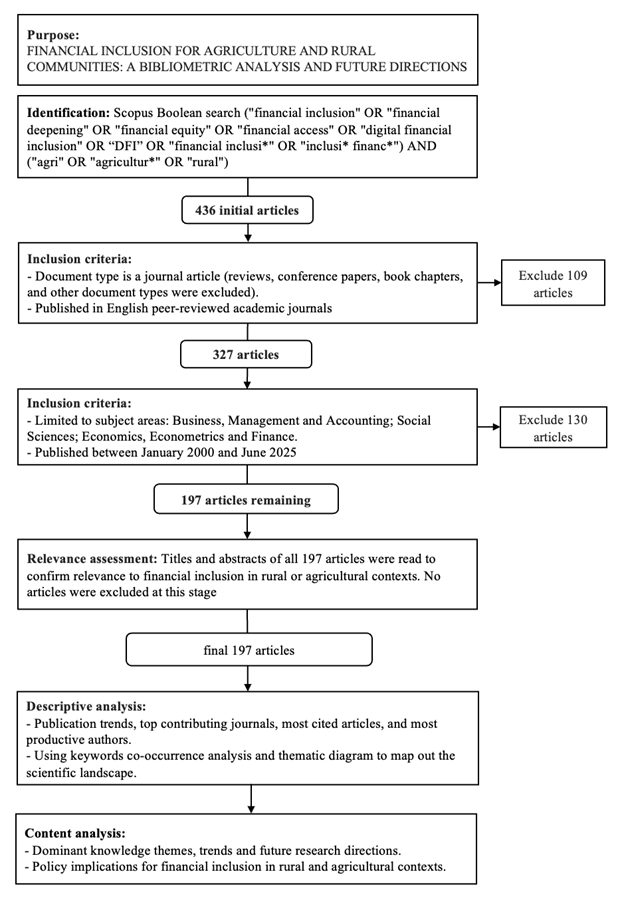
Figure 1. PRISMA-inspired flow diagram.
The search string was deliberately anchored on the term financial inclusion and its lexical variants rather than extended to related terms such as microfinance, rural credit, agri-finance, or rural banking. Although these concepts are closely related, they represent specific financial services, delivery mechanisms, or institutional domains rather than the broader concept of financial inclusion itself. Financial inclusion focuses on whether individuals and households can access, use, and benefit from formal financial services, whereas the adjacent literatures often examine particular financial products, institutions, or financing models. Including these terms would substantially broaden the scope of the review and introduce studies whose primary focus is financial service provision rather than financial inclusion.
To improve lexical consistency, we lower-cased text, removed stop-words and overly generic terms, and harmonized terminology with a VOSviewer thesaurus (e.g., digital inclusive finance ↔ digital financial inclusion; normalization of singular /plural and hyphenation). Bibliographic records were exported from Scopus in CSV format and, following a stepwise procedure, imported into VOSviewer v1.6.20 (van Eck & Waltman, 2010), which maps interlinkages among terms to reveal research areas based on co-occurrence patterns and conceptual associations. The software produced both network and density maps. A co-word analysis was conducted on the abstracts, author-provided keywords, indexed keywords, and abstract-derived terms. We used full counting with association strength normalization and set the minimum term occurrences to 3 (with sensitivity checks at thresholds 4 and 5). We used VOSviewer’s default modularity routine (resolution = 1.00) for clustering. VOSviewer automatically grouped highly co-occurring terms into five clusters; using the highest-frequency terms and intra-cluster link structures as anchors, we assigned labels and consolidated these clusters into five overarching research themes.
4. Results and Discussions
4.1. Publication Trends
Figure 2 reports the annual number of Scopus-indexed articles on financial inclusion from 2001 to 2025 (N = 197). The red line plots the cumulative article count. Its slope increases after the mid-2010s (the cumulative curve steepens), signaling an acceleration in yearly output from 2016 onward.
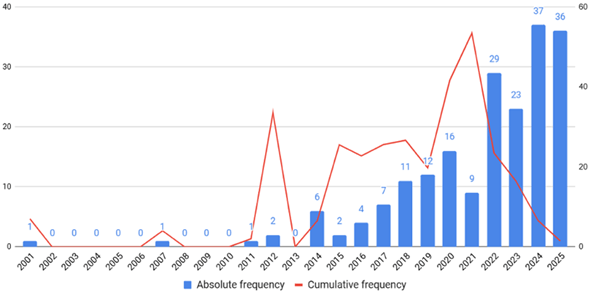
Figure 2. Publication trends.
In phase 1 (2001–2010), only two papers in the corpus used the term “financial inclusion” in their titles. This near-flat curve should not be read as an absence of research on rural financial issues in that decade. In practice, “financial inclusion” emerged as a prominent policy and research agenda only after the 2007–2008 global financial crisis (World Bank, 2015), and was further consolidated through subsequent milestones such as the Universal Financial Access 2020 initiative (World Bank, 2021) and its integration into the Sustainable Development Goals in 2015 (UNSGSA, 2019). Before this period, substantively related work was published under different labels such as microfinance, rural credit, and agri-finance. The low counts in Phase 1 therefore mark the timing of terminological adoption, not the intensity of research on rural finance. In phase 2 (2011–2015), the volume of research grew steadily with annual outputs rising from 1 (2011) to 6 (2014) and 11 papers in total (approximately 5.6%); this growth coincided with the emergence of financial inclusion on national and international policy agendas This is evident as, in 2015, financial inclusion also became a critical component of the Sustainable Development Goals (SDGs), referenced in seven of the 17 SDGs. This initiative was strongly endorsed by UN representatives from various nations and received particular backing from the Group of Friends of Financial Inclusion. During this period, the importance of financial access and usage became recognized by large international organizations such as the Bill & Melinda Gates Foundation, the World Bank Group with its Universal Financial Access 2020 initiative, and the IMF. In phase 3 (2016–2025), the outputs followed a steep, accelerating trajectory: 4 (2016), 7 (2017), 11 (2018), 12 (2019), 16 (2020). After a temporary dip to 9 (2021), productivity surged, eventually reaching a peak of 37 (2024) and 36 (2025). The data were retrieved in June 2026; therefore, the 2025 figures represent the full publication year. This phase accounts for well over 90% of the corpus, with 2018–2025 alone contributing nearly 88%, indicating a durable period of high productivity. This phase was driven by technological advancements. These include the proliferation of mobile money systems across Africa (building on post-M-Pesa agent networks and e-money regulation) and the rise of fintech platforms in Asia (e.g., digital-ID, e-KYC regimes, India’s UPI, and large e-wallet ecosystems). These developments created rich settings for causal and measurement work. These infrastructures lowered transaction and onboarding costs, generated new administrative and platform data, and enabled quasi‑experimental policy rollouts that are attractive to researchers.
Taken together, the inflection points around 2014 and 2016, along with the brief pandemic-era dip in 2021 followed by catch-up growth in 2022, and the persistently elevated outputs thereafter signal the consolidation of financial inclusion as a mainstream field, closely linked to the diffusion of digital financial services and fintech innovation and reinforced by policy agendas on poverty alleviation and the United Nations Sustainable Development Goals.
4.2. Countries with The Highest Number of Articles
Table 2 presents the distribution of scientific production by country. Following standard bibliometric practice, we attribute each article to every country represented in the authors’ affiliations. Consequently, internationally co-authored articles are counted once for each participating country, resulting in more country occurrences than the total number of articles. Figure 3 further illustrates the geographic distribution of publications across countries, with darker shades indicating a higher number of articles.
Table 2. Top countries by publications.
|
Countries |
Number |
% (N/197) |
|
China |
89 |
45.2% |
|
India |
41 |
20.8% |
|
Uganda |
15 |
7.6% |
|
USA |
14 |
7.1% |
|
South Africa |
13 |
6.6% |
|
Malaysia |
12 |
6.1% |
|
Nigeria |
10 |
5.1% |
|
Australia |
5 |
2.5% |
|
Ghana |
4 |
2.0% |
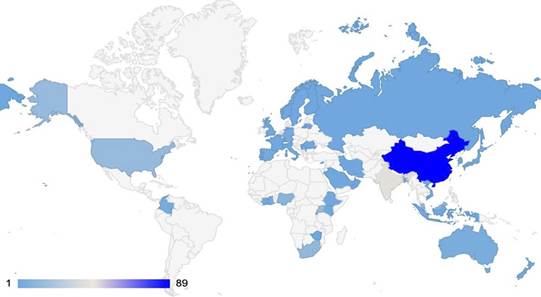
Figure 3. Geographic distribution of publications.
Overall, the majority of the publications originate from Asian and African countries. Among the countries contributing more than three publications, nine countries emerge as the leading contributors. China accounts for the largest share of publications (89, 45.2%), followed by India (41, 20.8%). Most of the remaining top contributors are developing economies: Uganda (15, 7.6%), South Africa (13, 6.6%), Malaysia (12, 6.1%), Nigeria (10, 5.1%), and Ghana (4, 2.0%). By comparison, only two developed countries—the United States (14, 7.1%) and Australia (5, 2.5%)—are represented among the leading contributors. Although China and India rank among the world’s largest economies, sizeable income disparities within their populations continue to create substantial demand for financial inclusion across many rural areas and vulnerable social groups, which may explain the strong research interest in this topic. The strong presence of Sub-Saharan African countries (Uganda, South Africa, Nigeria and Ghana) suggests that financial inclusion is regarded as a particularly pertinent issue in developing regions, offering a useful lens for understanding how rural households and firms gain access to financial services.
4.3. Top Contributing Journals
The publication landscape for this topic is skewed, with articles spread across a wide range of journals. However, as Table 3 shows, research is highly concentrated, with the top eight journals publishing nearly a third of all articles in the sample (61 out of 197, or 31%). The journal with the highest number of publications is Sustainability, with a total of 20 papers, accounting for 10.2% of the total output. As a broad-scope, interdisciplinary journal indexed under categories like “Environmental Studies,” its leading role is significant. The journal’s high output stems from a combination of factors, including its wide focus, an open-access model, and frequent special issues. These characteristics attract a substantial volume of submissions, which explains its position as the top publication outlet for this research topic. The next leading outlet is Finance Research Letters, with 13 publications, representing 6.6% of the total. This journal’s focus on financial research underscores the topic’s continued relevance within the traditional financial sector. The next tier includes China Agricultural Economic Review (6 articles) and Agricultural Finance Review (5 articles), which highlight the topic’s strong relevance to applied fields such as agricultural economics. Finally, generalist journals like Applied Economics (4 articles) and International Journal of Social Economics (4 articles) confirm the topic’s growing appeal outside of its original field.
Table 3. Top journals by publications.
|
No |
Title |
Articles |
|
1 |
Sustainability |
20 |
|
2 |
Finance Research Letters |
13 |
|
3 |
China Agricultural Economic Review |
6 |
|
4 |
Agricultural Finance Review |
5 |
|
5 |
Review of Development Economics |
5 |
|
6 |
Applied Economics |
4 |
|
7 |
Cogent Economics and Finance |
4 |
|
8 |
International Journal of Social Economics |
4 |
4.4. Most Influential Authors
Figure 4 illustrates the publication trajectory and citation impact of the ten most prolific authors over time. Each node’s size represents the annual number of articles, while its color intensity indicates average citations per year. Two different models of scholarly contribution are apparent. One group, including Munene J.C., Ntayi J.M., and Malinga C.A., was most active during a concentrated period, primarily from 2016 to 2019. Their publication pattern suggests an episodic engagement with the topic, rather than a long-term research focus. In contrast, authors such as Li W., Wang J., and Zhang Y. have maintained consistent activity in more recent years. Li W.’s work is particularly noteworthy for its high publication volume and strong citation impact, as shown by the larger, darker nodes in Figure 4. This indicates a leading and highly visible role in the field.
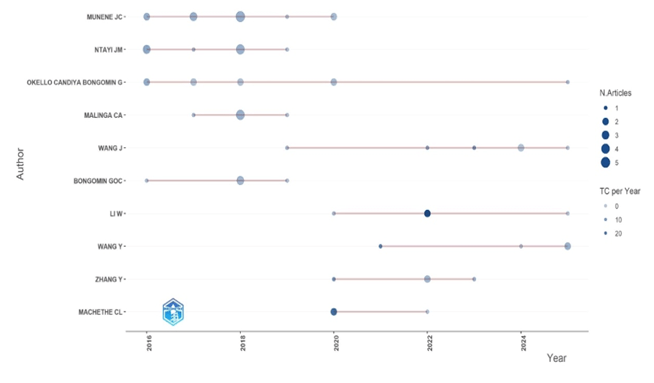
Figure 4. Annual publications and citation impact of top 10 authors.
Note: Bigger nodes mean more articles per year; darker color means more citations per year.
Meanwhile, Bongomin G. and Turvey C.G. exemplify sustained research over a long period. Although their yearly publication volume is modest, their enduring presence suggests a long-term commitment and a cumulative influence over time. Overall, this pattern highlights the varied nature of scholarly contributions, showing the field is shaped by both long-term, sustained research and short-term, intensive bursts of research.
4.5. Most Cited Articles
Table 4 reports the most highly cited articles in our dataset. The article titled "Has digital financial inclusion narrowed the urban-rural income gap: The role of entrepreneurship in China" (Ji et al., 2021) ranks first with 151 Scopus citations (retrieved June 2026). Using data from 275 Chinese cities during 2014–2018, the study finds that digital financial inclusion significantly narrows the urban-rural income gap by promoting entrepreneurship. The effect is especially strong in regions with lower levels of economic development and education, highlighting digital finance as a timely support for reducing poverty and improving income distribution. Ranking second, “Bridging the financial inclusion gender gap in smallholder agriculture in Nigeria: An untapped potential for sustainable development” (Adegbite & Machethe, 2020) has accumulated 147 citations and the highest number of local citations within the 197-article corpus. The study reveals that the widening gender gap in financial inclusion, driven by socioeconomic, institutional, and cultural barriers, undermines agricultural productivity, income equality, and food security. To address this, priority should be given to digital finance and agricultural credit solutions designed specifically for women to advance gender equality (SDG 5). Other influential studies have significantly expanded the research agenda across several key areas. Wang and He (2020; 128 citations) find that DFI reduces farmers’ vulnerability by improving their ability to cope with risk, while Wang and Fu (2022) identify specific mechanisms such as improved agricultural productivity and entrepreneurship. Concerning income disparities, Ji et al. (2021; 151 citations) note that DFI helps to narrow wage and property income gaps. Nevertheless, Huang and Zhang (2020) caution that inclusion might expand urban-rural inequality in the short run before narrowing it in the long term. C. Yu et al. (2022; 126 citations) focus on the rural consumption structure. The literature also addresses prerequisites and impacts (Niu et al., 2022), showing that broadband infrastructure improves DFI coverage, but actual usage depends on human capital. Aisaiti et al. (2019), when considering farmers’ borrowing intentions and the moderating role of digital finance and social enterprises, indicated that promoting participation in social enterprises and digital finance, as well as implementing a systematic, comprehensive financial education project, is crucial for developing inclusive finance in rural areas. Liu et al. (2021), however, critically suggest that DFI might also reduce agricultural production by making non-agricultural activities more efficient.
Table 4. The most cited articles.
|
Authors |
Title |
Year |
Scopus citations |
|
Ji X.; Wang K.; Xu H.; Li M. |
Has digital financial inclusion narrowed the urban-rural income gap: The role of entrepreneurship in China |
2021 |
151 |
|
Adegbite O.O.; Machethe C.L. |
Bridging the financial inclusion gender gap in smallholder agriculture in Nigeria: An untapped potential for sustainable development |
2020 |
147 |
|
Wang X.; He G. |
Digital financial inclusion and farmers’ vulnerability to poverty: Evidence from rural China |
2020 |
128 |
|
Yu C.; Jia N.; Li W.; Wu R. |
Digital inclusive finance and rural consumption structure – evidence from Peking University digital inclusive financial index and China household finance survey |
2022 |
126 |
|
Yu N.; Wang Y. |
Can digital inclusive finance narrow the Chinese urban–rural income gap? The perspective of the regional urban–rural income structure |
2021 |
104 |
|
Liu Y.; Liu C.; Zhou M. |
Does digital inclusive finance promote agricultural production for rural households in China? Research based on the Chinese family database (CFD) |
2021 |
103 |
|
Niu G.; Jin X.; Wang Q.; Zhou Y. |
Broadband infrastructure and digital financial inclusion in rural China |
2022 |
94 |
|
Huang Y.; Zhang Y. |
Financial Inclusion and Urban-Rural Income Inequality: Long-Run and Short-Run Relationships |
2020 |
88 |
|
Wang X.; Fu Y. |
Digital financial inclusion and vulnerability to poverty: evidence from Chinese rural households |
2022 |
86 |
|
Aisaiti G.; Liu L.; Xie J.; Yang J. |
An empirical analysis of rural farmers’ financing intention of inclusive finance in China: The moderating role of digital finance and social enterprise embeddedness |
2019 |
82 |
Overall, the table reveals several dominant streams: income-gap dynamics (including short-run vs. long-run effects), gendered inclusion in smallholder agriculture, poverty vulnerability and reduction mechanisms, and the critical assessment of infrastructure and agricultural production decisions. It also shows a geographic concentration of evidence in China and Nigeria, which together anchor the contemporary discussion on rural digital financial inclusion.
4.6. Keyword Co-Occurrence Analysis
Figure 5 shows the keyword co-occurrence map produced by VOSviewer (van Eck & Waltman, 2010). From 510 author keywords, 31 keywords that appeared at least four times were selected. In the network, each node represents a keyword, and its size reflects its frequency. Links between nodes indicate that the connected keywords co-appear in the same articles, while the thickness of the link represents the strength of these co-occurrences (Donthu et al., 2021). VOSviewer grouped the keywords into five clusters, each shown in a different color. Cluster 1 (Blue) centers on financial inclusion and its relationship with income inequality, with a particular focus on the roles of financial education and financial institutions, often in developing countries such as India. Cluster 2 (Green) focuses on digital financial inclusion and its impact on rural development, the urban-rural income gap, and entrepreneurship. Notably, it includes sophisticated analytical terms used to measure these impacts, such as “threshold effect,” “Theil index,” “heterogeneity,” and “mediating effect.” Cluster 3 (Yellow) focuses on financial access for vulnerable populations, specifically poor households in rural areas, looking at social capital, social networks, and institutional support. The Red cluster (Cluster 4) links fintech and mobile money, which drive the digital economy and rural inclusive finance to achieve sustainable development, climate resilience, and improve the agricultural sector. Cluster 5 (Purple), the smallest, connects traditional banking and savings with gender equality.
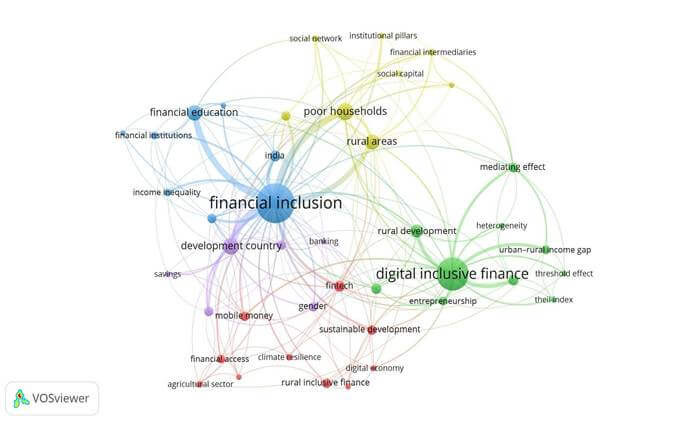
Figure 5. Keyword co-occurrence network.
Figure 6 presents the overlay visualization, a valuable tool for analyzing the temporal distribution of terms across clusters. In this visualization, colors range from purple to green to yellow, representing the chronological order in which keywords appear. In the overlay visualization, the research trends move from traditional financial inclusion for the poor to the impact of digital financial inclusion on rural development and entrepreneurship. Along the way, attention has also increased to the roles of technology, gender, and sustainable development trends.
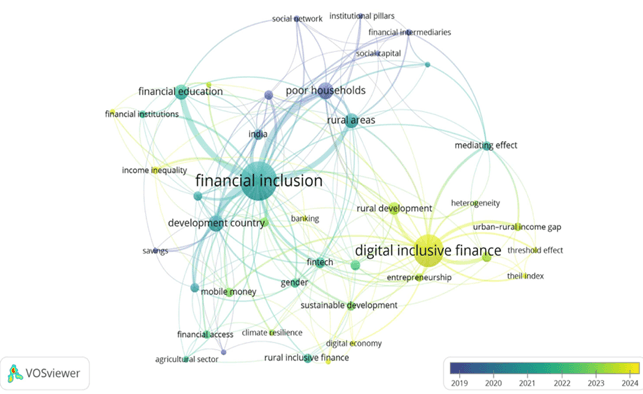
Figure 6. Overlay Visualization of Keyword Co-occurrence.
4.7. Thematic Analysis and Findings
4.7.1. Theme 1: Rural Financial Inclusion – Access, Impact and Sustainability
Consistent with its label, this cluster focuses on the core dimensions of rural and agricultural financial inclusion. At its core, financial inclusion concerns whether individuals, particularly those in rural areas, can access and effectively use formal financial services. Access to such services has been associated with higher incomes and improved quality of life. Accordingly, research in this cluster centers on three interrelated themes: (a) expanding access to financial services, often through fintech or digital channels; (b) assessing the socioeconomic impacts of financial inclusion; and (c) promoting the sustainability of financial inclusion in rural areas, where many people remain poor and underserved. The representative studies discussed below illustrate how the three dimensions shape this thematic cluster.
Financial inclusion delivers essential financial services through commercial banks and traditional financial institutions, extending access to remote areas and reducing barriers to financial participation (Sarma & Pais, 2011). With the development of technology, current studies on financial inclusion, including in agricultural and rural areas, are all directed towards the influence of technology, and the term “digital financial inclusion” is used and focused on in most studies (Fu et al., 2024; Wang & He, 2020; L. Zhang et al., 2023). Digital financial inclusion is considered a subset of financial inclusion that leverages technology platforms such as the internet, blockchain, AI, IoT, and cloud computing to broaden the scope of fintech services and non-traditional financial solutions, including mobile money, e-wallet, internet banking, P2P lending, and insurtech. P2P lending platforms enhance financial inclusion, especially in regions that lack traditional financial institutions, such as rural areas (Maskara et al., 2021). Digital financial inclusion greatly expands the coverage of financial services and accelerates digitization, enabling rural workers to access credit, promotes employment, raises incomes, and helps narrow the rural - urban wealth gap (Han et al., 2025; Mo et al., 2024). E-commerce policy has been shown to support improvements in digital financial inclusion in rural areas (Z. Zhang et al., 2024). However, the evidence in this cluster has notable limitations. Most studies measure access (e.g., account ownership) rather than the quality and continuity of financial service usage (Johnen et al., 2025; Panakaje et al., 2023). Moreover, many rely on short-term cross-sectional data, limiting their ability to assess whether welfare improvements among rural populations are sustained over time (Bongomin et al., 2023; Negera et al., 2025).
Research also demonstrates the multifaceted impact of rural financial inclusion. By expanding access to savings, credit, and investment services, financial inclusion promotes employment and increases incomes (Han et al., 2025; Mo et al., 2024). These benefits translate into micro-level outcomes such as poverty alleviation among farming households (Mhlanga, 2021) and broader macro-level effects, including a reduction in the urban–rural income gap (Ran et al., 2020). More recent studies further nuance this understanding by identifying digital technology as a key moderating factor that amplifies the positive influence of financial services on farmers’ well-being (Li et al., 2025). Financial inclusion also has a significant positive impact on improved nutrition and helps reduce the gender gap between food expenditure and nutrition of female- and male-headed households (Bali Swain & Nsabimana, 2024). In the agricultural sector, the usage of financial services through financial inclusion has significant impacts on agriculture both in the short run and long run (Olaniyi, 2017).
Financial inclusion also links to climate resilience and sustainable development. Negera et al. (2025) found that financial inclusion strengthens the climate resilience of rural households, making it a key pillar of climate action and an essential driver of sustainable development. Improving financial inclusion is critical for sustainable agricultural development in rural areas, and facilitating both traditional and non-traditional financial service providers would help to stimulate agricultural growth (Olaniyi, 2017). Furthermore, according to Jena (2025), fintech adoption enhances financial inclusion by closing the inclusion gap, empowering rural populations, and helping to achieve various Sustainable Development Goals.
Overall, the literature agrees that expanding financial access and usage is critical, and that digital channels are the key to achieving this at scale (L. Zhang et al., 2023). However, significant questions remain about long-term provider viability and user equity. Key debates include the financial viability of providers in rural thin markets; the risk of digital exclusion from strict requirements like e-KYC, smartphone ownership, and biased scoring algorithms (Bongomin et al., 2023); and the fundamental question of which outcome should guide policy - whether it be provider viability, household welfare, or climate resilience. The effects of financial inclusion also depend heavily on local context, including infrastructure, data protection, and social factors like gender and trust (Ozili, 2025). These debates point to research gaps in common provider-viability indicators, rural agents’ business models, and rules for privacy-by-design and fair algorithmic scoring.
4.7.2. Theme 2: Digital Finance’s Role in Rural China’s Development
China, as the world’s most populous country with a vast rural population, the third-largest land area, and strong agricultural development, has contributed the largest number of studies on financial inclusion. Over the past decade, China has become one of the pioneering countries in developing fintech services, with substantial capital and technological investment from both financial institutions and big tech firms. The rapid development of fintech has made digital finance a central research theme in rural China’s financial inclusion. It has also enabled the creation of comprehensive digital financial databases, giving Chinese researchers access to rich datasets that are often unavailable or less accessible in many other countries, including the Peking University Digital Financial Inclusion Index (Han et al., 2025), the China Household Finance Survey, the Rural Financial Inclusion Survey, and firm-level data from fintech companies such as Ant Group. Research has consistently demonstrated that digital financial inclusion affects China’s rural revitalization and the well-being of rural farmers (Le & Aralas, 2025; Li et al., 2025; Xia & Kong, 2024). Rural revitalization is measured by many factors, including industry, farming technology, healthcare, and quality of life. The impact varies across regions; western and central China show significantly stronger effects than other regions. Some studies have focused more on assessing the impact of financial inclusion in promoting and restructuring rural residents’ consumption, boosting economic growth (Z. Zhang et al., 2024), driving rural industrial prosperity (L. Zhang et al., 2023), fostering entrepreneurial activities of farmers (Le & Aralas, 2025) and reducing the income disparity between urban and rural regions (Aik & Zhang, 2023; Ran et al., 2020). Gender issues have received much attention in several Chinese studies; for example, Shao et al. (2023) examine the role of financial inclusion in promoting entrepreneurship. In the agricultural sector, research has proved that agricultural resource allocation and agricultural production are impacted by digital financial inclusion (X. He et al., 2025; Liu et al., 2021).
Although substantial Chinese research supports the significant contribution of digital finance to rural revitalization, entrepreneurship, and narrowing the urban–rural income gap, the findings remain subject to ongoing debate. First is the question of external validity: whether these findings can apply to other countries, given China’s unique market and regulatory environment. Second, many studies need stronger causal identification, prompting calls for more quasi-experimental research. Third, the dominant role of Big Tech firms raises important questions about market competition, the risk of crowding out local banks, and data privacy. These debates point to research gaps around the transferability of the Chinese model to other developing economies and the use of staged technology rollouts as natural experiments for causal identification.
4.7.3. Theme 3: Rural Financial Inclusion: Literacy, Digitalization, and Empowerment
Research in this area examines the multidimensional nature of financial inclusion, encompassing financial literacy, digital transformation, and socioeconomic empowerment. Particular attention has focused on digital financial inclusion rather than traditional financial services, reflecting the rapid advancement of digital technologies and fintech in recent years. In rural areas, where dispersed populations and geographical barriers often limit access to conventional banking, digital financial services play a crucial role in expanding financial inclusion.
However, another important characteristic of rural areas that can hinder access to financial inclusion is limited education and financial knowledge compared to urban areas. To promote financial inclusion, these root causes must be addressed, and many studies worldwide have identified and focused on these issues. According to Antil et al. (2022), among the key predictors of financial inclusion among rural agricultural households, education level is the most significant factor. By raising awareness of financial services’ availability and benefits, especially in low- and middle-income countries such as India, China, Nigeria, Uganda, and Ghana, financial literacy helps ensure financial inclusion in rural areas (Atkinson & Messy, 2013). In this relationship, network actors, financial institutions, digital access, and social capital have played mediating roles (Bongomin et al., 2016a; Bongomin et al., 2016b; Bongomin et al., 2020). Studies in this area also pointed out that, through financial inclusion, socio-economic empowerment is improved, and sustainable goals (SDGs) can be achieved (Dash & Mohanta, 2024; Panakaje et al., 2023).
A synthesis of the literature suggests that rural financial inclusion extends beyond expanding access to basic banking services. Rather, it is shaped by the interaction of three broad factors: individual capabilities, digital infrastructure, and the institutional environment. Financial literacy provides an essential foundation, but its benefits depend on whether it translates into sound financial behaviors and decisions. Likewise, digital technologies can accelerate financial inclusion, yet their effectiveness depends on reliable infrastructure, adequate digital skills, and equitable access. The institutional environment also plays a critical role, as trust, social norms, consumer protection, and supportive regulations influence whether rural populations are willing and able to engage with formal financial services. Within this context, trusted intermediaries, such as cooperatives and local financial advisors, can help bridge the gap between financial institutions and rural users. Taken together, these findings point to several areas requiring further attention. The literature highlights the need for more effective channels to deliver financial education through trusted local institutions, stronger digital infrastructure and capacity-building to ensure that digitalization reduces rather than reinforces exclusion, and more robust consumer protection frameworks to foster trust and safeguard vulnerable rural users.
4.7.4. Theme 4: Rural Financial Inclusion and Poverty Alleviation
Poverty and the income gap between urban and rural populations are major challenges for many developing and less-developed countries (Agwu, 2021). Therefore, studies on financial inclusion in rural areas worldwide examine whether greater access to financial services can increase income and reduce poverty, particularly given the significant regional and demographic disparities in rural communities. Digital financial inclusion is confirmed to provide a significant inhibitory impact on rural poverty (Luo & Chen, 2025; Pei et al., 2024) and narrow the rural-urban income gap and consumption structure (Yang et al., 2025; N. Yu & Wang, 2021). Relating to the impact mechanisms, studies in this area have indicated that access to finance helps the poor access community savings clubs and microfinance institutions (Abraham, 2018), increases their income, and affects both crop and livestock diversification, which leads to an impact on their access to food, dietary diversity, and nutritional structure (Murendo et al., 2021). Research on financial inclusion in agricultural and rural areas has not only stopped at using empirical analysis to identify problems and impacts, but a few recommendations have been suggested to encourage the development of financial inclusion in this area, which is considered to be more disadvantaged and challenging. Several studies, such as Bongomin and Munene (2020) and Hu et al. (2024), identify effective ways to promote financial inclusion and strengthen resilience against poverty. These include improving financial literacy, easing credit constraints, and applying appropriate account-opening fees. They also recommend designing financial products that are convenient, flexible, reliable, continuous, safe, and secure, while strengthening households’ risk-coping capacity.
Synthesizing these findings, while the consensus is that digital financial inclusion (DFI) helps reduce rural poverty and narrow income gaps by easing credit constraints and enabling better investment, the literature highlights crucial nuances. The impact is often heterogeneous; for instance, in China, benefits vary regionally, showing stronger effects in less-developed areas and non-linear patterns across different types of spending. Similarly, in Uganda, digital literacy levels strongly moderate the impact of financial technologies on vulnerable groups (Bongomin et al., 2023). At the same time, the evidence suggests that DFI is far from a complete solution. Its effectiveness is limited in areas with weak local industries, particularly affecting self-employment income. Furthermore, barriers to usage remain significant. As seen in Uganda, poor product fit, such as high upfront fees and minimum balances, along with weak client protection, significantly reduces uptake. Studies also caution that without proper safeguards, risks like over-indebtedness can offset the benefits. Taken together, the evidence in this cluster points to DFI as a partial rather than complete solution: its welfare and poverty-reduction effects appear conditional on complementary factors, including rural digital infrastructure, user skills, consumer protection, and real-sector development.
4.7.5. Theme 5: Financial Inclusion – Global Rural Perspectives
Research on financial inclusion in agricultural and rural areas has been extensively explored globally, with the most focus on studies in China, India, and a range of African countries such as Nigeria, Zimbabwe, Rwanda, Uganda, Ghana, and Kenya. In countries other than China, high poverty rates, wide rural-urban income gaps, and very limited access to financial services in rural areas have drawn strong research interest, with scholars seeking solutions to enhance financial inclusion. In India, Jena (2025) examines factors influencing fintech adoption to enhance financial inclusion. Besides, other studies have provided evidence on determinants of financial inclusion for the poor in developing economies, especially in rural Uganda, which include both direct and mediating factors (Bongomin et al., 2016a; Bongomin et al., 2016b; Bongomin et al., 2020). In Rwanda, Bali Swain and Nsabimana (2024) show that financial inclusion improves nutrition in rural areas. In Zimbabwe, Mhlanga (2021) demonstrates that financial access helps reduce poverty in agriculture. For middle-income countries, including Nigeria, technology has been proven to narrow the gap between rural development and financial inclusion (Agwu, 2021). A more comprehensive study by Baborska et al. (2020) across 88 low- and middle-income countries showed the impact of financial inclusion on food access and food security. In general, the research mainly focuses on some common key issues but addresses specific situations of each country or region, such as the factors and challenges affecting financial inclusion, the role of digital financial services for rural residents, the impacts on agricultural production, and recommendations to narrow income and livelihood gaps, promote equitable development, and reduce poverty. A rare European study, focused on rural Romania, presents a model based on non-bank financial institutions (Yue et al., 2019). In this model, such institutions invest in financial technology and offer flexible services suited to individual needs, especially in remote rural areas. The authors suggest that this model could be applied in other countries to expand financial inclusion. Gender is also a global concern in rural financial inclusion. Women often face more barriers in accessing finance, such as patriarchal bias, discrimination, and social norms, especially in poor countries (Manta, 2019). The severity and form of these barriers, however, differ markedly across regions. Studies from Sub-Saharan African contexts tend to emphasize documentation requirements and mobility constraints, whereas research in South Asian settings gives greater weight to household decision-making structures and social sanctions (Dash & Mohanta, 2024). This variation indicates that gender-responsive approaches face substantial transferability challenges across contexts.
Overall, while technology like FinTech and mobile banking is seen as a powerful tool, its success is not automatic. A major challenge is overcoming deep psychological and cultural barriers; therefore, simply providing the infrastructure is not enough. A further tension runs through this literature: digital channels offer efficiency, yet many rural users continue to value the personal relationships and trust embedded in informal financial arrangements. Since rural residents often prefer familiar systems, an important question for future work is how the trust associated with traditional methods might be combined with the efficiency of digital services. The literature in this cluster identifies a shift in focus from basic access (having an account) toward deeper use (whether financial tools improve life and resilience), while noting that measuring this deeper impact remains methodologically difficult. Studies also converge on the observation that outcomes are highly context-dependent and are shaped by broader institutional conditions, including restrictive social norms (such as gender bias), regulatory gaps, and weak consumer protection.
Read together, the five themes reveal both convergences and tensions. Themes 1 and 4 both examine the welfare outcomes of financial inclusion, including income, poverty, and food security, but differ in their scope. Theme 1 adopts a broad development perspective, encompassing access to financial services, socioeconomic impacts, climate resilience, and sustainable development. In contrast, Theme 4 focuses more specifically on the pathways through which financial inclusion contributes to poverty reduction and related welfare outcomes. Themes 2 and 5 are geographically complementary. Theme 2 concentrates on the data-rich Chinese context, while Theme 5 assembles more fragmented evidence from India, several African countries, and Europe. They also differ methodologically: Chinese studies typically draw on large, nationally systematic datasets that combine administrative indices with established household surveys, while studies elsewhere rely more on smaller, region-specific surveys. Rather than focusing on specific outcomes, Theme 3 emphasizes the enabling factors - particularly financial literacy, digital capabilities, and institutional trust - that underpin effective financial inclusion and its broader socioeconomic benefits. Across the five clusters, this pattern aligns with a contingency view of rural financial inclusion in the literature: intervention effectiveness varies with the local mix of infrastructure, human capital, and institutional quality, rather than following a single universal mode.
Beyond the thematic findings, the empirical literature has also evolved methodologically. Early studies relied mainly on cross-sectional regressions, whereas more recent research increasingly uses panel data models, instrumental variable approaches, difference-in-differences designs, and spatial econometric techniques to strengthen causal inference. While these methods improve the credibility of empirical findings, their effectiveness depends on the validity of their underlying assumptions. As a result, the strength of causal claims varies across studies, highlighting the need for more rigorous identification strategies in future research.
5. Discussions and Conclusions
Synthesizing 197 Scopus-indexed articles from 2000 to 2025, this study presents a bibliometric review of financial inclusion in agriculture and rural areas. Our analysis documents a significant shift from access-centric debates toward use- and impact-oriented analyses focused on digital financial services, entrepreneurship, gender equality, and sustainable development. The bibliometric evidence reveals a coherent intellectual structure composed of five interconnected research themes: (i) access, impact, and sustainability; (ii) digital finance in rural China’s development; (iii) literacy, digitalization, and empowerment; (iv) poverty alleviation; and (v) global rural perspectives with persistent gender and regional heterogeneity. Sensitivity analyses that vary the keyword occurrence threshold confirm the stability of this five-cluster structure, supporting the robustness of our findings. Theoretically, this study advances the literature by providing an in-depth understanding of the multifaceted nature of financial inclusion in agriculture and rural communities, while practically, it identifies key priorities for policymakers, practitioners, and researchers, as outlined below.
This focus on rural and agricultural contexts distinguishes our review from previous bibliometric studies on financial inclusion. Ahiase et al. (2024) and Gallego-Losada et al. (2023) map the digital financial inclusion literature across all sectors, while Ghosh (2024) traces general financial inclusion trends and organizes the field around initiation, service delivery, and customer-centric design. While these reviews offer valuable insights, their broad sectoral scope leaves many rural- and agricultural-specific issues underexplored. By focusing on rural and agricultural studies, our review highlights sub-themes less visible in broader bibliometric mappings: the seasonality of farm cash flows, bundled savings-credit-insurance products, the fragility of cash-in/cash-out infrastructure in thin markets, and climate resilience as a distinct dimension of inclusion. These are not simply rural variants of urban problems; they reflect a different underlying logic of financial need.
Our analysis yields three cross-cutting insights to serve as a basis for policy recommendations. First, assessment must move beyond simple access metrics (such as account ownership rates) to focus on quality-of-use indicators: active use, transaction intensity, product stacking, affordability, service reliability and protection, disaggregated by gender and age. This shift also requires research that traces how DFI alters farm productivity and household resource allocation across smallholders with different land sizes, market access, and gender, so that products can be designed for particular farmer groups rather than for an average user. Second, product design should be livelihood-sensitive- supporting seasonal cash flow smoothing, bundled savings-credit-insurance, and climate risk cover - to close usage gaps. Progress here depends on clarifying which channels matter most: whether improved savings, insurance uptake, access to credit, or efficient remittances most strongly reduce vulnerability to shocks such as climate events, health crises, and market volatility. It also depends on understanding how financial and digital literacy interact with behavioral traits such as trust, risk preference, and time preference, since these jointly shape whether services are adopted and well used. Third, digital financial infrastructure is necessary but not sufficient. Meaningful welfare gains depend on the combination of three core elements: shared digital public infrastructure (such as identification systems and real-time payments), a wide and adequately funded network of transaction agents, and consumer protection rules suited to small, frequent transactions, limiting hidden fees or minimum balance requirements. Whether these elements deliver depends on local conditions, suggesting that future work should test how connectivity, digital ID, e-KYC systems, and governance quality moderate the effect of DFI on non-farm employment and rural structural transformation. For policymakers, these insights imply a pivot from expanding access to deepening and stabilizing use. And for practitioners, they underscore the need to align products and delivery channels with rural cash flow cycles, agent liquidity constraints, and last-mile frictions.
Gender emerges as a cross-cutting dimension across the themes. Rather than representing a distinct research theme, gender cuts across the literature as a factor that shapes both access to financial services and the benefits derived from their use (theme 1). The reviewed studies consistently show that women face greater barriers to financial inclusion, although the nature and consequences of these barriers vary across contexts. In the literature on access to financial services, women encounter greater obstacles to adopting and sustaining the use of digital financial services because of documentation constraints, limited mobility, and lower mobile phone ownership (theme 1). In theme 2 relating to financial inclusion in China, research on financial capability highlights how gendered household bargaining power influences rural women’s entrepreneurial outcomes (Shao et al., 2023). Studies on poverty reduction (theme 4) show that narrowing gender gaps in smallholder agriculture is not only a matter of equity but also a key pathway to improving productivity and reducing poverty (Adegbite & Machethe, 2020; Bali Swain & Nsabimana, 2024). In theme 5, comparative studies demonstrate that gender-related barriers are highly context-specific, ranging from documentation and mobility constraints in Sub-Saharan Africa to household decision-making structures in South Asia (Dash & Mohanta, 2024; Manta, 2019). Collectively, these findings suggest that gender should be treated as a cross-cutting analytical lens, incorporating women’s needs into the design of rural financial products, delivery channels, and consumer protection frameworks from the outset rather than addressing it as a secondary consideration.
Building on these insights, this review translates the key findings into four policy priorities that provide actionable guidance for key stakeholders. First, policymakers and financial service providers should shift their focus from expanding access alone to improving the quality and effective use of financial services by developing products and services that support sustainable livelihood improvements. Second, financial institutions should design context-specific financial products that reflect the diverse needs of rural and agricultural populations, taking into account seasonal income patterns, production cycles, and varying levels of financial capability. Third, governments, regulators, and infrastructure providers should strengthen the enabling environment by expanding digital connectivity, improving digital identity systems, enhancing regulatory transparency and consumer protection, and investing in digital literacy. Particular attention should also be given to improving smartphone access and digital capabilities among rural populations to facilitate the effective adoption of digital financial services. Finally, policymakers, financial institutions, and development organizations should adopt gender-responsive financial inclusion strategies that address the structural barriers limiting women’s access to and effective use of financial services, while promoting their broader economic participation.
The literature’s geographic concentration should also be acknowledged. As shown in Table 2, China accounts for 45.2% of the corpus, and this concentration is not neutral: it shapes the mechanisms, variables, and even the causal identification strategies that dominate the field. The Chinese literature reflects a highly specific institutional context - a nationwide big-tech-based platform ecosystem led by firms such as Ant Group and Tencent, a proactive state-led regulatory framework that permits rapid rollout, and a dense administrative data infrastructure (notably the Peking University Digital Financial Inclusion Index) that supports large-sample empirical work. These conditions are rare outside China. Consequently, the mechanisms most frequently identified in the Chinese literature—for example, DFI operating through digital entrepreneurship and platform-mediated credit access to narrow the urban-rural income gap—may not travel well to agricultural economies with different institutional configurations. In Sub-Saharan African contexts, for instance, the dominant channels tend to run through mobile-money agent networks, informal savings groups, and NGO-supported microfinance rather than through big-tech platforms. Similarly, in South Asian settings other than India, digital public infrastructure and household decision-making structures play a stronger conditioning role. The intellectual structure identified in this review largely reflects evidence generated in the Chinese context. Because institutional arrangements, governance quality, digital infrastructure, and socioeconomic conditions vary considerably across countries, the generalizability of specific findings and mechanisms remains uncertain. At the same time, these findings provide a useful foundation for future comparative studies across different agricultural and rural contexts.
In addition, based on the gaps identified in this review, we propose the following future research directions to strengthen the field’s external validity and policy relevance. First, future research should move beyond examining whether financial inclusion improves income to better understand how it enhances agricultural livelihoods. This includes investigating its effects on farm productivity and household resource allocation across smallholders with different land sizes and levels of market access, while identifying the mechanisms through which financial inclusion reduces poverty and strengthens resilience. In particular, future studies should determine whether improved savings, greater insurance uptake, expanded access to credit, or more efficient remittance services are the primary channels through which financial inclusion mitigates vulnerability to climate shocks, health crises, and market volatility. Research should also examine how financial and digital literacy, together with behavioral factors such as trust, risk preferences, and time preferences, influence the adoption and effective use of financial services. Second, future research should focus on making financial inclusion more responsive to the diverse needs of rural populations. Studies should explore how financial services can be tailored to farmers with different socioeconomic characteristics, production conditions, and cash-flow patterns in order to reduce transaction costs, improve access to appropriate financial products, and encourage sustained use. Particular attention should be given to addressing persistent gender disparities by evaluating the effectiveness of targeted digital-literacy and empowerment programs, thereby providing evidence for more gender-responsive financial inclusion policies. Finally, future research should pay greater attention to the contextual conditions under which financial inclusion generates development outcomes and to the generalizability of existing evidence. Studies should investigate how digital infrastructure, including connectivity, digital identity, and e-KYC systems, together with local governance quality, shape the effectiveness of financial inclusion in promoting non-farm employment and rural structural transformation. Because much of the current evidence comes from rural China, future work should also assess whether existing models, measurement approaches, and empirical findings transfer to other agricultural economies, particularly in Africa and other developing regions. Although the broader financial inclusion literature has extensively studied the relationship between financial access and household vulnerability and the effectiveness of gender-focused programs, important knowledge gaps remain in rural and agricultural settings. Seasonal livelihoods, climate-related risks, and differences in the quality of financial service use create context-specific measurement and implementation challenges that evidence from more general populations cannot fully explain. Moreover, methodologically, future research should also strengthen causal inference by adopting more rigorous identification strategies and conducting comprehensive robustness and validation tests where appropriate.
This study has several limitations. First, our analysis rests exclusively on articles indexed in Scopus, which, despite its extensive coverage, introduces an English-language bias and potentially underrepresents research from the Global South published in regional journals or local languages. A substantial body of influential work in this domain also exists as grey literature, policy reports from the World Bank, CGAP, central banks, and major non-governmental organizations - which our approach excludes. Future bibliometric reviews could systematically integrate both academic and grey literature to provide a more comprehensive and practice-informed understanding of the field. Second, we restricted the search to articles using “financial inclusion” in their titles to preserve the conceptual consistency of the bibliometric analysis. As a result, related literature, including “microfinance,” “rural credit,” and “agricultural finance,” was excluded despite their role as intellectual antecedents. Future bibliometric studies could adopt broader search terms to trace the intellectual evolution from microfinance to financial inclusion. Third, text harmonization and keyword standardization inevitably involve some researcher judgment that may influence clustering outcomes. To enhance robustness, we tested alternative minimum keyword occurrence thresholds, all of which consistently produced the same five-cluster structure. While this supports the internal stability of the intellectual maps, it does not eliminate the inherent subjectivity associated with bibliometric preprocessing.
Overall, the knowledge structure mapped in this bibliometric review indicates a gradual shift from studies of financial access to research exploring the use and developmental outcomes of financial inclusion in agriculture and rural contexts. The evidence synthesized in this review suggests that future progress will depend not only on expanding access but also on improving the quality, appropriateness, and effective use of financial services. Achieving durable gains in welfare, agricultural productivity, and household resilience will require rigorous impact evaluation, context-specific product design, and continued investment in the digital and institutional infrastructure that enables affordable, secure, and reliable financial transactions.
CRediT Author Statement: Tam Nguyen Thi Thanh: Conceptualization, Methodology, Resources, Investigation, Writing – original draft; Writing – review & editing, and Funding acquisition; Giang Nguyen Thuc Huong: Conceptualization, Writing – original draft, Writing – review & editing, Project Administration, Supervision, and Validation; Tuyen Nguyen Thanh: Data curation, Formal analysis, Software, and Visualization.
Data Availability Statement: The data supporting the bibliometric analysis in this study were derived from the publicly available Scopus database. The extracted dataset used for the VOSviewer analysis can be provided by the corresponding author upon reasonable request.
Funding: This research was funded by Hanoi University of Science and Technology, grant number T2025- TN-002.
Conflicts of Interest: The authors declare no conflict of interest.
IRB Statement: Not applicable.
Informed Consent Statement: Not applicable.
Acknowledgments: The authors sincerely acknowledge the financial support provided by Hanoi University of Science and Technology for this study (Project code: T2025- TN-002).
Abbreviations
The following abbreviations are used in this manuscript:
|
AI |
Artificial Intelligence |
|
CGAP |
Consultative Group to Assist the Poor |
|
DFI |
Digital Financial Inclusion |
|
e-KYC |
Electronic Know Your Customer |
|
IMF |
International Monetary Fund |
|
IoT |
Internet of Things |
|
P2P |
Peer-to-Peer (lending) |
|
PRISMA |
Preferred Reporting Items for Systematic Reviews and Meta-Analyses |
|
SDG |
Sustainable Development Goal |
|
UPI |
Unified Payments Interface |
References
Abraham, T. W. (2018). Estimating the effects of financial access on poor farmers in rural northern Nigeria. Financial Innovation, 4, 25. https://doi.org/10.1186/s40854-018-0112-2
Adegbite, O. O., &
Machethe, C. L. (2020).
Bridging the financial inclusion gender gap in smallholder agriculture in
Nigeria: An untapped
potential for sustainable development. World
Development, 127, 104755.
https://doi.org/10.1016/j.worlddev.2019.104755
Agwu, M. E. (2021). Can technology bridge the gap between rural
development and financial inclusions? Technology Analysis & Strategic
Management, 33(2),
123–133. https://doi.org/10.1080/09537325.2020.1795111
Ahiase, G., Umar, A., Saeed, A. M. M., Rasuman, M. A., & Suri, E. R.
D. R. T. (2024). Research trends in digital financial inclusion: A
bibliometric analysis using VOSviewer. International
Journal of Informatics, Information System and Computer Engineering
(INJIISCOM), 5(1),
132–145. https://doi.org/10.34010/injiiscom.v5i1.12503
Aik, N. C., & Zhang, Q. (2023). Use of Theil for a specific duality economy: Assessing the impact of digital inclusive finance on urban-rural income gap in Chongqing. FinTech, 2(4), 668–679. https://doi.org/10.3390/fintech2040037
Aisaiti, G., Liu, L., Xie, J., & Yang, J. (2019). An empirical analysis of rural farmers’ financing intention of inclusive finance in China: The moderating role of digital finance and social enterprise embeddedness. Industrial Management & Data Systems, 119(7), 1535–1563. https://doi.org/10.1108/IMDS-08-2018-0374
Antil, S., Swain, N., & Kumar, M. (2022). Determinants of financial
inclusion of rural agricultural households in India. Journal of Rural
Development, 41(1), 87–101. https://doi.org/10.25175/jrd/2022/v41/i1/172464
Ardic, O. P., Chen, G., & Latortue, A. (2012). Financial access 2011: An overview of the supply-side data landscape. Consultative
Group to Assist the Poor &
International Finance Corporation.
https://documents1.worldbank.org/curated/en/307701468331824729/pdf/805390NWP0CGAP00Box385295B00PUBLIC0.pdf
Atkinson, A., & Messy, F.-A. (2013). Promoting financial inclusion through financial
education: OECD/INFE evidence, policies, and practice. OECD. OECD Working
Papers on Finance, Insurance and Private Pensions.
https://doi.org/10.1787/5k3xz6m88smp-en
Baas, J., Schotten, M., Plume, A., Côté, G., & Karimi, R. (2020). Scopus as a curated, high-quality bibliometric data source for
academic
research in quantitative science studies. Quantitative
Science Studies, 1(1), 377–386.
https://doi.org/10.1162/qss_a_00019
Baborska, R., Hernandez, E., Magrini, E., & Morales-Opazo, C. (2020). The
impact of financial inclusion on rural food security experience: A perspective
from low-and middle-income countries. Review of Development Finance, 10(2),
1–18.
https://hdl.handle.net/10520/ejc-rdfin-v10-n2-a1
Bali Swain, R., & Nsabimana, A. (2024). Financial inclusion and nutrition among rural households in Rwanda. European Review of Agricultural Economics, 51(2), 506–532. https://doi.org/10.1093/erae/jbae007
Bongomin, G. O. C., Malinga, C. A., Amani, A. M., & Balinda, R. (2023). Recalibrating the scope of financial inclusion through financial technologies in the digital age: The role of digital literacy as a moderator in rural Uganda. Information Technology & People, 38(3), 1178–1207. https://doi.org/10.1108/ITP-09-2022-0732
Bongomin, G. O. C., & Munene, J. C. (2020). Financial inclusion of the poor in developing economies in the twenty-first century: Qualitative evidence from rural Uganda. Journal of African Business, 21(3), 355–374. https://doi.org/10.1080/15228916.2019.1646601
Bongomin, G. O. C., Munene, J. C., Yourougou, P. (2020). Examining the role of financial intermediaries in promoting financial literacy and financial inclusion among the poor in developing countries: Lessons from rural Uganda. Cogent Economics & Finance, 8(1), 1761274. https://doi.org/10.1080/23322039.2020.1761274
Bongomin, G. O. C., Ntayi, J. M., Munene, J. C., & Nabeta, I. N. (2016a). Financial inclusion in rural Uganda: Testing interaction effect of
financial literacy and networks. Journal of African
Business, 17(1), 106–128.
https://doi.org/10.1080/15228916.2016.1117382
Bongomin, G. O. C., Ntayi, J. M., Munene, J. C., & Nabeta, I. N.
(2016b). Social capital: Mediator of financial literacy and financial inclusion
in rural Uganda. Review of International Business and Strategy, 26(2),
291–312.
https://doi.org/10.1108/RIBS-06-2014-0072
Dash, A., & Mohanta, G. (2024). Fostering financial inclusion for
attaining sustainable goals: What contributes more to the inclusive financial
behaviour of rural households in India? Journal of Cleaner Production, 449,
141731.
https://doi.org/10.1016/j.jclepro.2024.141731
Del Sarto, N., & Ozili, P. K. (2025). FinTech and financial inclusion in emerging markets: A bibliometric analysis and future research agenda. International Journal of Emerging Markets, 20(13), 270–290. https://doi.org/10.1108/IJOEM-08-2024-1428
Demirgüç-Kunt, A., Klapper, L., Singer, D., & Ansar, S. (2022). The Global Findex Database 2021: Financial inclusion, digital payments, and resilience in the age of COVID-19. World Bank Group. http://documents.worldbank.org/curated/en/099818107072234182
Donthu, N., Kumar, S., Mukherjee, D., Pandey, N., & Lim, W. M. (2021). How to conduct a bibliometric analysis: An overview and guidelines. Journal of Business Research, 133, 285–296. https://doi.org/10.1016/j.jbusres.2021.04.070
Fu, C., Sun, X., Guo, M., & Yu, C. (2024). Can digital inclusive
finance facilitate productive investment in rural households? –An empirical
study based on the China Household Finance Survey Finance Research Letters,
61, 105034.
https://doi.org/10.1016/j.frl.2024.105034
Gallego-Losada, M.-J., Montero-Navarro, A., García-Abajo, E., & Gallego-Losada,
R. (2023). Digital financial inclusion. Visualizing the
academic literature. Research in International
Business and Finance, 64, 101862.
https://doi.org/10.1016/j.ribaf.2022.101862
Ghosh, M. (2024). Financial inclusion studies bibliometric analysis: Projecting a sustainable future. Sustainable Futures, 7, 100160. https://doi.org/10.1016/j.sftr.2024.100160
Han, L., Lv, Q., & Zhang, Q. (2025). Digital financial inclusion, credit access and non-farm employment. Finance Research Letters, 72, 106510. https://doi.org/10.1016/j.frl.2024.106510
He, C., Zhou, L., Qu, F., & Xue, P. (2025). How does digital financial inclusion affect rural land transfer decisions? Evidence from China. Land, 14(9), 1723. https://doi.org/10.3390/land14091723
He, X., Yang, Z., & Tian, S. (2025). The impact of digital inclusive finance on the allocation of agricultural resources: Micro evidence from rural China. Finance Research Letters, 82, 107613. https://doi.org/10.1016/j.frl.2025.107613
Huang, Y., & Zhang, Y. (2020). Financial inclusion and urban-rural income inequality: Long-run and short-run relationships. Emerging Markets Finance and Trade, 56(2), 457–471. https://doi.org/10.1080/1540496X.2018.1562896
Hu, L., Sheng, D., Ni, G., Wang, D., & Fang, X. (2024). Digital
financial inclusion and poverty-alleviation resilience of Chinese rural
households. Journal of Family and Economic Issues.
https://doi.org/10.1007/s10834-024-09992-6
Jena, R. K. (2025). Factors influencing the adoption of FinTech for the enhancement of financial inclusion in rural India using a mixed methods approach. Journal of Risk and Financial Management, 18(3), 150. https://doi.org/10.3390/jrfm18030150
Ji, X., Wang, K., Xu, H., & Li, M. (2021). Has digital financial inclusion narrowed the urban–rural income gap? The role of entrepreneurship in China. Sustainability, 13(15), 8292. https://doi.org/10.3390/su13158292
Johnen, C., Mader, A., Nsengumuremyi, A., & Mußhoff, O. (2025). Financial inclusion along the Rural-Urban Continuum: Empirical evidence from a decomposition analysis in Kenya between 2012 and 2021. World Development, 194,107073. https://doi.org/10.1016/j.worlddev.2025.107073
Khan, F., Siddiqui, M. A., & Imtiaz, S. (2022). Role of financial literacy in achieving financial inclusion: A review, synthesis and research agenda. Cogent Business & Management, 9(1), 2034236. https://doi.org/10.1080/23311975.2022.2034236
Le, X., & Aralas, S. B. (2025). Digital inclusive finance,
entrepreneurial activity of farmers, and urban–rural income disparity: Evidence
from China. Organizations and Markets in Emerging Economies, 16(1),
111–132.
https://www.ceeol.com/search/article-detail?
Li, F., Chandio, A. A., Zang, D., & Liu, H. (2025). Financial inclusion, digital technology and farmers’ well-being nexus: Evidence from rural Xizang, China. Review of Development Economics, 29(3), 1907–1920. https://doi.org/10.1111/rode.13204
Liu, Y., Liu, C., & Zhou, M. (2021). Does digital inclusive finance
promote agricultural production for rural households in China? Research based
on the Chinese family database (CFD). China Agricultural Economic Review,
13(2), 475–494.
https://doi.org/10.1108/CAER-06-2020-0141
Luo, J., & Chen, L. (2025). Climate change risk, digital financial
inclusion and multidimensional relative poverty among farm households.
Sustainability, 17(12), 5404. https://doi.org/10.3390/su17125404
Manta, A. (2019). Financial inclusion and gender barriers for rural women. International Journal of Management, 10(5), 61–72. https://doi.org/10.34218/IJM.10.5.2019.006
Maskara, P. K., Kuvvet, E., & Chen, G. (2021). The role of P2P
platforms in enhancing financial inclusion in the United States: An
analysis of peer-to-peer lending across the rural-urban divide. Financial
Management, 50(3), 747–774.
https://doi.org/10.1111/fima.12341
Mhlanga, D. (2021). Financial access and poverty reduction in agriculture: A case of households in Manicaland Province, Zimbabwe. African Journal of Business and Economic Research, 16(2), 73–93. https://hdl.handle.net/10520/ejc-aa_ajber-v16-n2-a4
Mo, Y., Mu, J., & Wang, H. (2024). Impact and mechanism of digital inclusive finance on the urban-rural income gap of China from a spatial econometric perspective. Sustainability, 16(7), 2641. https://doi.org/10.3390/su16072641
Murendo, C., Murenje, G., Chivenge, P. P., & Mtetwa, R. (2021).
Financial inclusion, nutrition and socio-economic status among rural
households in Guruve and Mount Darwin Districts,
Zimbabwe. Journal of International Development, 33(1), 86–108. https://doi.org/10.1002/jid.3513
Mushtaq, R., Dastane, O., Rafiq, M., & Başar, B. D. (2023). Women
financial inclusion research: A
bibliometric and network analysis.
International Journal of Social Economics, 50(8), 1169–1185. https://doi.org/10.1108/IJSE-06-2022-0438
Neaime, S., & Gaysset, I. (2018). Financial inclusion and stability in MENA: Evidence from poverty and inequality. Finance Research Letters, 24, 230–237. https://doi.org/10.1016/j.frl.2017.09.007
Negera, M., Alemu, T., Hagos, F., & Haileslassie, A. (2025). Does financial inclusion enhance farmers’ resilience to climate change? Evidence from rural Ethiopia. Sustainable Development, 33(2), 3008–3022. https://doi.org/10.1002/sd.3277
Niu, G., Jin, X., Wang, Q., & Zhou, Y. (2022). Broadband infrastructure and digital financial inclusion in rural China. China Economic Review, 76, 101853. https://doi.org/10.1016/j.chieco.2022.101853
Olaniyi, E. (2017). Back to the land: The impact of financial inclusion on agriculture in Nigeria. Iranian Economic Review, 21(4), 885–903. https://doi.org/10.22059/ier.2017.64086
Ozili, P. K. (2025). Financial inclusion and digital financial inclusion of forcibly displaced persons: Strategies and challenges. Perspectives on Global Development and Technology, 24(3–4), 628–641. https://doi.org/10.1163/15691497-12341728
Page, M. J., McKenzie, J. E., Bossuyt, P. M., Boutron, I., Hoffmann, T. C., Mulrow, C. D., Shamseer, L., Tetzlaf, J. M., Akl, E. A., Brennan, S. E., Chou, R., Glanville, J., Grimshaw, J. M., Hróbjartsson, A., Lalu, M. M., Li, T., Loder, E. W., Mayo-Wilson, E., McDonald, S., McGuinness, L. A., … Moher, D. (2021). The PRISMA 2020 statement: An updated guideline for reporting systematic reviews. BMJ, 372. https://doi.org/10.1136/bmj.n71
Panakaje, N., Rahiman, H. U., Parvin, S. M. R., Kulal, A., & Siddiq, A.
(2023). Socio-economic empowerment in rural India: Do financial
inclusion and literacy matter? Cogent
Social Sciences, 9(1), 2225829. https://doi.org/10.1080/23311886.2023.2225829
Pei, P., Zhang, S., & Zhou, G. (2024). Digital inclusive finance, spatial spillover effects and relative rural poverty alleviation: Evidence from China. Applied Spatial Analysis and Policy, 17, 1129–1160. https://doi.org/10.1007/s12061-024-09580-z
Ran, M., Chen, L., & Li, W. (2020). Financial deepening, spatial
spillover, and urban–rural income disparity: Evidence from China.
Sustainability, 12(4),
1450. https://doi.org/10.3390/su12041450
Sarma, M., & Pais, J. (2011). Financial inclusion and development. Journal of International Development, 23(5), 613–628. https://doi.org/10.1002/jid.1698
Sánchez-Páramo, C., Hill, R., Mahler, D. G., Narayan, A., & Yonzan, N. (2021, October 7). COVID-19 leaves a legacy of
rising poverty and widening inequality. World Bank Blogs.
https://blogs.worldbank.org/en/developmenttalk/covid-19-leaves-legacy-rising-poverty-and-widening-inequality
Shao, K., Ma, R., & Kamber, J. (2023). An in-depth analysis of the entrepreneurship of rural Chinese mothers and the digital inclusive finance. Telecommunications Policy, 47(7), 102593. https://doi.org/10.1016/j.telpol.2023.102593
United Nations Secretary-General’s Special Advocate. (2019). UNSGSA Annual report 2019.
https://sdgs.un.org/sites/default/files/publications/2664UNSGSA_2019_Annual_Report.pdf
van Eck, N. J., & Waltman, L. (2010). Software survey: VOSviewer, a computer program for bibliometric mapping. Scientometrics, 84, 523–538. https://doi.org/10.1007/s11192-009-0146-3
Wang, X., & Fu, Y. (2022). Digital financial inclusion and vulnerability to poverty: Evidence from Chinese rural households. China Agricultural Economic Review, 14(1), 64–83. https://doi.org/10.1108/CAER-08-2020-0189
Wang, X., & He, G. (2020). Digital financial inclusion and farmers’ vulnerability to poverty: Evidence from rural China. Sustainability, 12(4), 1668. https://doi.org/10.3390/su12041668
World
Bank. (2015). Annual Report 2015.
https://documents1.worldbank.org/curated/en/880681467998200702/pdf/99910-REVISED-Box393218B-PUBLIC.pdf
World
Bank. (2021). Universal financial access 2020: Lessons for the future.
https://documents1.worldbank.org/curated/en/099045106142226430/pdf/P16287007a0d6b0680a7420dafe7fbc767d.pdf
Xia, D., & Kong, C. (2024). The impact of digital inclusive finance on rural revitalization. Journal of Organizational and End User Computing (JOEUC), 36(1), 1–18. https://doi.org/10.4018/JOEUC.337970
Yang, W., Mo, X., Zeng, Y., Yang, H., & Huang, W. (2025). How does
digital inclusive finance impact consumption structure of urban–rural
residents? Evidence from household survey data in China. Review of
Development Economics, 30(1), 313–330.
https://doi.org/10.1111/rode.13269
Yu, C., Jia, N., Li, W., & Wu, R. (2022). Digital inclusive finance and rural consumption structure – Evidence from Peking University digital inclusive financial index and China household finance survey. China Agricultural Economic Review, 14(1), 165–183. https://doi.org/10.1108/CAER-10-2020-0255
Yue, X.-G., Cao, Y., Duarte, N., Shao, X.-F., & Manta, O. (2019). Social and financial inclusion through nonbanking institutions: A model for rural Romania. Journal of Risk and Financial Management, 12(4), 166. https://doi.org/10.3390/jrfm12040166
Yu, N., & Wang, Y. (2021). Can Digital inclusive finance narrows the Chinese urban–rural income gap? The perspective of the regional urban–rural income structure. Sustainability, 13(11), 6427. https://doi.org/10.3390/su13116427
Zhang, L., Ning, M., & Yang, C.
(2023). Evaluation of the mechanism and effectiveness of digital inclusive
finance to drive rural industry
prosperity. Sustainability, 15(6), 5032. https://doi.org/10.3390/su15065032
Zhang, Z., Wang, J., & Sun, C. (2024). Digital financial inclusion,
rural consumption, and economic growth in China. American Journal of
Economics and Sociology, 83(4),
809–829. https://doi.org/10.1111/ajes.12587