Article
Influence of Community-Based Agriculture and Rural Development Projects on Poverty Reduction in Nigeria: The Moderating Role of Community Participation
Rabiu Barau Bal 1 and Welyne Jeffrey Jehom 2,*
1 Department of Sociology, Sa’adu Zungur University, Bauchi 751105, Nigeria; rabiubaraubal@gmail.com
2 Department of Anthropology and Sociology, Universiti Malaya, Kuala Lumpur 50603, Malaysia
* Correspondence: welynejj@um.edu.my
|
Citation: Barau Bal, R., & Jeffrey Received: 24 April 2026 Revised: 13 July 2026 Accepted: 17 July 2026 Published: 17 August 2026
Copyright: © 2026 by the authors. Licensee SCC Press, Kowloon, Hong Kong S.A.R., China. This article is an open access article distributed under the terms and conditions of the Creative Commons Attribution (CC BY) license. |


Abstract:
Rural Nigeria faces persistent poverty, where agriculture remains the primary livelihood for the largely rural population. However, although Community-Based Agriculture and Rural Development Projects (CBARDP) have been widely implemented, the extent to which community participation strengthens their poverty-reduction outcomes remains insufficiently examined, particularly using a comprehensive Structural Equation Modelling (SEM) approach. This paper discusses how Community-Based Agriculture and Rural Development Projects (CBARDP) reduce poverty in Nigeria with the community participation as a moderator. Primary data were collected from 385 rural household heads using a quantitative cross-sectional survey design. Respondents were selected through multistage stratified random sampling across the North-West, North-East, and South-South geopolitical zones of Nigeria, yielding a 96.25% response rate. The findings revealed that Community-Based Agriculture Projects (CBAP) exerted a significant positive direct effect on poverty reduction (β = .189, p < .001), whereas Rural Development Projects (RDP) did not. Community participation both directly reduced poverty (β = .237) and significantly strengthened the effects of CBAP (β = .304) and RDP (β = .215) on poverty reduction. The moderation model elucidated 47% of the variance in poverty alleviation. These results show that meaningful community involvement is not just an extra step, but a necessary step to turn investments in agriculture and rural development into long-term poverty reduction in Nigeria. While the cross-sectional design limits causal inference, the model explains substantial variation in poverty reduction and provides a robust basis for future longitudinal investigations.Keywords:
Community-Based Agriculture; community participation; poverty reduction; rural development1. Introduction
Poverty remains a significant socio-economic issue facing developing countries, especially sub-Saharan Africa, where a large proportion of the population relies on agriculture to earn a living (Dimnwobi et al., 2023). Nevertheless, decades of development interventions and economic reforms have left most rural communities with restricted access to economic opportunities, infrastructure, and social services. In Nigeria, poverty is mostly an urban phenomenon, experienced primarily in rural regions where farming is the main source of local economic activity. Rural families have tended to use subsistence farming, which is low-productivity, characterized by limited access to modern farming technologies, poor infrastructure, and limited institutional support (Vasavi et al., 2025). Such structural issues have led to low development and high poverty levels in most rural areas of the country.
Nigeria is endowed with extensive agricultural resources, including fertile land, favorable climatic conditions, and a large labor force, which can sustain agricultural production. Nonetheless, the agricultural sector has not been able to play its full role in economic development and poverty alleviation. Several limitations, including limited access to credit facilities, poor extension services, low market connectivity, and inadequate rural infrastructure, have constrained productivity in the sector. Consequently, a large number of smallholder farmers are caught in low-productivity and poverty cycles. Given the close association between rural living and agriculture, enhancing agricultural production and intensifying rural development programs have been placed on Nigeria’s policy agenda.
Rural development is a multidimensional concept that enhances the economic, social, and institutional status of rural people. It involves several interventions to increase agricultural productivity, provide the necessary infrastructure, and give rural communities a chance to participate in development processes and access markets and services. Governments and development agencies have, over the years, undertaken numerous rural development programmes to address poverty and ensure sustainable development in rural regions (Forkuor & Korah, 2023). Nevertheless, the outcomes of many of these programmes have been mixed due to issues with project implementation, institutional weaknesses, and a lack of community participation.
To address these issues, development practitioners have repeatedly stressed the importance of participatory and community-based approaches. The Community-Based Agriculture and Rural Development Projects (CBARDP) is one such measure that aims to empower rural communities by directly engaging them in development activities. These initiatives aim to enhance agricultural output, develop rural infrastructure, and improve livelihoods through locally led initiatives responsive to rural communities’ demands and concerns. CBARDP is based on grassroots involvement, collective decision-making, and ownership of development programs in contrast to the classic top-down developmental policies.
Community-based development methods have become widely recognized in the global development discourse. Development agencies and scholars argue that community participation in the formulation and implementation of development projects can significantly enhance their effectiveness and sustainability. Participatory development approaches, according to Dushkova and Ivlieva (2024), allow communities to recognize and define their own needs and priorities, thus making development interventions more pertinent and responsive to local conditions. On the same note, Mehedi Hasan et al. (2026) suggest that service delivery, stronger local institutions, and improved accountability could be enhanced if communities are actively involved in development processes through community-driven development programmes.
Nigeria has witnessed the implementation of several community-based agricultural and rural development projects aimed at alleviating rural livelihoods and minimizing poverty. Two of the most notable ones include the Fadama Development Projects, the Community and Social Development Project (CSDP), and other rural development programmes assisted by the donors (Nura, 2022). The efforts have aimed to increase agricultural productivity, expand access to productive resources, and empower community institutions through participatory development mechanisms. For example, the Fadama mobilized farmers into user groups, helped them establish their development priorities, and shared the project’s resources. According to programme evaluation evidence, these initiatives have led to increases in agricultural productivity, household income, and community access to infrastructure (Ashoro et al., 2024).
Although many rural development programmes have been instituted in Nigeria, poverty remains widespread in most rural areas. Jaiyeola and Bayat (2020) indicate that a significant proportion of the rural population in Nigeria remains below the poverty line. Such long-standing poverty raises critical questions about whether development interventions are effective and, under what circumstances, they can have significant socio-economic implications. Although community-based agricultural development initiatives are meant to enhance rural livelihoods, the success of such endeavors is normally pegged to several contextual and social factors.
Community participation is one of the key elements that determines how effective development projects are. Community participation is the active involvement of the community in the planning, implementation, monitoring, and evaluation of community development activities that impact their lives. Participation allows community members to share their knowledge, air their demands, and provide input on decisions regarding how to distribute and exploit development resources. Communities that engage in development projects through active participation develop a sense of ownership and responsibility, thereby increasing the sustainability and effectiveness of the projects (Uzorka et al., 2024).
Nevertheless, in addition to its direct effects on the development outcome, community participation may also shape the relationship between development interventions and poverty reduction. That is, involvement may affect the success of community-based development projects in bringing about significant socio-economic change in rural communities. Statistically, this implies that community participation can be a moderating variable on Community-Based Agriculture and Rural Development Projects and poverty reduction.
Community involvement would enhance the success of agricultural development initiatives in several ways. First, the involvement will help incorporate local knowledge and indigenous practices into development planning, thereby enhancing the relevance and flexibility of the development interventions. Second, participatory processes enhance transparency and accountability in project management, as community members can monitor project activities and ensure that resources are used properly. Third, participation enhances social capital within communities by promoting cooperation, trust, and collective action among community members (Portes, 1998).
Community participation in agricultural development projects is usually through systems such as farmer cooperatives, participatory planning workshops, community monitoring committees, and local development associations. Through these participatory structures, farmers and other community members can work together to address common development issues. This kind of cooperation can increase resource mobilization, knowledge sharing, and the adoption of better farming techniques.
Despite the importance of community participation in development initiatives, little research has examined its moderating effect on the effectiveness of agricultural and rural development programmes in Nigeria. This paper examines the influence of Community-Based Agriculture and Rural Development Projects (CBARDP) on poverty reduction in Nigeria. The study aims to contribute to the broader research on participatory development and poverty reduction in rural areas by exploring the effects of participation in community-based development programs on program effectiveness.
2. Literature Review
2.1. Poverty and Rural Development in Nigeria
Poverty is one of the most pressing development problems facing most developing nations, especially in sub-Saharan Africa, where large numbers of citizens are rural. Nigeria is a country with abundant natural and human resources, yet it remains poor, with the majority of the poor living in rural communities (Prince et al., 2023). Low-income rates, inaccessibility to basic social amenities, ineffective infrastructure, and unavailable economic opportunities usually define poverty in rural areas. Akoji and Abaji (2025) report that more than 60 percent of Nigerians are multidimensionally poor, with the largest percentage of that group living in rural areas. Such statistics highlight the socio-economic imbalances involved between the rural and urban regions of the country.
Agriculture has been an important part of the rural economy in Nigeria and has remained the main means of livelihood for a large number of the population. The industry plays a significant role in creating employment, ensuring food security, and driving economic growth. Nevertheless, the type of agriculture used by most rural societies is largely subsistence farming, characterized by low productivity, limited access to new technology, limited credit facilities, and limited extension services. These limits have, to a great extent, reduced rural households’ ability to raise their incomes and escape poverty.
As a result, rural development has been a major concern for national and international development policies, aimed at addressing the structural causes of poverty in rural communities. Rural development is a broad term that encompasses a range of strategies aimed at improving the economic, social, and institutional conditions of rural populations. The main measures in these strategies are usually aimed at enhancing agricultural output, rural infrastructure, market accessibility, and community empowerment (Abubakar, 2022). The recent decades have been characterized by the growing significance of participatory and community-based approaches among development scholars and practitioners in their rural development programs
2.2. Community-Based Agriculture and Rural Development Projects (CBARDP)
Community-Based Agriculture and Rural Development Projects (CBARDP) are a form of participatory development that focuses on the role of local communities in planning, executing, and managing development projects. The projects are meant to boost agricultural productivity and rural livelihoods, and to alleviate poverty by delivering locally initiated solutions. In contrast to traditional top-down approaches to development, in which an outside authority makes decisions, CBARDP emphasizes local knowledge and community needs, as well as grassroots involvement.
CBARDP typically encompasses numerous measures to empower rural economies. These interventions can include providing better agricultural inputs, irrigation facilities, farmer training programmes, developing rural roads, market access initiatives, and cooperative development. With a blend of agricultural assistance and community development programs, CBARDP aims to support sustainable development that enhances the overall quality of life of people in rural areas.
International development organizations such as the World Bank, the Food and Agriculture Organization (FAO), and the International Fund for Agricultural Development (IFAD) have strongly encouraged a community-driven approach to development. Awoyemi and Oke (2024) suggest that community-based development initiatives may enhance service delivery and accountability, and strengthen local governance structures when communities participate in project implementation. Community involvement makes development interventions more relevant and enhances sustainability by fostering a sense of ownership.
In Nigeria, several community-integrated agricultural development programmes have been implemented to enhance rural livelihoods. Some of the most recognizable projects are the Fadama Development Projects, which the World Bank sponsored to raise agricultural productivity and rural incomes through community-level development mechanisms. These projects enabled local farmers to form user groups, determine development priorities, and even manage project resources together. Assessments of such programmes have revealed that agricultural productivity, access to productive assets, and household income are increasing among participating communities (Ara et al., 2024).
2.3. Agricultural Development and Poverty Reduction
It is well established that agricultural development is a key route to reducing poverty in developing nations, where the majority of the population relies on agriculture for income. Expansion in the agricultural sector is highly poverty-alleviating, as it directly benefits the rural population that depends on agriculture to earn a living. Chand (2025) argues that in many developing countries, agricultural growth is much more effective at reducing poverty than non-agricultural growth.
In Nigeria, agricultural development programmes have been geared towards enhancing farmers’ productivity, food security, and rural incomes. These programmes are supposed to enhance agricultural production and improve the livelihoods of rural populations by supplying farmers with better seeds, fertilizers, irrigation, and technical expertise. An increase in agricultural productivity enables farmers to earn more money, thereby enhancing their standards of living and allowing them to invest in other forms of livelihood.
Community-based agricultural development programs promote these advantages by promoting mutual action by rural communities. In rural areas, community members can work together to address common developmental issues through farmer cooperatives, community associations, and participatory planning systems. These partnerships can enhance resource management, knowledge sharing, and the strengthening of rural institutions that facilitate sustainable development.
2.4. Community Participation in Development Projects
The idea of community involvement has emerged as a core principle of contemporary development. Participation is the direct contribution of community members to decision-making processes on development projects that impact their lives. It involves identifying community needs, developing plans, implementing projects, and monitoring project outcomes. Sabet and Khaksar (2024) say that participatory development processes enhance local ownership, social capital, and the sustainability of development results. Communities that are actively engaged in development projects are more likely to support project implementation and the maintenance of project infrastructure and services.
Community involvement also contributes to empowerment and social inclusion. Marginalized groups, including women, youth, and smallholder farmers, can have access to decision-making platforms and development resources through participatory development processes. Through this process of empowerment, community members can influence policies and initiatives that will shape their lives (Sebunya & Gichuki, 2024).
Community participation in the context of agricultural development projects can take the form of the formation of farmer groups, shared management of resources, participatory planning workshops, and community monitoring committees. Through these mechanisms, cooperation between community members is promoted, and a greater sense of collective responsibility is fostered in the development process.
2.5. Hypothesis Development
Based on the literature reviewed, community-based agriculture and rural development projects are expected to contribute to poverty reduction by improving agricultural productivity, increasing rural incomes, and strengthening local economic opportunities. Empirical studies have consistently demonstrated the positive impact of agricultural development initiatives on poverty alleviation in rural communities (Badaruddin et al., 2021; Carmen et al., 2022; Eriksson et al., 2021; Sebunya & Gichuki, 2024; Zhou & Kaplanidou, 2018). Therefore, this study hypothesized that (see Figure 1):
H1: Community-Based Agriculture Projects have a significant positive influence on poverty reduction in Nigeria.
H2: Rural development Projects have a significant positive influence on poverty reduction in Nigeria.
H3: Community participation has a significant positive influence on poverty reduction in Nigeria.
H4: Community participation significantly moderates the relationship between Community-Based Agriculture and Rural Development Projects and poverty reduction in Nigeria.

Figure 1. Research Framework.
3. Methodology
The impact of Community-Based Agriculture and Rural Development Projects (CBARDP) and community participation on poverty reduction in Nigeria was evaluated using a quantitative cross-sectional survey method (CBARDP; Creswell & Creswell, 2017). The target population was limited to rural household heads in the states where the CBARDP was implemented. The sample was obtained through multi-stage stratified random sampling, in which three geopolitical zones (North-West, North-East, South-South) were purposively selected; two states were randomly selected in each; and finally, local government areas were selected based on evidence of being CBARDP beneficiaries. Systematic random sampling was used to select households in the communities.
Based on the SEM rule of 10 respondents per indicator (Hair et al., 2019), a target of 400 questionnaires was set, yielding 385 usable responses, for a response rate of 96.25%. Data was collected through a survey questionnaire that included questions on participant demographics (Section A), and questions related to the 5 point participatory Likert scale (CBAP) Community Based Agriculture Projects, Rural Development Projects (RDP), Community Participation (CP), and Poverty Reduction (PR), with adaptations made from Ara et al. (2024), Nura (2022), Forkuor and Korah (2023), Abubakar (2022), Sabet and Khaksar (2024), Sebunya and Gichuki (2024), Prince et al. (2023), and Jaiyeola and Bayat (2020). Content validity was confirmed through expert review, and the pilot study (n = 40) yielded Cronbach’s alpha values exceeding 0.70 for all components (Nunnally, 1978). A summary of the items for each component is presented in Table 1.
Table 1. Summary of Construct Measurement Items
|
Construct |
Items |
Sources |
|
Community-Based Agriculture Projects (CBAP) |
6 |
|
|
Rural Development Projects (RDP) |
6 |
|
|
Community Participation (CP) |
6 |
|
|
Poverty Reduction (PR) |
6 |
Note: Questionnaire items adapted from the above-listed authors.
Anderson and Gerbing’s (1988) two-step approach was followed in analyzing the data using IBM SPSS AMOS version 26. Measurement model fit was assessed using Confirmatory Factor Analysis (CFA) by examining fit indices via χ²/df (≤ 3.00), CFI and TLI (≥ 0.90), RMSEA and RMSEA (≤ 0.08), and Composite Reliability (CR≥ 0.70) and Average Variance Extracted (AVE ≥ 0.50) and the HTMT ratio (< 0.85) for discriminant validity (Fornell & Larcker, 1981; Hair et al., 2019; Henseler et al., 2015; Hu & Bentler, 1999) and shown in Table 2. Following that, the structural model was the assessment of the direct effect(s) of CBAP and RDP on poverty reduction (H1, H2), the direct effect of CP on poverty reduction (H3), as well as the moderation effect of CP (H4) via multi-group analysis of the moderated model (i.e. constrained and unconstrained groups) via chi-square difference tests (Δχ²; Kline, 2016). Each effect was analyzed via bootstrapping (5,000 resamples, 95% bias-corrected CI; Preacher & Hayes, 2008). To mitigate common method bias, Harman’s single-factor test and the Common Latent Factor approach were employed (Podsakoff et al., 2003). Fieldwork commenced upon receiving ethical approval. Informed consent and respondent anonymity were guaranteed.
Table 2. Model Fit Indices and Acceptable Thresholds.
|
Fit Index |
Threshold |
Reference |
|
χ²/df |
≤ 3.00 |
Hair et al. (2019) |
|
CFI |
≥ 0.90 |
Hu & Bentler (1999) |
|
TLI |
≥ 0.90 |
Hair et al. (2019) |
|
RMSEA |
≤ 0.08 |
Hu & Bentler (1999) |
|
SRMR |
≤ 0.08 |
Hair et al. (2019) |
|
CR |
≥ 0.70 |
Hair et al. (2019) |
|
AVE |
≥ 0.50 |
Fornell and Larcker (1981) |
|
HTMT |
< 0.85 |
Henseler et al. (2015) |
Note: fitness indices as recommended by scholars.
4. Results
4.1. Preliminary Tests: Sampling Adequacy and Common Method Bias
The Kaiser-Meyer-Olkin (KMO) measure of sampling adequacy returned a value of .886, well above the .60 threshold (Kaiser, 1974) and deemed meritorious. This result signifies that the items exhibit specific, compact correlation patterns and that factor analysis is warranted for this data set. Bartlett’s Test of Sphericity was significant (χ² = 6718.151, df = 276, p < .001), indicating that the correlation matrix is not the identity matrix and that the items have sufficient common Variance to warrant factor extraction. Collectively, these results, as shown in Table 3, demonstrate the adequacy of the data’s factorability and the appropriateness of the sample for the confirmatory factor analysis and structural equation modelling that follow.
Table 3. KMO and Bartlett’s Test of Sphericity.
|
KMO and Bartlett’s Test |
|
Value |
|
Kaiser-Meyer-Olkin Measure of Sampling Adequacy |
|
.886 |
|
Bartlett’s Test of Sphericity |
Approx. Chi-Square |
6718.151 |
|
|
df |
276 |
|
|
Sig. |
.000 |
4.2. Harman’s Single-Factor Test for Common Method Bias
To evaluate common method bias, we applied Harman’s single-factor test (Table 4). We performed principal components analysis (PCA) without rotation on all items. The first unrotated factor explained 27.992% of the total Variance. Since this number is well below the 50% threshold (Podsakoff et al., 2003), this study does not suffer from common-method bias. The single factor explains a relatively low proportion of the Variance, indicating that the self-report data are not highly contaminated by common method variance, supporting the validity of the measurement model and the structural relationships to be evaluated in subsequent analyses.
Table 4. Common Method Bias (CMB).
|
Component |
Total Eigenvalue |
% of Variance |
Cumulative % |
Extraction Total |
Extraction Cumulative % |
|
1 |
6.718 |
27.992 |
27.992 |
6.718 |
27.992 |
Note: Extraction Method: Principal Component Analysis.
4.3. Reliability Analysis
Cronbach’s alpha coefficient was used to evaluate each construct’s reliability. All four constructs showed strong internal consistency, as Table 5 illustrates, with alpha values exceeding Nunnally’s (1978) minimum acceptable threshold of 0.70. Rural Development Projects (α = 0.860) and Community Participation (α = 0.834) showed good reliability, whereas Community-Based Agriculture Projects (α = 0.923) and Poverty Reduction (α = 0.889) demonstrated excellent reliability. Since all item-total correlations fell within acceptable bounds, no items were removed during this phase. These findings confirm that the measurement tools have sufficient reliability for further confirmatory factor analysis.
Table 5. Reliability Test Results.
|
Construct |
Items Deleted |
No. of Items |
Cronbach’s Alpha |
|
Community-Based Agriculture Projects (CBAP) |
Nil |
6 |
0.923 |
|
Rural Development Projects (RDP) |
Nil |
6 |
0.860 |
|
Community Participation (CP) |
Nil |
6 |
0.834 |
|
Poverty Reduction (PR) |
Nil |
6 |
0.889 |
Note: Cronbach’s Alpha was tested using a threshold of 0.7.
4.4. Confirmatory Factor Analysis (CFA)
IBM SPSS AMOS 26 was used to perform a Confirmatory Factor Analysis (CFA) to evaluate the measurement model’s psychometric properties. Initially, all 24 items from each of the four constructs were used to test the pooled CFA model. To increase model parsimony and fit, three items (RDP6, CP5, and CP6) were eliminated after modification indices and item loadings were examined. This elimination resulted in a final measurement model with 21 items. Across several indices, the improved measurement model showed respectable goodness-of-fit. All factor loadings were statistically significant and above the suggested 0.50 threshold, and the CFA model fit was satisfactory.
4.5. Validity Analysis
All four constructs satisfied the convergent validity criterion, as shown in Table 6: Composite Reliability (CR) values ranged from 0.907 to 0.925, all surpassing the 0.70 threshold (Hair et al., 2019). More than half of the Variance in each construct is explained by its indicators, as confirmed by the Average Variance Extracted (AVE) values, which varied from 0.622 to 0.725 and were all above the suggested 0.50 criterion (Fornell & Larcker, 1981). Using the Fornell-Larcker criterion, the square root of each construct’s AVE (bold diagonal values) was greater than all inter-construct correlations, indicating discriminant validity. Discriminant validity was further confirmed as all constructs’ Maximum Shared Variance (MSV) values were less than their matching AVE values.
Table 6. Validity Analysis.
|
Constructs |
CR |
AVE |
CA_Projects |
RD_Projects |
C_Participation |
P_Reduction |
|
CA_Projects |
0.925 |
0.676 |
0.822 |
|
|
|
|
RD_Projects |
0.925 |
0.712 |
0.279 |
0.844 |
|
|
|
C_Participation |
0.913 |
0.725 |
0.087 |
0.120 |
0.851 |
|
|
P_Reduction |
0.907 |
0.622 |
0.277 |
0.247 |
0.052 |
0.789 |
4.6. Structural Equation Modelling (SEM) – Direct Effects
To test the proposed direct relationships between the predictor constructs and poverty reduction, the structural model was estimated (H1–H3). Figure 2 below shows the structural model’s model fitness indices.
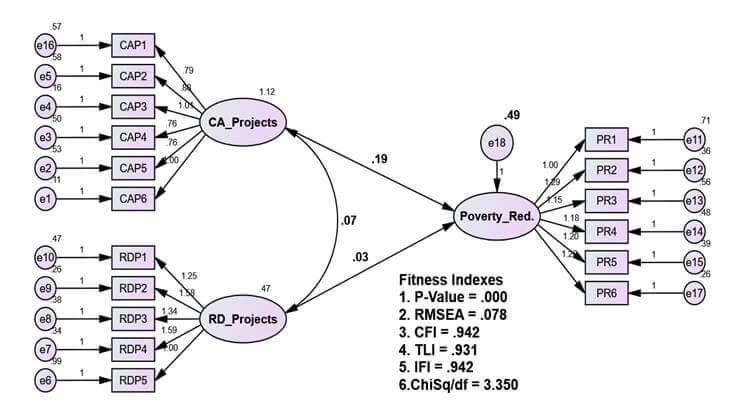
Figure 2. Structural Equation Model Fitness Indexes.
Note: P-Value = .000; RMSEA = .078; CFI = .942; TLI = .931; IFI = .942; ChiSq/df = 3.350.
The structural model fitness indices indicate an acceptable fit to the data. Good model fit was indicated by the CFI (.942), TLI (.931), and IFI (.942) exceeding the suggested threshold of ≥ 0.90 (Hair et al., 2019; Hu & Bentler, 1999). The RMSEA value suggests a reasonable approximation of the model to the population covariance structure of.078, which falls within the acceptable range of ≤ 0.08. Because chi-square is sensitive to sample size, the χ²/df ratio of 3.350 is generally accepted in social science research with large samples, even though it is slightly above the strict threshold of ≤ 3.00 (Kline, 2016). Taken as a whole, these indices indicate that the structural model adequately captures the observed data.
The hypothesis that Community-Based Agriculture Projects (CBAP) have a positive impact on poverty reduction (H1) is supported, as Table 7 illustrates. Higher participation in community-based agricultural projects is associated with significant reductions in poverty among rural communities, as indicated by a statistically significant standardised path coefficient (β = 0.189, S.E. = 0.038, CR = 4.944, p < .001). Although this effect is small, it is accurately calculated and consistent across bootstrapped confidence intervals, indicating that improvements in agricultural access, inputs, and farmer mobilisation through CBAP significantly reduce rural poverty.
Table 7. Hypotheses Testing – Direct Effects
|
Relationship |
Estimate (β) |
S.E. |
CR. |
p-value |
Decision |
|
Poverty Reduction ← CA_Projects |
.189 |
.038 |
4.944 |
*** |
Supported (H1) |
|
Poverty Reduction ← RD_Projects |
.033 |
.057 |
.570 |
.569 |
Not Supported (H2) |
*** p < .001.
On the other hand, there is no evidence to support the hypothesis that Rural Development Projects (RDP) directly lower poverty (H2). The path coefficient (β = 0.033, S.E. = 0.057, CR = 0.570, p = .569) was small and not statistically significant. This result implies that RDP does not directly reduce poverty in a statistically significant way. This result does not necessarily mean that RDP is ineffective; rather, it suggests that other enabling conditions, such as the degree of community participation, examined in the moderation analysis below, may be necessary for the benefits of rural development infrastructure and services in reducing poverty.
4.7. Moderation Analysis: The Role of Community Participation
A moderation model was estimated using standardised z-scores for all predictor, moderator, and interaction terms to test H3 (the direct effect of community participation on poverty reduction) and H4 (the moderating role of community participation on the CBARDP–poverty reduction relationship). The interaction terms were derived from the products of standardised community participation scores with standardised CBAP and RDP scores, respectively. Figure 3 shows the moderation model.
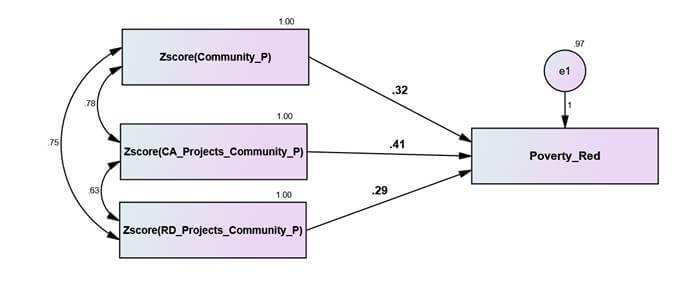
Figure 3. Moderation Model.
The moderation model accounted for 47% of the Variance in poverty reduction (R² = .47), indicating significant explanatory power. The direct effect of community participation (H3) on poverty reduction was positive and significant (β = .237), indicating that communities with higher levels of active engagement in development processes achieve more substantial poverty reduction outcomes (see Table 8). This result supports H3 and aligns with the idea that participatory governance makes development more effective.
Table 8. Moderation Path Coefficients.
|
Relationship |
Label |
Standardized Estimate (β) |
Decision |
|
Poverty Reduction ← Community Participation (H3) |
Zscore(Community_P |
.237 |
Supported (H3) |
|
Poverty Reduction ← CA_Projects × Community Participation (H4a) |
Zscore(CA_Projects_Community_P) |
.304 |
Supported (H4) |
|
Poverty Reduction ← RD_Projects × Community Participation (H4b) |
Zscore(RD_Projects_Community_P) |
.215 |
Supported (H4) |
Note: Standardized coefficients are reported. The direct effects in Table 8 include standard errors and p-values estimated using maximum likelihood estimation. Interaction effects were estimated using standardized product terms.
The interaction term between community participation and Community-Based Agriculture Projects (CBAP × CP) produced the most robust coefficient in the moderation model (β = .304), signifying that community participation substantially enhances the poverty-reduction impact of CBAP. The result suggests that CBAP is more effective at reducing poverty in communities with greater community involvement. This interaction makes agricultural interventions more effective.
The interaction term between Rural Development Projects and community participation (RDP × CP) was also positive and significant (β = .215). This finding is especially important because RDP did not have a statistically significant direct effect on reducing poverty (H2 not supported). The substantial moderation effect (β = .215) indicates that rural development initiatives yield poverty-alleviation benefits, contingent on active community participation. If people in the community do not get involved, the benefits of rural development infrastructure and services may not translate into real reductions in poverty. It seems that community participation is essential to making the RDP work. It connects development investments to real improvements in household welfare. This result completely backs up H4.
5. Discussion
5.1. Direct Effects of CBARDP on Poverty Reduction
The discovery that Community-Based Agriculture Projects (CBAP) significantly forecast poverty reduction (β = .189, p < .001) aligns with existing empirical literature illustrating the poverty-reducing efficacy of agricultural interventions in rural Nigeria and sub-Saharan Africa (Ara et al., 2024; Chand, 2025). CBARDP’s agricultural projects, such as providing better inputs, developing farmer cooperatives, and giving farmers access to extension services, directly address some of the main structural problems that rural smallholders face in making a living. CBAP helps families cross the line between subsistence and prosperity by increasing farm productivity and income. This process allows them to invest in education and healthcare and build up productive assets over time. This finding aligns with those of Badaruddin et al. (2021), who found that community-driven agricultural empowerment enhances household welfare among rural populations in developing contexts.
The insignificant direct effect of Rural Development Projects on poverty reduction (β = .033, p = .569) offers a more complex perspective. This result may seem strange at first because there is substantial evidence and policy support for investing in rural infrastructure to reduce poverty. Nonetheless, this finding is not entirely at odds with the existing literature. Forkuor and Korah (2023) observe that the conversion of rural development investments into enhanced livelihoods is frequently influenced by local governance capacity, social cohesion, and community ownership of project outcomes. In the Nigerian context, implementation gaps, limited community ownership, lack of maintenance, and low participation constrain their contribution to household welfare (Abubakar, 2022). The current observation indicates that, unless the facilitating circumstances that community participation offers, RDP benefits are not consistently delivered to vulnerable households.
5.2. Community Participation as a Direct Driver of Poverty Reduction
The direct impact of community participation on poverty reduction (=.237) contributes to a body of evidence increasingly treating participation as a development outcome rather than a device to achieve an outcome. Active communities in the planning, implementation, and monitoring of developmental activities build social capital, institutional capacity, and collective agency, which, in turn, will contribute to reducing poverty (Portes, 1998; Sabet & Khaksar, 2024). Making active also reinforces accountability structures, minimizes resource leaks, and ensures that development gains are channeled to vulnerable members of the community (Uzorka et al., 2024). All these processes will lead to increased household welfare, regardless of the nature of the projects undertaken.
These findings are echoed by Sebunya and Gichuki (2024), who found that communities with high levels of participation in rural development planning exhibit greater long-term socio-economic benefits. The implication is that participation should not be seen merely as a tool for enhancing project delivery but as an objective of development itself, one that establishes the institutional bases for permanent poverty reduction.
5.3. The Moderating Role of Community Participation
The findings of the moderation give the most theoretically significant results of this paper. H4a was confirmed by the significant poverty-reduction impact of CBAP when carried out by the community (.304). This synergistic impact is consistent with the theory of participatory development, which holds that community ownership can change the utilization and sustainability of agricultural interventions (Dushkova & Ivlieva, 2024). By involving rural households in the design and implementation of projects, agricultural technologies and inputs are more likely to be adopted, sustained, and customized to local ecological conditions, thereby maximizing productivity benefits and poverty reduction.
The most practically relevant finding is the moderation of the impact of community participation on the poverty reduction introduced by RDP (.215). The situation where RDP had no substantial direct impact but was found to be effective with moderation through community participation highlights the importance of participatory mechanisms as essential enabling factors for infrastructure-oriented development interventions. The result is in line with the general literature on community-driven development, which underscores that investments in physical infrastructure can yield socio-economic returns only when supported by robust community governance and ownership systems (Awoyemi & Oke, 2024; Mehedi Hasan et al., 2026). In the Nigerian case, this implies that the standard problem of the so-called white elephant rural infrastructure projects, constructed but never used or serviced, can be resolved by attempting to systematize investment in the capacity to engage communities.
The overall R2 of.47 in the moderation model implies that the interactions among CBAP, RDP, community participation, and their interaction terms explain 47 percent of the poverty reduction in the participating communities. This result shows a significant explanatory power of a parsimonious three-predictor framework, indicating that the CBARDP framework, coupled with authentic community involvement, is a potent tool for addressing rural poverty in Nigeria.
6. Policy Implications
The impact of CBAP is very high, confirming that community-based agricultural programming must remain a priority in Nigeria’s anti-poverty plan. Farmers’ Cooperative Policies that support the development of cooperatives and improve access to better inputs and agricultural extension services should be increased and maintained.
Secondly, the contingent character of the RDP effects on levels of community participation implies that mobilization of rural populations, capacity building and participatory governance programmes should be combined with rural infrastructure investments. Isolated infrastructure undertakings, unlinked to community ownership systems, will not yield the best results in reducing poverty.
Third, community participation should be institutionalized as a required component of CBARDP programming by government agencies and development partners, rather than being optional or symbolic. The moderation effects in this study are motivated by meaningful participation, that is, real decision-making power, open resource management, and community-level monitoring. Conversely, tokenistic involvement is unlikely to yield such synergistic benefits. Finally, because it is significant to participate as a direct participant and moderator in poverty reduction, social mobilization, civic education, and community-level governance, these activities should be reflected in the budget as development expenditures, not administrative overhead.
7. Conclusion
This paper uses the Community-Based Agriculture and Rural Development Projects (CBARDP) as the determinant of poverty reduction in Nigeria and community participation as the moderating variable. The study applied SEM to 385 rural household heads across various geopolitical areas and found that Community-Based Agriculture Projects (CBAP) had a significant positive direct impact on poverty reduction. In contrast, Rural Development Projects (RDP) did not. It was noted that community participation was a direct positive factor towards reducing poverty and, most importantly, a strong moderator that enhanced the poverty-reduction impacts of both CBAP and RDP. This may reflect that RDP initiatives often lack localized targeting, unlike CBAP, which are inherently participatory. The moderation model explained 47 percent of the variation in poverty reduction and confirmed the results’ feasibility. Our findings empirically validate the Asset-Based Community Development theory by demonstrating that participation amplifies returns on project investments. Our results challenge top-down, supply-driven rural development models and advocate for deliberate, funded participatory mechanisms as a non-negotiable component of project design.
8. Limitations and Further Studies
First, it is more difficult to determine causal correlations between the studied variables when using a cross-sectional research methodology. Future longitudinal studies are necessary to investigate how the links between Community-Based Agriculture Projects, Rural Development Projects, community engagement, and poverty reduction change over time, even if the structural model has strong explanatory power.
Second, the study concentrated on particular Nigerian geopolitical zones. Despite the fact that these zones offer insightful information about rural development interventions, care should be used when extrapolating the results to the entire nation due to variations in institutional capability, program implementation, and socioeconomic factors.
Third, future research should investigate whether various aspects of community participation, such as participation in project appraisal, planning, implementation, monitoring, and financial decision-making, produce different moderating effects on outcomes related to poverty reduction.
Finally, researchers should adopt mixed-methods and process-tracing approaches across various agro-ecological zones and sub-Saharan African contexts to better understand the institutional and behavioral mechanisms through which community participation affects the efficacy of Community-Based Agriculture and Rural Development Projects.
CRediT Author Statement: Rabiu Barau Bal: Conceptualization, Methodology, Data curation, and Writing – original draft; Welyne Jaffrey Jehom: Supervision and Writing – review & editing.
Data Availability Statement: Upon reasonable request, the corresponding author will provide access to any datasets used in this study.
Funding: This research received no external funding.
Conflicts of Interest: The authors declare no conflicts of interest.
IRB Statement: Not applicable.
Informed Consent Statement: The study was authorized by the university’s ethics council, ensuring voluntary participation, informed consent, anonymity, confidentiality, and adherence to institutional ethical standards for data collection and processing.
Acknowledgments: Not applicable.
Abbreviations
The following abbreviations are used in this manuscript:
|
CBARDP |
Community-Based Agriculture and Rural Development Projects |
|
CBAP |
Community-Based Agriculture Projects |
|
RDP |
Rural Development Projects |
|
CP |
Community Participation |
|
PR |
Poverty Reduction |
|
SEM |
Structural Equation Modelling |
|
AMOS |
Analysis of Moment Structures (IBM SPSS AMOS) |
|
SPSS |
Statistical Package for the Social Sciences |
|
CFA |
Confirmatory Factor Analysis |
|
PCA |
Principal Component Analysis |
|
KMO |
Kaiser–Meyer–Olkin Measure of Sampling Adequacy |
|
CMB |
Common Method Bias |
|
CR |
Composite Reliability (also Critical Ratio in SEM path output—see note below) |
|
AVE |
Average Variance Extracted |
|
HTMT |
Heterotrait–Monotrait Ratio of Correlations |
|
SRMR |
Standardized Root Mean Square Residual |
|
RMSEA |
Root Mean Square Error of Approximation |
|
CFI |
Comparative Fit Index |
|
TLI |
Tucker–Lewis Index |
|
IFI |
Incremental Fit Index |
|
MSV |
Maximum Shared Variance |
|
χ² |
Chi-Square Statistic |
|
Df |
Degrees of Freedom |
|
S.E. |
Standard Error |
|
Β |
Standardized Regression Coefficient (Beta Coefficient) |
|
R² |
Coefficient of Determination (Explained Variance) |
|
Sig. |
Significance Value (p-value) |
|
H1–H4 |
Research Hypotheses 1–4 |
|
z-score |
Standardized Score |
References
Abubakar, I. R. (2022). Multidimensional poverty among Nigerian households:
Sustainable development implications. Social Indicators
Research, 164, 993–1014. https://doi.org/10.1007/s11205-022-02963-0
Akoji, S. J., & Abaji, A. S. (2025). The 2022 multidimensional
poverty index of Nigeria: A
sociological review. PanAfrican Journal of
Governance and Development, 6(1), 141–168. https://www.ajol.info/index.php/pajgd/article/view/291978/274816
Anderson, J. C., & Gerbing, D. W. (1988). Structural equation modeling in practice: A review and recommended two-step approach. Psychological Bulletin, 103(3), 411–423. https://doi.org/10.1037/0033-2909.103.3.411
Ara, E., Seddiky, M. A., Basit, A., & Khanam, R. (2024). Enhancing community participation in local development projects: The Bangladesh context. European Scientific Journal, ESJ, 20(19), 84. https://doi.org/10.19044/esj.2024.v20n19p84
Ashoro, C. O., Gbigbi, T. M., & Ovharhe, O. J. (2024). Financial inclusion and impacts on agriculture in Delta State, Nigeria. GSC Advanced Research and Reviews, 18(2), 87–96. https://doi.org/10.30574/gscarr.2024.18.2.0479
Awoyemi, O., & Oke, O. (2024). The Community-Based Participatory
Communication (CBPC) framework: Strengthening grassroots
governance and social impact. Journal of Frontiers in Multidisciplinary
Research, 5(1), 40–49.
Badaruddin, B., Kariono, K., Ermansyah, E., & Sudarwati, L. (2021).
Village community empowerment through village owned enterprise based on social
capital in North Sumatera. Asia Pacific Journal of Social Work and
Development, 31(3), 163–175.
https://doi.org/10.1080/02185385.2020.1765855
Carmen, E., Fazey, I., Ross, H., Bedinger, M., Smith, F. M., Prager, K., McClymont, K., & Morrison, D. (2022). Building community resilience in a context of climate change: The role of social capital. Ambio, 51, 1371–1387. https://doi.org/10.1007/s13280-021-01678-9
Chand, R. (2025). Reimagining agriculture for growth, poverty, nutrition,
and sustainability. Agricultural Economics, 56(3), 485–492.
https://doi.org/10.1111/agec.70015
Creswell, J. W.,
& Creswell, J. D. (2017). Research design: Qualitative, quantitative,
and mixed methods approaches. Sage
publications.
Dimnwobi, S. K., Okere, K. I., Onuoha, F. C., & Ekesiobi, C. (2023).
Energy poverty, environmental degradation and agricultural productivity in
Sub-Saharan Africa. International Journal of Sustainable Development &
World Ecology, 30(4), 428–444.
https://doi.org/10.1080/13504509.2022.2158957
Dushkova, D., & Ivlieva, O. (2024). Empowering communities to act for a change: A review of the community empowerment programs towards sustainability and resilience. Sustainability, 16(19), 8700. https://doi.org/10.3390/su16198700
Eriksson, M., Santosa, A., Zetterberg, L., Kawachi, I., & Ng, N. (2021). Social capital and sustainable social development—How are changes in neighbourhood social capital associated with neighbourhood sociodemographic and socio-economic characteristics? Sustainability, 13(23), 13161. https://doi.org/10.3390/su132313161
Forkuor, D., & Korah, A. (2023). NGOs and sustainable rural
development: Experience from
Upper West Region of Ghana. Environment,
Development and Sustainability, 25, 351–374.
https://doi.org/10.1007/s10668-021-02057-w
Fornell, C., & Larcker, D. F. (1981). Evaluating structural equation
models with unobservable variables and measurement error. Journal of
Marketing Research, 18(1), 39–50. https://doi.org/10.1177/002224378101800104
Hair, J. F., Risher, J. J., Sarstedt, M., & Ringle, C. M. (2019).
When to use and how to report the results of PLS-SEM. European Business
Review, 31(1), 2–24. https://doi.org/10.1108/EBR-11-2018-0203
Henseler, J., Ringle, C. M., & Sarstedt, M. (2015). A new criterion for
assessing discriminant validity in variance-based structural equation
modeling. Journal of the Academy of Marketing Science, 43, 115–135. https://doi.org/10.1007/s11747-014-0403-8
Hu, L., & Bentler, P. M. (1999). Cutoff criteria for fit indexes in covariance structure analysis: Conventional criteria versus new alternatives. Structural Equation Modeling, 6(1), 1–55. https://doi.org/10.1080/10705519909540118
Jaiyeola, A. O., & Bayat, A. (2020). Status of living standards in
Nigeria between 2010 and 2013. Journal of Poverty, 24(1), 45–71.
https://doi.org/10.1080/10875549.2019.1692270
Kaiser, H. F. (1974). An index of factorial simplicity. Psychometrika, 39, 31–36. https://doi.org/10.1007/BF02291575
Kline, R. B. (2016). Principles and practice of structural equation modeling (4th ed.). Guilford Press.
Mehedi
Hasan, M., Shafeeul Islam, S. M., & Misra, V. (2026). Social
inclusion and community engagement in sustainable infrastructure
governance. In V. Sharma, E. Idziak, J. B. de Vasconcelos, & A. Kurucz (Eds.), Infrastructure
finance and sustainable governance (pp. 171–192). Springer. https://doi.org/10.1007/978-3-032-07224-5_9
Nunnally, J. C. (1978). Psychometric theory (2nd ed.). McGraw-Hill.
Nura, A. Y. (2022).
Spatial technology adoption amongst African Development Bank community based
agriculture and rural development
programme beneficiaries in Nigeria. Nigerian Journal of Agriculture and
Agricultural Technology, 2(1), 78–92.
https://doi.org/10.59331/njaat.v2i1.9
Podsakoff, P. M., MacKenzie, S. B., Lee, J.-Y., & Podsakoff, N. P. (2003). Common method biases in behavioral research: A critical review of
the literature and recommended remedies. Journal of Applied Psychology,
88(5), 879–903.
https://psycnet.apa.org/doi/10.1037/0021-9010.88.5.879
Portes, A. (1998). Social capital: Its origins and applications in modern sociology. Annual Review Sociology, 24, 1–24. https://doi.org/10.1146/annurev.soc.24.1.1
Preacher, K. J., & Hayes, A. F. (2008). Asymptotic and resampling strategies for assessing and comparing indirect effects in multiple mediator models. Behavior Research Methods, 40, 879–891. https://doi.org/10.3758/BRM.40.3.879
Prince, A. I., Ehi, O. E., Brown-Ofoeme, M. N., Collins, O., &
Alobele, I. A. (2023). Social policies and poverty reduction in Africa: A
Nigeria-centered perspective. IIARD Journal of Humanities and Social Policy,
9(1), 49–77.
https://www.researchgate.net/profile/Izuchukwu-Adamaagashi/publication/372947808
Sabet, N. S., & Khaksar, S. (2024). The
performance of local government, social capital and participation of villagers
in sustainable rural
development. The Social Science Journal, 61(1), 1–29. https://doi.org/10.1080/03623319.2020.1782649
Sebunya, J., & Gichuki, A. (2024). The impact of participatory planning on sustainable development. Journal of Strategic Management, 4(4), 1–9. https://pdfs.semanticscholar.org/140a/22477f1ac7e833080ce086c8233ad0cfc0b8.pdf
Uzorka, A., Akiyode, O., & Isa, S. M. (2024). Strategies for engaging
students in sustainability initiatives and fostering a sense of ownership and
responsibility towards sustainable development. Discover Sustainability,
5, 320.
https://doi.org/10.1007/s43621-024-00505-x
Vasavi, S., Anandaraja, N., Murugan, P. P., Latha, M. R.,
& Pangayar Selvi, R. (2025). Challenges and strategies of
resource poor farmers in adoption of innovative farming technologies: A
comprehensive review. Agricultural Systems, 227, 104355.
https://doi.org/10.1016/j.agsy.2025.104355
Zhou, R., & Kaplanidou, K. (2018). Building social capital from
sport event participation: An exploration of the social impacts of
participatory sport events on the community. Sport Management Review, 21(5),
491–503.
https://doi.org/10.1016/j.smr.2017.11.001