Review
Repositioning the Palm Oil Industry from Oil Extraction to Whole Palm Valorization
Hui Teng Tan 1†* , Ahmad
bin Ibrahim 2†, Jun Wei Roy Chong 1, Petar
Sabev Varbanov 3, Tomohisa
Katsuda 4 and Siew-Moi Phang 5,6*
, Ahmad
bin Ibrahim 2†, Jun Wei Roy Chong 1, Petar
Sabev Varbanov 3, Tomohisa
Katsuda 4 and Siew-Moi Phang 5,6*
1 Center of Excellence for Research, Value Innovation and Entrepreneurship, UCSI University, Kuala Lumpur 56000, Malaysia; junweiroy@gmail.com
2 Faculty
of Engineering, Technology & Built Environment, UCSI
University, Kuala Lumpur 56000, Malaysia;
ahmadibrahim@ucsiuniversity.edu.my
3 Széchenyi István University, 9026 Győr, Hungary; varbanov.petar.sabev@sze.hu
4 Department of Chemical Science and Engineering, Kobe University, Kobe 657-8501, Japan; katsuda@kobe-u.ac.jp
5 Faculty of Applied Sciences, UCSI University, Kuala Lumpur 56000, Malaysia
6 Institute of Ocean and Sciences, University of Malaya, Kuala Lumpur 50603, Malaysia
† These authors contributed equally to this work.
* Correspondence: phangsm@ucsiuniversity.edu.my (S.-M.P.); huiteng28.tan@gmail.com (H.T.T.)
|
Citation: Tan, H. T., Ibrahim, A. b., Chong, J. W.
R., Varbanov, P. S., Katsuda, T., & Phang, S.-M. (2026). Received: 24 April 2026 Revised: 26 May 2026 Accepted: 11 June 2026 Published: 14 August 2026
Copyright: © 2026 by the authors. Licensee SCC Press, Kowloon, Hong Kong S.A.R., China. This article is an open access article distributed under the terms and conditions of the Creative Commons Attribution (CC BY) license. |


Abstract:
The palm oil industry is a major contributor to agricultural production, rural livelihoods, and industrial development in many tropical economies. However, its long-term competitiveness is increasingly constrainted by stagnant yields, ageing plantations, labor shortages, slow replanting, and rising environmental expectations. Although previous studies have examined palm biomass utilization, waste management, renewable energy and low-carbon technologies, these topics are often treated as separate technical domains rather than as connected components of an integrated industry transition. This review addresses that gap by advancing a whole palm valorization perspective, defined here as the coordinated recovery, conversion, and value creation of plantation and mill-generated biomass and residual streams. For conceptual clarity, the core analytical boundary is restricted to resources generated directly within the plantation-mill system, while downstream post-consumer streams such as used cooking oil are treated only as related circular-bioeconomy boundary cases. The review compares major valorization pathways in term of technical maturity, economic feasibility, environmental benefits, logistical constraints, and implementation potential. Evidence from the literature shows that large fractions of fresh fruit bunches become residual resources. Besides, palm oil mill effluent (POME) and mill biomass offer measurable opportunities for energy recovery, emissions reduction, nutrient recycling, and downstream value creation. Nevertheless, implementation remains uneven due to feedstock logistics, capital requirements, market uncertainty, limited offtake arrangements, and fragmented governance. Overall, this review provides an integrated and evidence-based foundation for repositioning the palm oil industry beyond oil extraction toward a circular, lower-carbon, and more resource-efficient development pathway.Keywords:
palm oil industry; whole palm valorization; circular bioeconomy; biomass utilization; Sustainable Development Goals (SDGs)1. Introduction
Oil palm has emerged as one of the most productive and strategically important plantation crops in the tropical agricultural economy (Naidu & Moorthy, 2021; Putri et al., 2022). Its high oil yield, wide industrial use, and strong global demand have made palm oil a major commodity in food, oleochemicals, cosmetics, and energy-related sectors contributions have given palm oil a central place in agricultural development and industrial growth (Zhang et al., 2025).
However, the operating context of the industry is changing. Productivity growth has slowed in many areas, and sustainability expectations have become more demanding (Naidu & Moorthy, 2021). At the same time, public and scientific attention has expanded beyond oil yield alone. Greater attention is now placed on waste management, resource efficiency, emissions performance (Wahyudin & Oge, 2025), and the overall structure of palm-based production systems (Awoh et al., 2023). This shift suggests that the long-term future of the industry cannot be assessed only through the quantity of oil produced.
Previous studies have provided useful insights into oil palm biomass utilization, palm oil mill effluent (POME) management (Kurniawan et al., 2025), renewable energy generation (Wu et al., 2017), bio-based materials and low-carbon technologies (Manikandan et al., 2026). However, these themes are commonly reviewed as separate technological or environmental topics. This creates an important research gap: there is still limited synthesis explaining how plantation residues, mill by-products, liquid effluent, downstream product development, and carbon-linked opportunities interact as part of a single plantation-mill resource system. As a result, the existing literature has not sufficiently clarified how these separated pathways can collectively reposition the palm oil industry from a narrow oil-extraction model toward whole palm valorization.
This review addresses that gap by adopting whole palm valorization as the central analytical lens. The contribution of this review is not simply to list additional uses for oil palm residues, but to integrate scattered evidence into a sector-level framework for understanding the palm oil industry as a multi-output bioresource system. The novelty of the review lies in three related contributions: first, it defines the plantation-mill boundary of whole palm valorization and distinguishes production-based residual resources from broader downstream circular-economy streams such as used cooking oil; second, it compares major valorization pathways according to maturity, feasibility, environmental benefit, logistics constraints, and implementation potential; and third, it links technical pathways with governance, commercialization, carbon-value creation, and stakeholder participations. By doing so, this review shows how field residues, mill residues, POME, energy recovery, nutrient recycling, carbon reduction, and downstream product development can be analyzed together rather than as isolated themes. The main objective is therefore to examine how whole palm valorization can advance the palm oil industry beyond oil extraction while supporting diversified income, circular bioeconomy practices, and lower-emission production. This objective aligns with the UN SDGs, particularly SDG1 (No poverty), SDG2 (Zero hunger) and SDG 13 (Climate Action), particularly through resource efficiency, waste reduction, greenhouse gas mitigation, and circular value creation.
Literature Search and Selection Approach
This review was developed as a narrative and integrative literature review. Relevant literature was identified through Scopus, Web of Science, ScienceDirect, SpringerLink, and Google Scholar using combinations of search terms including “oil palm,” “palm oil industry,” “oil palm biomass,” “empty fruit bunch,” “oil palm frond,” “oil palm trunk,” “palm kernel shell,” “mesocarp fibre,” “palm oil mill effluent,” “biogas,” “biomass valorization,” “biorefinery,” “circular bioeconomy,” “carbon credit,” “sustainable palm oil,” and “smallholder.” The literature surveyed covered publications from 2008 to 2026, with stronger emphasis on studies published from 2021 onwards because of their relevance to recent circular bioeconomy, low-carbon, and governance discussions. Sources were included when they addressed plantation residues, milling by-products, POME treatment, valorization technologies, techno-economic or environmental performance, policy, or stakeholder implementation in the oil palm sector. Sources were excluded when they focused on unrelated edible-oil markets, non-oil-palm biomass, downstream post-consumer wastes without a clear palm-based link, or topics outside the plantation-mill boundary defined in this review. As the reviewed studies used heterogenous methods, units, and system boundaries, the evidence was synthesized thematically and comparatively rather than through a formal meta-analysis. This plantation-mill boundary was applied consistently to prevent production-based whole palm valorization from being conflated with downstream post-consumer circular-economy stream.
2. Rationale for Repositioning the Palm Oil Industry Beyond Oil Extraction
For a long time, the palm oil industry has been organized through the extraction and sale of crude palm oil and palm kernel oil (Rajakal et al., 2024). This oil-centred structure generated substantial economic returns because these two products remain the main commercial outputs of the crop (Rajakal et al., 2024). However, the conditions that supported this model are changing. Land expansion is increasingly constrained, labor availability is uncertain, and markets are placing stronger emphasis on sustainability, traceability, and resource efficiency (Cheah et al., 2023; Murphy et al., 2021). Under these conditions, reliance on oil alone is unlikely to provide a sufficient foundation for long-term competitiveness.
The need to reposition the industry reflects a broader change in how value is understood in agricultural and bio-based sectors. In the past, value was measured mainly through primary commodity output. Today, value is also linked to resource efficiency, by-product valorization, emissions performance, downstream diversification, and circular production (Figure 1). This change is particularly relevant to oil palm because the crop generates large quantities of biomass and residual resources in addition to oil. Therefore, broadening value assessment should be understood as expanding the industry’s development pathway rather than replacing the central role of crude palm oil and palm kernel oil (Cheah et al., 2023; Kurniawan et al., 2025).
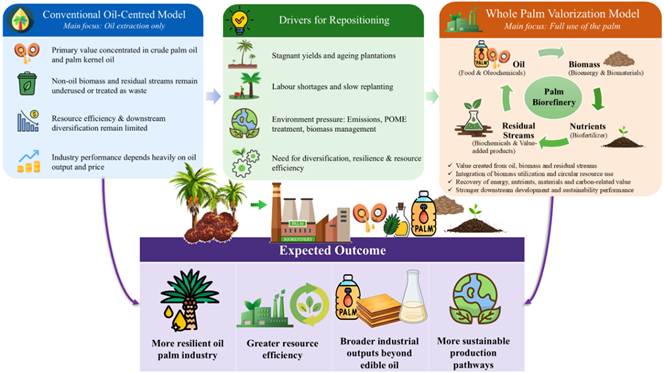
Figure 1. Conceptual Framework for Repositioning the Oil Palm Industry from Oil Extraction to Whole Palm Valorization.
Collectively, this expanded understanding of value provides the basis for repositioning the sector. Repositioning the industry beyond oil extraction does not reduce the importance of oil; rather, it shows why oil output must be interpreted alongside the wider resource base generated by the same production system. This review does not attempt a complete sector-wide techno-economic quantification as a remaining research need. Instead, it synthesizes available quantitative evidence where comparable data are reported in the literature and identifies more complete pathway-level quantification as a remaining research need. The key issue is that conventional performance indicators based mainly on crude palm oil and palm kernel oil do not fully capture the wider value, cost, and risk associated with the plantation-mill resource base (W. Ng et al., 2025). A broader resource perspective can therefore help the industry reduce dependence on a single dominant product, improve resource efficiency, and identify additional value from residues that are already generated within the system.
This repositioning is important for both industrial competitiveness and sustainability performance. Global manufacturing, energy, and agricultural systems are moving toward renewable feedstocks, circular production, and lower-emission pathways. If the palm oil industry shifts from a narrow oil-extraction model toward a wider resource-based model, it can better respond to these transitions while retaining its strategic role in tropical economies (Cheah et al., 2023; Murphy et al., 2021).
Structural Constraints in the Conventional Oil-Centered Palm Oil Model
The conventional oil-centered palm oil model faces several structural constraints (Table 1). One major constraint is stagnant yield performance. In Malaysia, the national crude palm oil yield was reported at about 3.28 tonnes ha−1 in 2024. Industry discussions have suggested that a more realistic medium-term target is approximately 4.5 tonnes ha-1 rather than the often cited 6–7 tonnes ha-1 target (Asia Palm Oil Magazine, 2026). This gap shows that yield improvement remains central to competitiveness. Historical production patterns also indicate that output growth has not always kept pace with area expansion. For example, Malaysian oil palm planted area increased from 4.85 million ha in 2010 to 5.74 million ha in 2021, while crude palm oil production rose from 16.99 million tonnes to 18.12 million tones over the same period (Ahmad et al., 2024). These figures suggest that the yield challenge is not solely technological, but also reflects replanting delays, plantation age structure, labor availability, management capacity, and environmental variability (Murphy et al., 2021).
Table 1. Major structural constraints that limit the performance and long-term resilience of the conventional oil-centered palm oil model.
|
Constraint |
Description |
Implication for the industry |
References |
|
Stagnant yields |
CPO yield around 3.28 tonnes ha−1 (2024), 3.50 tonnes ha−1 (2025); still below the proposed 4.5 tonnes ha−1 (2035) |
Reduces productivity and competitiveness |
(Asia Palm Oil Magazine, 2026; Malaysian Palm Oil Board, 2026) |
|
Ageing plantations |
Older palms reduce output; delayed replanting extends low-yield cycles |
Weakens output and increases replanting urgency |
|
|
Slow replanting |
High replanting cost and temporary income loss |
Prolongs low productivity cycles |
|
|
Labor dependence |
Harvesting and field management remain labor-intensive |
Increases vulnerability to labor shortages and rising costs |
|
|
Environmental pressure |
Emissions, POME treatment, biomass management, and resource efficiency concerns |
Increases regulatory, market, reputational, and pollution-management pressure |
Note: CPO refer to Crude Palm Oil; tonnes ha−1 refer to tonnes per hectare.
Aging plantations create another constraint. Older palms produce less and are more difficult to manage and harvest (Khor et al., 2023). Replanting can solve this problem, but many growers delay replanting because it requires high investment and leads to temporary income loss (J. Ng, 2025). This issue is more serious for smallholders because they have fewer financial resources and less flexibility during the replanting period (Touch et al., 2024).
Labor dependence remains a serious limitation. The industry relies heavily on manual work for harvesting, pruning, collection, and field maintenance. Labor shortages, rising labor costs, and changes in labor policy create major operational concerns (Zapata-Hernández et al., 2024). Mechanization is a possible solution, but its adoption is uneven and is often limited by terrain, estate design, and access to capital (Haryati et al., 2022).
Environmental pressure creates another constraint. Current concerns include emissions, waste generation, effluent management, and overall resource efficiency. These concerns influence public perception, regulatory attention, and market expectations (Naidu & Moorthy, 2021). The conventional focus on oil extraction alone does not reflect the full range of issues shaping the industry.
Taken together, these constraints show that the traditional oil-centered model is under increasing pressure. The issue is not only that oil production faces productivity, labor, and environmental challenges. The deeper issue is that the current production model captures only a fraction of the crop’s total value, while many co-products and residual streams remain underutilized.
3. Whole Palm Valorization: Concept, Scope and Analytical Boundary
Building on the repositioning rationale above, whole palm valorization is defined in this review as an integrated development approach that seeks to maximize useful value from the oil palm crop and its production residues through coordinated recovery, conversion, reuse, and upgrading of plantation and milling streams. Importantly, the concept is used here as an analytical boundary and strategic framework, not simply as another term for biomass utilization. It interprets the oil palm production system as a multi-output bioresource platform in which crude palm oil, palm kernel oil, lignocellulosic biomass, solid mill residues, liquid effluent, nutrients, energy, and carbon-related value are considered together. This definition makes whole palm valorization an analytical boundary and strategic framework, rather than a synonym for general biomass utilization (Rendón-Camargo et al., 2026). For analytical consistency, this review applies three boundary criteria. First, the resource must be generated directly during oil palm cultivation, replanting, harvesting, or crude palm oil milling. Second, the resource must be recoverable or manageable within the plantation-mill production chain before the consumer-use stage. Third, its valorization must contribute to resource efficiency, downstream product development, nutrient recovery, renewable energy generation, emissions reduction, or carbon-linked value creation. These criteria define the scope of the review and prevent the concept from becoming too broad.
The core analytical boundary therefore includes field-generated resources such as fronds and trunks, mill generated solid residues such as empty fruit bunches (EFB), mesocarp fibre (MF), palm kernel shells, and other fibre-rich fractions; liquid residues such as POME; and treatment-derived streams such as sludge, digestate, recovered nutrients, biogas, heat, electricity, biochar, biomaterials, or carbon products derived from these plantation and mill resources. These streams are included because plantation managers, mill operators, logistics providers, and downstream processors can directly influence their recovery, handling, conversion, and value creation (Nasir et al., 2018; Wu et al., 2017).
By contrast, downstream and post-consumer waste streams, including used cooking oil, are excluded from the core analytical boundary of whole palm valorization in this review. Although these streams are relevant to the wider palm-based circular bioeconomy because they extend the useful life of palm-derived materials after consumption, they are not generated directly by plantation or milling operations. Used cooking oil is therefore treated as a boundary case that helps distinguish whole palm valorization from broader circular economy opportunities, rather than as a core valorization pathway (Wahyudin & Oge, 2025).
The relationship between whole palm valorization and related concepts is therefore complementary but not interchangeable. Biomass utilization refers to the use of individual feedstocks such as empty fruit bunches, fronds, trunks, shells, fibres, or POME. Biorefinery development refers to the conversion platforms that transform these feedstocks into fuels, chemicals, materials, energy, or other products. Circular bioeconomy provides the wider sustainability logic of keeping renewable biological resources, nutrients, and energy in productive use for as long as possible. Carbon value creation focuses on climate-linked value, including methane capture, emissions avoidance, biochar, carbon products, or carbon finance. Whole palm valorization integrates these narrower concepts into a sector-level framework that asks how the plantation-mill resource base can be organized, compared, commercialized, and governed as a coherent development pathway (Rajakal et al., 2024).
In this way, whole palm valorization differs from the conventional oil-centred model. In the oil-centred model, value is concentrated mainly in crude palm oil and palm kernel oil, while other outputs are treated as secondary residues. In the whole palm valorization model, oil remains important, but the associated biomass, effluent, nutrients, energy potential, and carbon-linked opportunities are also treated as strategic resources. This shift changes how industry performance is assessed because it connects productivity, waste reduction, downstream diversification, emissions performance, and governance within one internally consistent framework.
4. Valorization Pathways of Oil Palm Biomass and Residual Resources
Within the defined plantation-mill boundary, the oil palm production system generates a wide range of biomass and residual resources from both plantation and milling activities. These resources include field residues, solid processing by-products, and liquid effluent streams (Terry et al., 2021). Their scale is substantial (Kurniawan et al., 2025). In a typical palm oil mill system, only about one-fifth of processed fresh fruit bunches become crude palm oil, while the remaining fraction appears as solid residues and liquid effluent; one estimate reports that crude palm oil represents about 21% of fresh fruit bunches, with the remaining 79% becoming biomass residues and waste stream (Chew et al., 2024). Another industry-based study reported that almost 70% of fresh fruit bunches can be converted into empty fruit bunches, mesocarp fiber, palm kernel shell, and liquid effluent after milling (Ahmad et al., 2024). These quantities show why whole palm valorization should be treated as an industrial resource strategy rather than only a waste-management response. A whole palm valorization approach views these materials differently. It treats oil palm biomass and residual resources as renewable feedstocks that can support new value chains in energy, materials, agriculture, and environmental management (Zhang et al., 2025). The analytical significance of this shift lies not only in waste reduction, but also in creating additional economic outputs from the same biological resource base (Umana et al., 2020). This framing enables different resource streams and conversion pathways to be compared according to their maturity, feasibility, environmental contribution, and implementation requirements, rather than being described only as isolated technical options.
The potential of each valorization pathway
depends on the type, quality, accessibility, and conversion suitability of the
resource stream. This potential can also be assessed using quantitative
indicators, such as resource availability, moisture content, net heating value,
COD reduction, methane yield, electricity output, greenhouse gas abatement,
investment cost, payback period, and delivered feedstock cost (Plesu Popescu et al., 2021). Therefore, the pathways
should not be evaluated only by technical possibilities. A comparative
assessment is needed to distinguish near-term, technically mature options, such
as mill energy recovery and POME biogas, from higher-value but more demanding
options, such as biochemical conversion, engineered biomaterials, and carbon
products (Nasir et al., 2018; Tang et al.,
2025).
4.1. Major Oil Palm Biomass and Residual Streams
Oil palm production generates biomass throughout the life cycle of the crop (Table 2). In the plantation phase, major biomass streams include fronds and trunks. Fronds are produced regularly during harvesting and pruning, while trunks become available in large volumes during replanting (Pulingam et al., 2022; Wahab et al., 2022). In the milling phase, the main solid residual streams include empty fruit bunches, mesocarp fiber, and palm kernel shells. Mills also generate liquid residues, particularly POME, during oil extraction and clarification (Sulin et al., 2025).
Table 2. Major oil palm biomass and residual streams, their main sources, general characteristics, and broad valorization potential.
|
Biomass/ residual stream |
Main source |
General characteristics |
Common |
Valorization |
References |
|
Fronds |
Plantation pruning and harvesting |
Lignocellulosic, bulky, low loose bulk density (~100–150 kg/m3), low NHV (~14–16 MJ/kg) |
Mulching, field return |
Compost, fiber products, bioenergy |
|
|
Trunks |
Replanting operations |
Woody biomass, large volume, moderate loose density (~200–300 kg/m3), NHV (~15–17 MJ/kg) |
Field disposal, limited reuse |
Panels, fibre materials, bio-based products |
|
|
Empty fruit bunches |
Milling |
Moist, fibrous and bulky, high moisture (> 60%); as-received NHV (~8–10 MJ/kg) |
Mulching, composting |
Biochar, biomaterials, bioenergy, soil amendments |
|
|
Mesocarp fiber |
Milling |
Fibrous, combustible, relatively low moisture after milling;dry-basis NHV (~17–19 MJ/kg) |
Boiler fuel |
Energy, carbon materials, industrial fibre use |
|
|
Palm kernel shells |
Milling |
Dense, carbon-rich solid; loose bulk density (~600–700 kg/m3), dry-basis NHV (~18–20 MJ/kg) |
Fuel use |
Activated carbon, solid fuel, carbon products |
|
|
Palm oil mill effluent (POME) |
Milling |
Liquid organic effluent, with high COD/BOD, negligible NHV in raw form |
Wastewater treatment |
Biogas, biomethane, emissions reduction |
(Akuma et al., 2026; Kurniawan et al., 2025; Manikandan et al., 2026; Yong et al., 2023) |
Note: NHV: net heating value; COD: chemical oxygen demand; BOD: biochemical oxygen demand. Values are indicative ranges compiled from the cited sources. Bulk density values refer to approximate loose/as-received biomass density unless otherwise stated. NHV values for fronds, trunks, mesocarp fibre and palm kernel shells refer mainly to dry or air-dried solid biomass, whereas the EFB range reflects high-moisture as-received material; moisture correction is therefore needed before engineering design or economic calculation.
Each resource stream has distinct characteristics. Fronds, trunks, and empty fruit bunches are mainly lignocellulosic in nature, and they can support several forms of biological, thermochemical, or material conversion (Nabila et al., 2023; Tan et al., 2022). Mesocarp fiber and palm kernel shells are often easier to handle in energy systems because of their combustion properties (Mohd Faizal et al., 2018). Palm oil mill effluent differs from these solid streams because it is a liquid organic waste with high treatment demand and strong energy recovery potential (Akuma et al., 2026).
It should be emphasized that these streams should not be viewed solely as residues to be disposed of. They represent a diverse portfolio of renewable feedstocks (Terry et al., 2021). Some streams can support direct agricultural reuse, such as mulching or composting. Other streams can be converted into bioenergy, biomaterials, carbon-rich products, or industrial intermediates. Their fuller utilization can reduce waste, improve resource efficiency, and create additional value within the palm oil supply chain (Nasir et al., 2018; Sulin et al., 2025).
However, not all streams can be valorized in the same way. Moisture content, bulk and energy density, cost, emissions of logistics, and seasonal availability all affect economic feasibility. Therefore, successful utilization depends not only on technical suitability but also on logistics, scale, and market demand (Nabila et al., 2023; Obi, 2015). Sometimes, pretreatment is important to maximize the recovery of the components in the biomass (Chia et al., 2024; D. W. K. Chin et al., 2021). This means that biomass valorization should be approached as both a technological and a feasible challenge.
4.2. Comparative Evaluation of Major Valorization Pathways
A comparative view shows that whole palm valorization is not a single pathway but a portfolio of options with different readiness levels and implementation requirements. Pathways that are already embedded in mill operations, such as mesocarp fibre and palm kernel shell combustion, generally have higher technical maturity and lower implementation risk, but their value addition is often limited. In contrast, pathways such as biorefineries, engineered biomaterials, and advanced carbon products may offer higher downstream value, but require stronger feedstock quality control, preprocessing, investment, product standards, and market offtake arrangements. Based on recent literature on palm oil circular bioeconomy, biomass utilization, POME recovery, thermochemical conversion, biocomposites, biorefinery development, and carbon-based products, Table 3 compares the major whole palm valorization pathways according to technical maturity, economic feasibility, environmental benefit, logistical constraint, and implementation potential.
Table 3. Comparative assessment of major whole palm valorization pathways.
|
Pathway |
Main |
Technical maturity |
Economic |
Environmental benefit |
Logistical constraint and implementation potential |
References |
|
Field |
Fronds, trunks, EFB, POME, sludge/digestate |
High for field return and composting |
Low to moderate direct revenue; useful for nutrient recycling and soil management |
Reduces disposal pressure and supports nutrient cycling, but emissions depend on management practice |
Low transport need when used on site; high near-term potential, especially for smallholders and estates |
(Ahmad et al., 2024; Cheah et al., 2023; Rendón-Camargo et al., 2026; Sulin et al., 2025) |
|
Mill heat and power recovery |
MF and PKS |
High; already widely used in boilers |
High when used internally because it offsets mill energy demand; MF use for in-house electricity generation was reported at 92.4% in Peninsular Malaysia mills |
Offsets fossil energy and improves mill energy self-sufficiency |
Limited by boiler efficiency, competing PKS markets, and relatively low product diversification; high implementation potential |
(Ahmad et al., 2024; Cheah et al., 2023; Rendón-Camargo et al., 2026) |
|
POME anaerobic digestion, biogas and biomethane |
Palm oil mill effluent |
Medium to high; commercial systems are available but adoption remains uneven |
Moderate; viability depends on POME volume, energy offtake, tariff structure, capital expenditure, and operational stability |
High climate benefit; COD reduction of up to 91% biogas production reaching 325,292 m3 month-1, and greenhouse gas (GHG) reduction of 1,131 tCO2-eq month-1 |
Needs covered lagoons or digesters, gas handling, grid/offtake access, and skilled operation; high potential for medium and large mills |
(Akuma et al., 2026; Manikandan et al., 2026; Sulin et al., 2025) |
|
Biochar, solid fuel and thermochemical products |
EFB, PKS, fronds, trunks |
Medium; pyrolysis, torrefaction, and carbonization are technically established but project economics vary |
Moderate; stronger for drier and denser feedstocks such as PKS than for wet EFB unless preprocessing is available |
Can improve carbon retention, soil amendment potential, and fossil fuel substitution |
Moisture, bulk density, drying cost, and transport distance are major constraints; medium implementation potential through regional biomass hubs |
(Nabila et al., 2023; Rendón-Camargo et al., 2026; Yulistiani et al., 2025) |
Table 3. Cont.
|
Pathway |
Main |
Technical maturity |
Economic |
Environmental benefit |
Logistical constraint and implementation potential |
References |
|
Biomaterials, panels, fibres and biocomposites |
Trunks, fronds, EFB fibre, mesocarp fibre |
Medium; product development is advancing but quality control is critical |
Moderate to high where stable offtake and product standards exist |
May substitute wood or fossil-based materials and increase downstream value |
Requires segregation, drying, fibre processing, standards, and product certification; medium potential through industrial clusters |
(Ahmad et al., 2024; Aisyah et al., 2024; Rendón-Camargo et al., 2026) |
|
Biochemical and integrated biorefinery products |
EFB, trunks, fronds, POME-derived organics |
Low to medium; promising but less commercially mature than energy recovery |
Potentially high value, but high capital expenditure and pretreatment costs increase operational and financial risk |
Can create higher value chemicals, sugars, fuels, and circular intermediates |
Require stable feedstock supply, pretreatment process integration, and long-term offtake; longer-term potential |
(Cheah et al., 2023; Jailani et al., 2025; Rendón-Camargo et al., 2026) |
|
Activated carbon and advanced carbon products |
PKS. EFB biochar, carbon-rich residues |
Medium to high for activated carbon; lower for advanced materials |
Potentially high for PKS due to density and carbon content |
Supports higher-value carbon utilization and may reduce low-grade combustion dependence |
Requires controlled carbonization/activation, product quality assurance, and market access; medium to high potential for suitable feedstocks |
Note: MF: mesocarp fibre; PKS: palm kernel shells ; EFB: empty fruit bunches; POME: palm oil mill effluent; COD: chemical oxygen demand. This comparison indicates that implementation should be sequenced rather than treated as a uniform transition. Mature, low-risk options can be expanded first to improve resource efficiency, while higher-value biorefinery and biomaterial pathways should be developed through demonstration plants, feedstock aggregation, product standards and market-building measures. In this sense, whole palm valorization is most practical when it combines immediate resource recovery with longer-term industrial upgrading.
4.3. Palm Oil Mill Effluent (POME), Energy Recovery, and Emissions Reduction
Palm oil mill effluent (POME) is one of the most important residual streams in the palm oil industry because it is generated continuously during sterilization, clarification, and hydrocyclone processes (Akuma et al., 2026). Quantitatively, about 700 kg of POME can be generated for every tonne of fresh fruit bunches processed, and Malaysia has been estimated to generate approximately 50–75 million m3 of POME annually. This stream contains high organic matter, COD, and BOD, making untreated or poorly controlled POME treatment a major source of pollution and methane emissions (Manikandan et al., 2026; Mohammad et al., 2021).
At the same time, POME offers one of the clearest opportunities for measurable resource recovery. When POME is integrated into an anaerobic digestion, biogas recovery, or biomethane upgrading system, it becomes a feedstock for a mill-based resource-recovery pathway rather than a biorefinery by itself. Anaerobic digestion can convert its organic content into biogas for heat and electricity generation (Sodri & Septriana, 2022). A techno-economic and environmental assessment of a POME-based biogas plant reported COD reduction of up to 91% biogas production of 325,292 m3 month−1 with 55% methane content, and electricity generation of 696,163 kWh month−1 (Sodri & Septriana, 2022). These figures illustrate why POME biogas should be considered a relatively mature and high-impact pathway within whole palm valorization (Akuma et al., 2026). In this way, POME can be viewed as a strategic resource-recovery stream within whole palm valorization because it connects waste treatment, renewable energy generation, and emissions reduction within a single system.
This pathway shows how environmental management can be linked directly to economic and carbon value creation. In the same case study, the biogas plant reduced greenhouse gas emissions by 1,131 tonnes tCO2-eq month−1, although profitability remained sensitive to plant loading, electricity sales, and operational efficiency, with an internal rate of return of 6.75% and a payback period of 10.8 years under the observed operating conditions (Sodri & Septriana, 2022). This suggests that POME biogas has strong environmental value, but its economic performance depends on sufficient feedstock volume, reliable power offtake, and supportive tariff or carbon-credit mechanisms (Naidu & Moorthy, 2021).
Even so, implementation remains uneven across the industry. Some mills lack the capital, infrastructure, or technical capacity needed for digestion, gas cleaning, power generation, or biomethane upgrading. Other mills may not obtain sufficient return if POME volume is low, grid access is weak, or energy purchase agreements are uncertain (Akuma et al., 2026; Manikandan et al., 2026).
4.4. Circular Resource Use and Carbon-linked Value Creation
Circular resource use and carbon-linked value creation provide an important foundation for whole palm valorization. A circular approach seeks to reduce waste by keeping materials, nutrients, and energy in productive use for as long as possible (Sulin et al., 2025). In the oil palm industry, this means that biomass and residual streams should be managed as reusable resources rather than discarded outputs. When combined with methane capture, renewable energy generation, soil amendment, and material substitution, circular resource use can also support lower-emission production and climate-linked value creation. This approach improves system efficiency and supports more sustainable production practices (Siagian et al., 2024).
Several circular pathways are possible in palm-based production systems. Organic residues can return to the field as mulch, compost, or soil amendment. Solid biomass can be converted into energy, carbon materials, or industrial feedstocks. Liquid and solid streams can also be linked through integrated treatment systems that recover energy and nutrients (Cheah et al., 2023). These pathways help close material loops and reduce losses across the plantation-mill system (Cheah et al., 2023; Lau et al., 2024).
Circular resource use also changes how value is understood in the industry. In a conventional oil-centered model, value is measured mainly through oil yield and extraction efficiency. In a circular model, value also includes nutrient recovery, waste reduction, energy reuse, and the production of secondary outputs (Siagian et al., 2024; Sulin et al., 2025). This broader understanding is important because it reflects the full resource base of the crop and not only its primary oil fraction.
However, circularity requires more than technical potential. A circular system depends on coordination between estates, mills, processors, and end users. It also depends on practical systems for collection, segregation, processing, and market delivery. Without these connections, many circular pathways remain fragmented or limited to small-scale practice (Kaniapan et al., 2021). Whole palm valorization, therefore, benefits from circular thinking because circular systems create the conditions under which dispersed residues can become stable and productive value chains. Carbon management has become an important part of the global discussion on agricultural and industrial sustainability. The oil palm industry is increasingly affected by this shift because emissions performance now influences market access, investor confidence, and public credibility (Ali et al., 2025; Murphy et al., 2021). As a result, carbon is no longer only an environmental issue for the sector. Carbon is also becoming an economic and strategic issue (Murphy et al., 2021).
The oil palm industry has several pathways for climate-linked value creation. Some pathways reduce emissions directly, while others improve the efficiency of biomass and residual resource use. Methane capture from POME is one of the clearest examples because it can lower greenhouse gas emissions while also generating useful energy (Manikandan et al., 2026). Quantitative evidence from POME biogas projects shows that emissions reductions can be substantial at the mill scale, with one case reporting a reduction of 1,131 tonnes CO2-eq month−1 from POME treatment (Sodri & Septriana, 2022). Improved handling of biomass and organic residues can also reduce unmanaged decomposition and support lower-emission production systems, while enabling the co-production of value-added products (Rendón-Camargo et al., 2026). In addition, the use of oil palm biomass as a renewable feedstock may help reduce dependence on fossil-based materials and energy in selected applications (Gourich et al., 2023).
These opportunities matter because they connect environmental improvement with industrial upgrading. When mills recover methane, when biomass is used more efficiently, or when residues are converted into higher-value products, the industry can improve both sustainability performance and economic output (Siagian et al., 2024). This connection is especially important in a sector that is often judged through both productivity and environmental accountability. Therefore, carbon-related value creation fits naturally within the broader logic of whole palm valorization.
Carbon markets may also offer new possibilities for the oil palm industry. In principle, verified emission reductions from methane capture, renewable energy use, or improved waste management could generate carbon-related revenue. This prospect is attractive because it may help support investments that would otherwise be difficult to justify through conventional returns alone. In this sense, carbon finance may become a useful complement to biomass valorization and low-carbon upgrading.
However, carbon opportunities also require caution. Carbon projects are technically demanding and institutionally sensitive as they involve complex regulatory requirements, coordination across multiple institutions, and the need to ensure stakeholder acceptance. They require clear baselines, credible methodologies, reliable monitoring, and transparent reporting. Weak project design can lead to poor-quality credits, limited economic return, or reputational risk. These risks are especially important in industries where sustainability claims are already closely scrutinized (Delacote et al., 2024; Noviyanto et al., 2026). Therefore, carbon-linked value creation should be approached through strong technical standards and careful governance rather than through overly simplified market expectations (K. N. R. Kumar, 2025).
The sector also needs to consider who benefits from these opportunities. Larger estates and integrated mill operators may be better positioned to adopt carbon-related projects because they have better access to infrastructure, finance, and technical support. Smaller mills and smallholders may find it harder to participate unless aggregation mechanisms or shared systems are available (Rajakal et al., 2024). This issue matters because uneven participation can limit the wider development of climate-linked initiatives.
Overall, carbon opportunities should be understood as part of the broader whole palm valorization transition rather than as a separate agenda. They are not separate from questions of biomass use, waste management, and industrial modernization. Instead, they are closely linked to how the industry manages biomass, effluent, energy recovery, waste reduction, and product diversification. If developed with credible measurement, reporting, verification, and inclusive governance, these opportunities can strengthen the role of whole palm valorization in building a more resilient, resource-efficient, and lower-emission palm oil industry.
5. Implementation Challenges and Governance Priorities
Despite its strong potential, whole palm valorization has not progressed evenly across the palm oil industry. Many resource streams are available in large volumes, but their conversion into stable value chains remains limited. This gap shows that technical potential alone is not enough. Implementation also depends on logistics, commercialization pathways, policy coordination, financing, standards, and inclusive participation (Akuma et al., 2026).
5.1. Logistical and Commercial Barriers
Logistics remains one of the most important barriers. Many biomass streams are bulky, wet, scattered, and costly to transport (Pulingam et al., 2022). Empty fruit bunches, fronds, and trunks often require preprocessing before they can be moved efficiently into downstream applications (Saleh et al., 2025). This requirement increases handling costs and reduces economic feasibility, especially when collection points and processing facilities are far apart. As a result, some resources remain underused even when promising technologies are available.
Concrete resource characteristics illustrate this barrier. Empty fruit bunches are typically produced as a moist and bulky stream with moisture above 60% and as-received NHV of about 8–10 MJ kg−1, whereas palm kernel shells have a higher loose density of about 600–700 kg m3 and NHV of about 18–20 MJ kg−1 (Mohd Faizal et al., 2018; Nabila et al., 2023). As a result, palm kernel shells can enter fuel and carbon-product markets more easily, while empty fruit bunches often require drying, shredding, densification, or on-site use before they become economically attractive for longer-distance transport. This example shows that logistics barriers are linked to measurable feedstock properties, not only to general supply-chain weakness.
Commercialization also remains weak in many parts of the sector. Research and pilot projects have demonstrated many possible uses for oil palm biomass and residual streams (Nabila et al., 2023; Rendón-Camargo et al., 2026). However, large-scale adoption has been much slower. Investors often face uncertainty about feedstock consistency, product quality, technology performance, and long-term market demand. This uncertainty creates a gap between laboratory success and commercial deployment. In many cases, the industry still lacks stable offtake mechanisms, such as long-term purchase agreements, needed to support wider investment (Akuma et al., 2026; Mohamad Zaki et al., 2025).
The POME biogas pathway also illustrates the commercialization challenge. Although one case generated 696,163 kWh month−1 and reduced emissions by 1,131 tonnes CO2-eq month−1, the same study reported an internal rate of return of 6.75% and a payback period of 10.8 years under observed conditions (Sodri & Septriana, 2022). This suggests that even technically proven pathways may require supportive tariffs, energy-purchase agreements, carbon-credit access, or concessional finance to become widely attractive.
Policy fragmentation creates another barrier. Different parts of the oil palm value chain often fall under different regulatory and policy domains (Putri et al., 2022). Agriculture, biomass utilization, renewable energy, waste management, and industrial development are not always governed through a single coordinated framework. This separation can weaken implementation because one part of the system may move forward while another remains underdeveloped. A project may be technically ready, but supporting regulations, market incentives, or infrastructure planning may still lag behind.
The transition also faces uneven participation across stakeholders. Larger estates, mills, and integrated companies usually have better access to capital, infrastructure, and technical support. Smallholders and smaller mills may not have the same capacity to adopt new technologies or enter emerging value chains (Iyai et al., 2024). This imbalance matters because smallholders contribute significantly to oil palm production in many regions (Ogahara et al., 2022). If they remain excluded, the broader benefits of the whole palm valorization will be limited.
Market development remains another challenge. Some biomass-based products still face weak demand, uncertain pricing, or strong competition from conventional alternatives (Cheah et al., 2023). Buyers may hesitate when supply is inconsistent or when quality standards are not clearly established. These problems can discourage investment even when resource availability is high (Murphy et al., 2021). Therefore, successful valorization depends not only on production capacity, but also on market confidence and product acceptance.
Taken together, these barriers show that whole palm valorization is not simply a matter of converting residues into products. The transition requires coordinated systems that can support feedstock supply, technology adoption, commercial investment, and broad participation. Without these supporting conditions, many valorization pathways will remain technically attractive but operationally limited (Kaniapan et al., 2021).
5.2. Policy and Governance Priorities
The shift from oil extraction to whole palm valorization requires more than technological innovation. It also depends on clear policy direction and effective governance (Zachlod et al., 2025). These elements are essential because the oil palm industry operates across agriculture, milling, energy, waste management, manufacturing, trade, and climate-related policy domains (Ayompe et al., 2025). If these areas remain poorly connected, the transition will move slowly and unevenly.
The first priority is to strengthen the productive base of the industry (Table 4). Whole palm valorization does not replace the need for strong plantation performance. Replanting, better planting materials, improved agronomic management, and suitable mechanization remain important because they shape the long-term quality and stability of biomass and residual resources. A productive upstream sector creates a stronger foundation for downstream valorization (Murphy et al., 2021; Siagian et al., 2024).
Table 4. Implemented-oriented policy and governance priorities for repositioning the palm oil industry from oil extraction to whole palm valorization.
|
Priority area |
Practical implementation and stakeholder roles |
Expected outcome |
References |
|
Upstream productivity and replanting |
Use staged replanting support, improved planting materials, agronomic extension, and selective mechanization. Lead roles: plantation agencies, MPOB, estate owners, smallholder authorities, cooperatives, and financial institutions. |
Higher CPO yield ha-1; reduced ageing-palm area; better biomass quality and predictable supply. |
(Ayompe et al., 2025; Murphy et al., 2021; Siagian et al., 2024) |
|
Biomass logistics and |
Develop regional biomass hubs for collection, drying, shredding, storage, and transport near mill clusters. Lead roles: mills, estate groups, logistics firms, local governments, and technology, and technology providers |
Lower delivered feedstock cost; stable EFB/frond/ trunk supply; reduced unmanaged residues. |
(Kaniapan et al., 2021; Pulingam et al., 2022; Saleh et al., 2025) |
|
Commercialization and market offtake |
Move from pilot studies to demonstration projects with product standards, blended finance, and long-term purchase agreements. Lead roles: industry consortia, investors, universities, technology developers, and downstream buyers |
Demonstration plants; signed offtake agreements; product specifications; improved NPV/payback |
(Hassan et al., 2024; Mohamad Zaki et al., 2025; Putri et al., 2022) |
|
POME biogas and carbon value creation |
Prioritize covered lagoons or anaerobic digesters at mills with sufficient POME volume, linked to power purchase, biomethane use, or verified carbon credits. Lead roles: mills, energy regulators, utilities, carbon-standard bodies, and environmental agencies. |
COD/BOD reduction; kWh generated; methane captured; tCO2-eq avoided; verified MRV reports. |
(Akuma et al., 2026; Manikandan et al., 2026; Sodri & Septriana, 2022) |
|
Policy alignment across sectors |
Prepare a whole-palm roadmap linking agriculture, energy, waste, industry, and climate policies with clear incentives and permitting pathways. Lead roles: federal and state agencies, industry boards, certification bodies, and investment agencies |
Aligned incentives; faster approvals; clearer rules for biomass, biogas, biochar, and carbon claims. |
(Bathaei & Štreimikienė, 2023; Putri et al., 2022; Zachlod et al., 2025) |
|
Smallholder and small-mill inclusion |
Use cooperative supply models, shared preprocessing facilities, extension support, and aggregation contracts. Lead roles: smallholder organization, cooperatives, mills, NGOs, and development finance institutions. |
Smallholders participating; shared facility use; additional residue income; equitable benefit distribution. |
(Ayompe et al., 2025; Iyai et al., 2024; Ogahara et al., 2022) |
|
Traceability, standards and assurance |
Develop traceability systems and product standards for biomass-derived products and carbon claims. Lead roles: certification bodies, standards agencies, mills, manufacturers, and auditors |
Documented feedstock origin; verified sustainability claims; improved buyer confidence and export readiness. |
(Delacote et al., 2024; Noviyanto et al., 2026; Santos et al., 2026) |
Note: MPOB: Malaysian Palm Oil Board; POME: palm oil mill effluent; NGO: non-governmental organization; CPO: crude palm oil; EFB: empty fruit bunches; NPV: net present value; MRV: monitoring, reporting and verification; COD: chemical oxygen demand; BOD: biochemical oxygen demand; tCO₂-eq = tonnes of carbon dioxide equivalent; ha⁻¹ = per hectare; kWh = kilowatt-hour.
A second priority is to improve the enabling environment for biomass and residual resource use through physical logistics infrastructure. This should include regional biomass hubs located near mill clusters, where empty fruit bunches, fronds, trunks, fibre, and shells can be collected, shredded, dried, densified, stored, and dispatched according to downstream product requirements. Mills and estate groups can provide feedstock data and primary handling facilities; logistics companies can manage transport and storage, while state agencies can support land allocation, infrastructure planning, and permitting. This would directly address one of the most persistent barriers to whole palm valorization: the mismatch between dispersed, bulky biomass supply and centralized industrial demand. Policy support should extend beyond conversion technologies alone and also cover collection systems, preprocessing facilities, storage, transport, and feedstock coordination (A. Kumar et al., 2025). A third priority is to create stronger alignment across policies through a dedicated whole-palm valorization roadmap. Such a roadmap should connect agricultural productivity programmes, biomass utilization incentives, renewable-energy tariffs, waste regulations, industrial upgrading funds, and climate-policy instruments. The practical purpose is to prevent a situation in which one agency promotes biomass use while another imposes unclear waste-handling, grid-access, or permitting requirements. Clear inter-agency coordination would give mills, investors, and technology providers greater confidence to plan long-term projects (Bathaei & Štreimikienė, 2023). Governance should also actively support commercialization by bridging the gap between research outputs and bankable projects (Putri et al., 2022). Public support can be channeled into demonstration plants that evaluate real feedstock variability, product quality, logistics cost, and buyer acceptance under commercial conditions. Universities and research institutes can validate process performance; mills can provide feedstock and operational sites; technology providers can supply conversion systems; and industrial buyers can define product specifications. This approach would move valorization beyond laboratory feasibility toward investment-ready deployment (Hassan et al., 2024; Putri et al., 2022).
5.3. Inclusion, Traceability and Carbon Governance
Inclusion should be treated as a policy priority because smallholders and smaller mills may not have the capital, infrastructure, or technical capacity to participate individually (Ayompe et al., 2025; Kaniapan et al., 2021). Cooperative supply models, shared preprocessing facilities, cluster-based aggregation, extension support, and residue-purchase contracts can create practical entry points for these groups. Extension agencies and cooperatives can help standardize collection and quality practices, while mills and buyers can offer transparent pricing mechanisms. Without these arrangements, whole palm valorization risks becoming concentrated among large integrated operators rather than generating broader sector-wide benefits.
Carbon-related initiatives also require careful governance through measurable, reportable, and verifiable systems. For POME biogas and other emissions-reduction projects, implementation should specify baselines, methane capture measurements, electricity or biomethane output, fugitive emissions, and third-party verification. These requirements are essential because weak carbon accounting can damage credibility and reduce investor confidence. Carbon value creation should therefore be treated as part of sector-wide monitoring and assurance rather than as an isolated revenue opportunity.
Overall, policy and governance must help reposition the palm oil industry as a more integrated and resource-efficient system (Putri et al., 2022; Yuslaini et al., 2026). Effective implementation requires assigned responsibilities, operational infrastructure, investment mechanisms, measurable indicators, and coordinated standards. In practical terms, whole palm valorization will advance only when upstream productivity, biomass logistics, downstream markets, carbon governance, and inclusion mechanisms are developed together rather than through isolated initiatives.
6. Future Directions for Research and Industrial Development
Future research should move beyond identifying general resource potential and focus more on implementation under real operating conditions. Many studies have already shown that oil palm biomass and residual streams can support a wide range of applications (Kaniapan et al., 2021; Saleh et al., 2025; Terry et al., 2021). However, fewer studies explain which pathways remain most feasible at commercial scale, under which conditions, and for which types of producers. This gap needs more attention because industrial decisions depend on practical performance rather than technical promise alone.
Research should also adopt a stronger systems perspective. Many studies still examine individual biomass streams or technologies in isolation. This approach is useful for early-stage development, but it does not fully reflect the complexity of the oil palm production system. In practice, the value of one stream may depend on how other streams are handled, combined, or prioritized. For example, allocating biomass to energy production rather than material or biochemical applications can lead to different economic and environmental trade-offs. Future work should therefore examine how plantation residues, mill by-products, energy recovery systems, carbon-linked pathways, and downstream processing routes can function together within an integrated valorization framework (Akuma et al., 2026). In this more technical context, exergy-based indicators may also be useful. An exergy footprint can be understood as an indicator of the useful energy or resource quality consumed, degraded, or lost in delivering a given process output, and it should be reported together with economic and environmental metrics rather than used in isolation. Applying a combination of Energy Quality Pinch (H. H. Chin et al., 2023) targeting and P-graph based network optimization is therefore a promising option that deserves further attention (W. Ng et al., 2025).
Economic assessment should become more detailed and more consistent. Technical feasibility does not always translate into commercial viability (Makepa et al., 2023). Future studies should therefore report comparable quantitative indicators, including delivered feedstock cost, moisture-adjusted energy value, preprocessing cost, product yield, capital expenditure, operating cost, net present value, internal rate of return, payback period, greenhouse gas abatement cost, and market price sensitivity. Comparative analysis across different valorization pathways will also be useful because mill energy recovery, POME biogas, empty fruit bunches biochar, biomaterials, and biochemical conversion differ substantially in maturity, risk, and value creation potential (International Renewable Energy Agency, 2022).
Industrial development should also become more strategic. The sector does not need to commercialize every possible biomass application at once. Instead, it should identify priority pathways that match local feedstock conditions, infrastructure capacity, policy direction, and market opportunities. Mature pathways such as MF/PKS energy recovery and POME biogas can be prioritized for near-term resource efficiency and emissions reduction, while empty fruit bunches-based biomaterials, biochar, and biochemical platforms can be developed through regional demonstration hubs (Kaniapan et al., 2021; Siagian et al., 2024). A more selective strategy will improve the chances of successful scale-up and avoid spreading investment too thinly across poorly integrated projects.
Future work should also give greater attention to inclusive participation. Smallholders and smaller mills are important parts of the oil palm landscape, but they often have limited access to capital, technology, and downstream value chains (Ogahara et al., 2022). Research and industrial planning should therefore explore models that reduce these barriers. Shared biomass hubs, cooperative supply systems, cluster-based processing, and joint investment platforms may provide more practical entry points for smallholders. These models deserve closer study because they can make whole palm valorization more workable and more equitable (Ayompe et al., 2025).
Finally, future development should pay closer attention to standards, traceability, and market confidence. Biomass-based and low-carbon products will face stronger competition if quality remains inconsistent or if claims are poorly supported. Research should therefore contribute not only to process innovation, but also to methods for product assurance, environmental assessment, and transparent performance reporting (Santos et al., 2026). These elements will be important for building trust among regulators, investors, industrial users, and export markets.
7. Conclusion
The oil palm industry has reached a stage where oil extraction alone is no longer sufficient to support long-term resilience and competitiveness. Although the sector remains economically important, it now faces growing pressure from stagnant yields, ageing plantations, labor constraints, slow replanting, and rising environmental expectations. This review shows that whole palm valorization offers a broader framework for addressing these challenges by expanding the role of the industry beyond edible oil production to include biomass utilization, renewable materials, energy recovery, nutrient recycling, carbon-linked value creation, and resource-efficient production pathways.
The key contribution of this review is the integrated whole-palm framing, which moves the discussion from isolated biomass or waste-utilization options toward a connected assessment of plantation residues, mill residues, POME, energy recovery, carbon-linked value, downstream markets, and governance requirements. By defining whole palm valorization within the plantation-mill boundary, this review clarifies how the concept differs from, while connecting with, biomass utilization, circular bioeconomy, biorefinery development, and carbon value creation. It also clarifies that downstream post-consumer streams such as used cooking oil fall outside the core boundary of whole palm valorization and are better treated as related circular-bioeconomy boundary cases. The comparative assessment shows that valorization pathways are not equal in maturity or feasibility. Field return, composting, and mill energy recovery are relatively mature but often generate modest downstream value; POME biogas offers strong and quantifiable climate benefits when feedstock volume and energy offtake are sufficient; while biomaterials, biochar, advanced carbon products, and biochemical platforms require stronger logistics, preprocessing, standards, and market development. Therefore, the future of the oil palm industry will depend not only on technological innovation, but also on stronger coordination across plantation management, biomass logistics, downstream processing, finance, carbon governance, and smallholder inclusion. Overall, whole palm valorisation provides an important pathway for enhancing economic resilience, strengthening downstream value creation, and supporting a more resource-efficient and sustainable palm oil industry.
Moving forward, policymakers should prioritize a coordinated whole-palm valorization roadmap that links biomass logistics, POME biogas deployment, carbon governance, product standards, and smallholder inclusion, while researchers should focus on comparative pathway-level techno-economic and environmental assessments to identify the most feasible and scalable valorization options. These actions would make whole palm valorization more measurable, investment-ready, and inclusive.
CRediT Author Statement: Hui Teng Tan: Conceptualization, Methodology, Data curation, Writing – original draft, Visualization, Investigation, and Writing – review & editing; Ahmad bin Ibrahim: Conceptualization, Methodology, Data curation, Writing – original draft, and Writing – review & editing; Jun Wei Roy Chong: Writing – review & editing; Petar Sabev Varbanov: Validation; Tomohisa Katsuda: Visualization and Investigation; Siew-Moi Phang: Conceptualization, Methodology, Supervision, and Validation.
Data Availability Statement: Not applicable
Funding: This research was supported by the UCSI University Research Excellence & Innovation Grant, grant number REIG-CERVIE-2026/005.
Conflicts of Interest: The authors declare no conflict of interest. The funders had no role in the study design; in the collection, analysis, or interpretation of data; in the writing of the manuscript; or in the decision to publish the results.
IRB Statement: Not applicable
Informed Consent Statement: Not applicable
Acknowledgments: The authors are deeply grateful for the research grants provided by UCSI University.
Abbreviations
The following abbreviations are used in this manuscript:
|
POME |
Palm Oil Mill Effluent |
|
SDGs |
Sustainable Development Goals |
|
CPO |
Crude Palm Oil |
|
EFB |
Empty Fruit Bunches |
|
MF |
Mesocarp Fibre |
|
COD |
Chemical Oxygen Demand |
|
BOD |
Biochemical Oxygen Demand |
|
NHV |
Net Heating Value |
|
PKS |
Palm Kernel Shells |
|
MPOB |
Malaysian Palm Oil Board |
|
NGO |
Non-governmental Organization |
|
MRV |
Monitoring, Reporting and Verification |
References
Ahmad, S. M., Ismail, A., Abdul Wahab, N., Mohamed Salleh, K., Kamil, N.
N., & Abdullah, N. (2024). Comparative analysis of current
biomass utilisation by palm oil mills in Peninsular Malaysia. Journal of
Sustainability Science and Management, 19(7), 166–176. https://doi.org/10.46754/jssm.2024.07.009
Aisyah, H. A., Hishamuddin, E., Noorshamsiana, A. W., Ibrahim, Z., & Ilyas, R. A. (2024). Oil palm fiber hybrid composites: A recent review. Journal of Renewable Materials, 12(10), 1661–1689. https://doi.org/10.32604/jrm.2024.055217
Akuma, S. O., Yazdi, S. K., & Eze, U. (2026). A
review of resource recovery from palm oil mill effluent (POME): Recent
technological
innovations and pathways to circular economy. Next Sustainability, 7,
100261.
https://doi.org/10.1016/j.nxsust.2026.100261
Ali, M. S., Radzil, R., & Safian, S. S. S. (2025). Impact of palm oil industry and agricultural growth on carbon dioxide emission in Malaysia: ARDL approach. International Journal of Research and Innovation in Social Science, IX(VI), 6532–6547. https://doi.org/10.47772/IJRISS.2025.906000490
Asia Palm Oil Magazine. (2026, May 4). MPOC: Boosting yields critical to palm oil sustainability.
https://www.asia-palmoil.com/post/mpoc-boosting-yields-critical-to-palm-oil-sustainability
Awoh, E. T., Kiplagat, J., Kimutai, S. K., & Mecha, A. C. (2023).
Current trends in palm oil waste management: A comparative review of
Cameroon and Malaysia. Heliyon,
9(11), e21410. https://doi.org/10.1016/j.heliyon.2023.e21410
Ayompe, L. M., Nkongho, R. N., Acobta, A. N., Masso, C., & Egoh, B. N. (2025). Transforming palm oil production: Sustainable techniques and waste management strategies for Cameroon’s smallholder farmers. Frontiers in Sustainable Food Systems, 9, 1606323. https://doi.org/10.3389/fsufs.2025.1606323
Bathaei, A., & Štreimikienė, D. (2023). Renewable energy and sustainable agriculture: Review of indicators. Sustainability, 15(19), 14307. https://doi.org/10.3390/su151914307
Cheah, W. Y., Siti-Dina, R. P., Leng, S. T. K., Er, A. C., & Show, P. L. (2023). Circular bioeconomy in palm oil industry: Current practices and future perspectives. Environmental Technology & Innovation, 30, 103050. https://doi.org/10.1016/j.eti.2023.103050
Chew, S. C., How, Y. H., Hasan, Z. A. B. A., & Chu, C. C. (2024). Recovery of bioactive compounds from oil palm waste using green extraction techniques and its applications. International Journal of Food Science and Technology, 59(11), 8101–8113. https://doi.org/10.1111/ijfs.17572
Chia, S. M., Chiong, M. C., Panpranot, J., & Lee, K. M. (2024). Process optimization on co-production of lignin and cellulose in deep eutectic solvent pretreatment of oil palm empty fruit bunch. Biomass Conversion and Biorefinery, 14, 32485–32497. https://doi.org/10.1007/s13399-023-05025-8
Chin, D. W. K., Lim, S., Pang, Y. L., Lim, C. H., Shuit, S. H., Lee, K. M., & Chong, C. T. (2021). Effects of organic solvents on the organosolv pretreatment of degraded empty fruit bunch for fractionation and lignin Removal. Sustainability, 13(12), 6757. https://doi.org/10.3390/su13126757
Chin, H. H., Varbanov, P. S., Klemeš, J. J., & Kravanja, Z. (2023). Novel circularity and sustainability assessment of symbiosis networks through the Energy Quality Pinch concept. Energy, 266, 126271. https://doi.org/10.1016/j.energy.2022.126271
Delacote, P., L’Horty, T., Kontoleon, A., West, T. A. P., Creti, A.,
Filewod, B., LeVelly, G., Guizar-Coutiño, A., Groom, B., & Elias, M.
(2024). Strong transparency required for carbon credit mechanisms. Nature
Sustainability, 7, 706–713.
https://doi.org/10.1038/s41893-024-01310-0
Gourich, W., Song, C. P., Qua, K. S., & Chan, E.-S. (2023). The potential of palm bioenergy in achieving Malaysia’s renewable energy target and climate ambition in line with the Paris Agreement. Energy for Sustainable Development, 76, 101296. https://doi.org/10.1016/j.esd.2023.101296
Haryati, Z., Subramaniam, V., Noor, Z. Z., Hashim, Z., Loh, S. K., &
Aziz, A. A. (2022). Social life cycle assessment of crude palm oil
production in Malaysia. Sustainable Production and Consumption, 29,
90–99. https://doi.org/10.1016/j.spc.2021.10.002
Hassan, M. A., Farid, M. A. A., Zakaria, M. R., Ariffin, H., Andou, Y.,
& Shirai, Y. (2024). Palm oil expansion in Malaysia and its
countermeasures through policy window and biorefinery approach. Environmental
Science & Policy, 153, 103671. https://doi.org/10.1016/j.envsci.2024.103671
International Renewable Energy Agency (IRENA). (2022). Scaling up biomass for the energy transition: Untapped opportunities in Southeast Asia. https://www.irena.org/-/media/Files/IRENA/Agency/Publication/2022/Feb/IRENA_Biomass_Energy_Transition_2022.pdf
Iyai, D. A., Ako, A., Runtuboi, Y. Y., Sirajuddin, S. N., Dimara, P. A., Nohong, B., Auri, A., Panambe, N., Pakage, S., & Benu, N. M. H. (2024). Designing and analyzing properties of socio-culture and perception from livestock farmers: An evidence in utilizing oil palm plantation land-use of West Papua. Agricultural and Rural Studies, 2(2), 23. https://doi.org/10.59978/ar02020010
Jailani, N., Jaafar, N. R., Azelee, N. I. W., Rahman, R. A., Illias, R. M., & Wahab, M. K. H. A. (2025). Bioconversion of oil palm empty fruit bunches waste into prebiotic xylooligosaccharides using a genetic modified cross-linked endoxylanase aggregates immobilization. Biocatalysis and Agricultural Biotechnology, 64, 103489. https://doi.org/10.1016/j.bcab.2025.103489
Kaniapan, S., Hassan, S., Ya, H., Patma Nesan, K., & Azeem, M. (2021).
The utilisation of palm oil and oil palm residues and the related
challenges as a sustainable alternative in biofuel,
bioenergy, and transportation sector: A review. Sustainability,
13(6), 3110. https://doi.org/10.3390/su13063110
Khor, J. F., Ling, L., Yusop, Z., Chin, R. J., Lai, S. H., Kwan, B. H., & Ng, D. W. K. (2023). Impact comparison of El Niño and ageing crops on Malaysian oil palm yield. Plants, 12(3), 424. https://doi.org/10.3390/plants12030424
Kumar, A., Bhayana, S., Singh, P. K., Tripathi, A. D., Paul, V., Balodi, V.,
& Agarwal, A. (2025). Valorization of used cooking
oil: challenges, current developments, life cycle assessment and future
prospects. Discover Sustainability, 6, 119.
https://doi.org/10.1007/s43621-025-00905-7
Kumar, K. N. R. (2025). Structural vector autoregressive modeling for carbon dioxide emissions—Evidence from India. Agricultural and Rural Studies, 3(4), 20. https://doi.org/10.59978/ar03040020
Kurniawan, T. A., Ali, M., Mohyuddin, A., Haider, A., Othman, M. H. D.,
Anouzla, A., Goh, H. H., Zhang, D., Dai, W., Aziz, F., Khan, M. I., Ali, I.,
Mahmoud, M., Alkhadher, S. A. A., & Alsultan, G. A. (2025). Innovative
transformation of palm oil biomass waste into
sustainable biofuel: Technological breakthroughs and future prospects. Process
Safety and Environmental Protection, 193, 643–664. https://doi.org/10.1016/j.psep.2024.11.073
Lau, G. W., King, P. J. H., Chubo, J. K., King, I. C., Ong, K. H.,
Ismail, Z., Robin, T., & Shamsi, I. H. (2024). The potential benefits of
palm oil waste-derived compost in embracing
the circular economy. Agronomy, 14(11),
2517.
https://doi.org/10.3390/agronomy14112517
Makepa, D. C., Chihobo, C. H., Ruziwa, W. R., & Musademba, D. (2023). A systematic review of the techno-economic assessment and biomass supply chain uncertainties of biofuels production from fast pyrolysis of lignocellulosic biomass. Fuel Communications, 14, 100086. https://doi.org/10.1016/j.jfueco.2023.100086
Malaysian Palm Oil Board. (2026). Average crude
palm Oil (CPO) yield of oil palm estates.
https://bepi.mpob.gov.my/images//Yield/Yield-2025//Homepage%20Oil%20Yield%2012%20(Jan-Dec).pdf
Manikandan, S. K., Hasnain, M., Zainab, R., Ridouane, F. L., Moalla, A. A., Sheteiwy, M., Abideen, Z., & El-Keblawy, A. (2026). Treating palm oil mill effluent (POME): Opportunities, challenges, and sustainable practices. Environmental Technology & Innovation, 42, 104857. https://doi.org/10.1016/j.eti.2026.104857
Mohamad
Zaki, M. A., Ooi, J., Ng, W. P. Q., How, B. S.,
Lam, H. L., Foo, D. C. Y., & Lim, C. H. (2025). Impact of industry 4.0
technologies on the oil palm industry: A literature review. Smart
Agricultural Technology, 10, 100685.
https://doi.org/10.1016/j.atech.2024.100685
Mohammad, S., Baidurah, S., Kobayashi, T., Ismail, N., & Leh, C. P.
(2021). Palm oil mill effluent treatment processes—A review.
Processes, 9(5), 739. https://doi.org/10.3390/pr9050739
Mohd Faizal, H., Shamsuddin, H. S., Heiree, M. H. M., Muhammad Ariff Hanaffi, M. F., Abdul Rahman, M. R., Rahman, M. M., & Latiff, Z. A. (2018). Torrefaction of densified mesocarp fibre and palm kernel shell. Renewable Energy, 122, 419–428. https://doi.org/10.1016/j.renene.2018.01.118
Murphy, D. J., Goggin, K., & Paterson, R. R. M. (2021). Oil palm in the 2020s and beyond: Challenges and solutions. CABI Agriculture and Bioscience, 2(1), 39. https://doi.org/10.1186/s43170-021-00058-3
Nabila, R., Hidayat, W., Haryanto, A., Hasanudin, U., Iryani, D. A., Lee,
S., Kim, S., Kim, S., Chun, D., Choi, H., Im, H., Lim, J., Kim, K., Jun, D.,
Moon, J., & Yoo, J. (2023). Oil palm biomass in Indonesia: Thermochemical
upgrading and its utilization. Renewable and
Sustainable Energy Reviews, 176, 113193. https://doi.org/10.1016/j.rser.2023.113193
Naidu, L., & Moorthy, R. (2021). A review of key sustainability issues in Malaysian palm oil industry. Sustainability, 13(19), 10839. https://doi.org/10.3390/su131910839
Nasir, S., Hussein, M. Z., Zainal, Z., Yusof, N. A., Zobir, S. A. M., & Alibe, I. M. (2018). Potential valorization of by-product materials from oil palm: A review of alternative and sustainable carbon sources for carbon-based nanomaterials synthesis. Bioresources, 14(1), 2352–2388. https://www.researchgate.net/profile/Salisu-Nasir/publication/329119018
Ng, J. (2025, January 8). MPOB on future-proofing palm oil. The Edge Malaysia.
Ng, W. P. Q., Ang, X. T., & Lam, H. L. (2025). Optimising the sustainable circular economy of palm oil biomass with a P-graph approach to waste-to-wealth solutions. Discover Sustainability, 6, 1285. https://doi.org/10.1007/s43621-025-01887-2
Noviyanto, A., Ramadhani, F., Kautsar, V., Avianto, Y., Gunawan, S., Astuti, Y. T. M., & Maimunah, S. (2026). Advancing concession-scale carbon stock prediction in oil palm using machine learning and multi-sensor satellite indices. Resources, 15(1), 12. https://doi.org/10.3390/resources15010012
Obi, O. F. (2015). Evaluation of the effect of palm oil mill sludge on the properties of sawdust briquette. Renewable and Sustainable Energy Reviews, 52, 1749–1758. https://doi.org/10.1016/j.rser.2015.08.001
Ogahara, Z., Jespersen, K., Theilade, I., & Nielsen, M. R. (2022). Review of smallholder palm oil sustainability reveals limited positive impacts and identifies key implementation and knowledge gaps. Land Use Policy, 120, 106258. https://doi.org/10.1016/j.landusepol.2022.106258
Plesu Popescu, A., Cheah, Y. K., Varbanov, P. S., Klemeš, J. J., Kabli, M. R., & Shahzad, K. (2021). Exergy Footprint assessment of cotton textile recycling to polyethylene. Energies, 15(1), 205. https://doi.org/10.3390/en15010205
Pulingam, T., Lakshmanan, M., Chuah, J.-A., Surendran, A., Zainab-L, I., Foroozandeh, P., Uke, A., Kosugi, A., & Sudesh, K. (2022). Oil palm trunk waste: Environmental impacts and management strategies. Industrial Crops and Products, 189, 115827. https://doi.org/10.1016/j.indcrop.2022.115827
Putri, E. I. K., Dharmawan, A. H., Hospes, O., Yulian, B. E., Amalia, R., Mardiyaningsih, D. I., Kinseng, R. A., Tonny, F., Pramudya, E. P., Rahmadian, F., & Suradiredja, D. Y. (2022). The oil palm governance: Challenges of sustainability policy in Indonesia. Sustainability, 14(3), 1820. https://doi.org/10.3390/su14031820
Rajakal, J. P., Ng, F. Y., Zulkifli, A., How, B. S., Sunarso, J., Ng, D. K.
S., & Andiappan, V. (2024). Analysis of current state, gaps, and
opportunities for technologies in the Malaysian oil palm estates and palm oil
mills towards net-zero emissions. Heliyon, 10(10), e30768. https://doi.org/10.1016/j.heliyon.2024.e30768
Rendón-Camargo, D., Boom-Cárcamo, E., Buelvas-Gutiérrez, L., & Maya-Gonzalez, A. (2026). Utilization of oil palm residual biomass within the framework of industrial symbiosis: A systematic review of the economic sectors involved in its valorization. Biomass, 6(1), 10. https://doi.org/10.3390/biomass6010010
Saefumillah, A., Nur, S. S., Umar, A., & Apriandanu, D. O. B. (2026). MgO-biochar composites derived from empty fruit bunches of oil palm for phosphate removal in aqueous solutions. Next Materials, 10, 101153. https://doi.org/10.1016/j.nxmate.2025.101153
Saleh, Y., Ali, L., & Altarawneh, M. (2025). Recent advances in biomass valorization through thermochemical processes, bio-oil production and AI strategies: A concise review. RSC Advances, 15(54), 45943–45978. https://doi.org/10.1039/d5ra05770a
Santos, P. H. dos, Ramos, R. F., Cruz, J. E., & Brom, P. C. (2026).
Traceability in sustainable agribusiness: A systematic review and future
research directions. Sustainable Production and Consumption, 63,
124–137. https://doi.org/10.1016/j.spc.2026.01.005
Siagian, U. W. R., Wenten, I. G., & Khoiruddin, K. (2024). Circular economy approaches in the palm oil industry: Enhancing profitability through waste reduction and product diversification. Journal of Engineering and Technological Sciences, 56(1), 25–49. https://doi.org/10.5614/j.eng.technol.sci.2024.56.1.3
Sodri, A., & Septriana, F. E. (2022). Biogas power generation from palm oil mill effluent (POME): Techno-economic and environmental impact evaluation. Energies, 15(19), 7265. https://doi.org/10.3390/en15197265
Sulin, S. N., Mokhtar, M. N., Baharuddin, A. S., & Mohammed, M. A. P. (2025). Simulation and techno-economic evaluation of integrated palm oil mill processes for advancing a circular economy. Cleaner Environmental Systems, 19, 100323. https://doi.org/10.1016/j.cesys.2025.100323
Tang, D. Y. Y., Feng, Y. C., Chen, L., Nastic, N., Banat, F., &
Show, P. L. (2025). Advancing sustainable
utilization of date palm, Phoenix
dactylifera, a multifunctional
resource for agro-industrial applications.
Agricultural and Rural Studies, 3(3), 23. https://doi.org/10.59978/ar03030018
Tan, J. Y., Tey, W. Y., Panpranot, J., Lim, S., & Lee, K. M.
(2022). Valorization of oil palm empty fruit bunch for cellulose fibers: A
reinforcement material in polyvinyl alcohol biocomposites for its application as detergent capsules. Sustainability, 14(18), 11446. https://doi.org/10.3390/su141811446
Terry, L. M., Li, C., Chew, J. J., Aqsha, A., How, B. S., Loy, A. C. M.,
Chin, B. L. F., Khaerudini, D. S., Hameed, N., Guan, G., & Sunarso, J.
(2021). Bio-oil production from pyrolysis of oil palm biomass and the upgrading
technologies: A review. Carbon Resources
Conversion, 4, 239–250. https://doi.org/10.1016/j.crcon.2021.10.002
Touch, V., Tan, D. K. Y., Cook, B. R., Liu, D. L., Cross, R., Tran, T.
A., Utomo, A., Yous, S., Grunbuhel, C., & Cowie, A. (2024). Smallholder
farmers’ challenges and opportunities: Implications for agricultural
production, environment and food security. Journal of
Environmental Management, 370, 122536. https://doi.org/10.1016/j.jenvman.2024.122536
Umana, U. S., Ebong, M. S., & Godwin, E. O. (2020). Biomass production from oil palm and its value chain. Journal of Human, Earth, and Future, 1(1), 30–38. https://doi.org/10.28991/HEF-2020-01-01-04
Wahab, R., Sukhairi Mat Rasat, M., Mohd Fauzi, N., Saiful Sulaiman, M.,
W. Samsi, H., Mokhtar, N., Syazmini Mohd Ghani, R., & Haziq
Razak, M. (2022). Processing and properties of oil palm fronds composite boards from Elaeis guineensis. In H. Kamyab (Ed.), Elaeis guineensis.
IntechOpen. https://doi.org/10.5772/intechopen.98222
Wahyudin, C. I., & Oge,
L. (2025). Utilization of oil palm waste as a renewable energy source: A current literature review. Journal of
Agribusiness, Welfare, Technology, Humanity, Environment, Social, and Economy,
1(2), 70–81.
Wu, Q., Qiang, T. C., Zeng, G., Zhang, H., Huang, Y., & Wang, Y. (2017). Sustainable and renewable energy from biomass wastes in palm oil industry: A case study in Malaysia. International Journal of Hydrogen Energy, 42(37), 23871–23877. https://doi.org/10.1016/j.ijhydene.2017.03.147
Yong, G. T. X., Chan, Y. J., Lau, P. L., Ethiraj, B., Ghfar, A. A., Mohammed, A. A. A., Shahid, M. K., & Lim, J. W. (2023). Optimization of the performances of palm oil mill effluent (POME)-based biogas plants using comparative analysis and response surface methodology. Processes, 11(6), 1603. https://doi.org/10.3390/pr11061603
Yulistiani, F., Aqsha, & Bindar, Y. (2025). Sustainable biochar from empty fruit bunches: Technological innovations and future perspectives. Journal of Analytical and Applied Pyrolysis, 189, 107111. https://doi.org/10.1016/j.jaap.2025.107111
Yuslaini, N., Syafhendry, Maulidiah, S., & Abdillah, A. (2026). Palm oil industry investments in local community welfare and local government intervention through sustainable practical strategies for resilient economic: Environmental outcomes. Discover Environment, 4, 16. https://doi.org/10.1007/s44274-026-00515-8
Zachlod, N., Hudecheck, M., Sirén, C., & George, G. (2025). Sustainable palm oil certification inadvertently affects production efficiency in Malaysia. Communications Earth & Environment, 6, 200. https://doi.org/10.1038/s43247-025-02150-2
Zapata-Hernández, A., Ruiz-Álvarez, E., Arias, N., Mosquera-Montoya, M., & Cooman, A. (2024). Adoption of mechanization alternatives in oil palm crops in the Colombian Orinoquía natural region. OCL, 31, 10. https://doi.org/10.1051/ocl/2024008
Zhang, S., Chen, Z., Chen, Y., & Yang, S. (2025). The structure and influencing mechanisms of the global palm oil trade: A complex network perspective. Sustainability, 17(7), 3062. https://doi.org/10.3390/su17073062