Article
Mechanism and Effect of Digital Economy on Green Utilization Efficiency of Cultivated Land—Taking the Jiangsu-Zhejiang-Anhui Region as an Example
Peixin Zhu 1,† , Yaxuan
Wang 1,†,*, Yingying Wang 2,*, Jun Ruan 1 and Shugao Lin 1
, Yaxuan
Wang 1,†,*, Yingying Wang 2,*, Jun Ruan 1 and Shugao Lin 1
1 School of Public Administration, Nanjing Agricultural University, Nanjing 210095, China; zpx@njau.edu.cn; 2106725192@qq.com (J.R.); lsgao613@163.com (S.L.)
2 Faculty of Business and Economics, University of Malaya, Kuala Lumpur 50603, Malaysia.
* Correspondence: 18252040588@163.com (Yaxuan Wang); 1264494897@qq.com (Yingying Wang)
† These authors contributed equally to this work.
|
Citation: Zhu, P., Wang, Y., Wang, Y., Ruan, J., & Lin, S. (2026). Mechanism and Effect of Digital Economy on Green Utilization Efficiency of Cultivated Land—Taking the Jiangsu-Zhejiang-Anhui Region as an Example. Agricultural & Rural Studies, 4(1), 22. https://doi.org/10.59978/ar04010004 Received: 26 November 2025 Revised: 19 January 2026 Accepted: 23 January 2026 Published: 14 February 2026
Copyright: © 2026 by the authors. Licensee SCC Press, Kowloon, Hong Kong S.A.R., China. This article is an open access article distributed under the terms and conditions of the Creative Commons Attribution (CC BY) license. |


Abstract:
At present, under the dual strategic demands of digital economic development and green transformation of cultivated land, the Jiangsu-Zhejiang-Anhui region, as a key area simultaneously facing the pressure of cultivated land quality degradation and the heavy responsibility of food security, has made the deep integration of digital technology and cultivated land utilization an urgent issue. This study takes 40 prefecture-level cities in Jiangsu, Zhejiang, and Anhui as subjects and uses panel data from 2013 to 2023. The Super-SBM model and entropy method are employed, combined with approaches such as the instrumental variable method, spatial econometric models, and the Tobit econometric model, to empirically examine the impact of the digital economy on the green utilization efficiency of cultivated land and analyze its spatial heterogeneity characteristics. Overall, the findings indicate that (a) the study develops an integrated framework across driving, input, output, and emission dimensions; (b) the digital economy significantly enhances the green utilization efficiency of cultivated land, and this effect remains robust after addressing endogeneity and conducting multiple sensitivity checks; (c) the promotional impact exhibits pronounced spatial heterogeneity, showing a clear inter-provincial gradient (Zhejiang > Jiangsu > Anhui) and significant divergence among cities within provinces. The digital economy development enhances the green utilization efficiency of cultivated land through multiple pathways. It is imperative to implement differentiated policies and establish a coordinated development framework for the three provinces to foster the synergistic development of the digital economy and green agriculture.Keywords:
digital economy development; green utilization efficiency of cultivated land; Super-SBM model; Tobit model; Jiangsu-Zhejiang-Anhui region1. Introduction
Presently, the wave of informatization is sweeping across the globe, with the widespread application of digital technologies giving rise to the digital economy. Digital economy constitutes a series of economic activities that utilize digitalized knowledge and information as key production factors, employ modern information networks as vital conduits, and leverage the effective application of information and communications technology as a significant driver for enhancing efficiency and optimizing economic structures (J. Sun, 2023). At the 2024 Global Digital Economy Conference, the Global Digital Economy White Paper released by the China Academy of Information and Communications Technology (CAICT) revealed that the digital economy has become the new engine driving the global wave of technological revolution and industrial transformation. Countries around the world are accelerating the development of key areas in the digital economy, actively seizing development opportunities in digital technology and industries, industrial digitalization, and data elements. Developing the digital economy is a strategic choice to seize the new opportunities presented by the latest round of technological revolution and industrial transformation, and holds significant strategic importance for national development (People’s Daily, 2021). In recent years, with the increasing prevalence of information technologies (Wolfert et al., 2017), the digital economy—as a new driving force and business model—has continuously integrated with rural industries. It has gradually become a significant force in promoting the comprehensive revitalization of rural areas and achieving high-quality development (Q. Zhang & Pan, 2025). Presently, the protection and utilization of cultivated land in China face numerous challenges, with prominent issues including declining soil quality, severe soil erosion, and excessive use of chemical fertilizers and pesticides (K. Jiang et al., 2025). To promote high-quality agricultural development, the Ministry of Agriculture and Rural Affairs has issued comprehensive guidelines to enhance the application of smart agriculture, including improving the cultivated land quality monitoring network. Integrating digital economy development with the green utilization efficiency of cultivated land has become an essential component of achieving national food security and sustainable agricultural development strategies.
The green utilization efficiency of cultivated land is a multi-dimensional and dynamically evolving concept, mainly highlighting the characteristics of “greening” and “low-carbonization.” Greening focuses on reducing inputs of polluting factors such as pesticides, fertilizers, and agricultural films, alongside mitigating non-point source pollution, while low-carbonization stresses carbon emission reduction and enhanced carbon sink functions (Fu et al., 2024). Green utilization efficiency of cultivated land emphasizes the environmental externalities of farmland utilization systems, aiming to achieve the maximum output of economic, social, and ecological benefits with the minimum input of resources (Xie et al., 2018). From a theoretical perspective, the concept aligns with the principles of ecological economics and sustainable intensification, which advocate for optimizing resource use while minimizing environmental impacts (Tilman et al., 2011). Analyzing this from a life-cycle perspective involves considering three stages: input, production, and output. During the input stage, optimizing the allocation of factors for cultivated land utilization through precise management and other methods, thereby reducing unnecessary inputs (Gebbers & Adamchuk, 2010). The production stage focuses on reducing unexpected outputs such as carbon emissions and non-point source pollution. The output stage prioritizes enhancing grain yields and agricultural output value to increase expected outputs (Zhou & Han, 2024).
Numerous scholars have explored how digital economy development influences agricultural production. Some, through case studies, propose that digital technologies progressively permeate agricultural processes, creating novel production methods and economic models that drive agricultural transformation and upgrading (H. Yin et al., 2020). For instance, Du Jianjun et al. argue that the dissemination of digital technologies facilitates land transfers, thereby promoting large-scale agricultural operations (Du et al., 2023). These scaled entities adopt green technologies, ultimately enhancing agricultural green total factor productivity (Basso & Antle, 2020). Others define digital literacy and digital skills as farmers’ “digital capital,” positing that this capital provides comprehensive information, thereby enhancing farmers’ awareness of green and low-carbon transformation and facilitating their decision-making in this regard (Huang & Nie, 2023). Other scholars propose that digital factors can integrate profoundly with traditional production factors, significantly enhancing input-output efficiency by substituting for and interacting with other factors, thereby boosting green total factor productivity (Han et al., 2022; Klerkx et al., 2019). Furthermore, other literature examines the impact of digital technologies on agricultural and rural development from diverse angles, such as the effects of “Internet Plus” on agriculture (Z. Zhang & Mao, 2020), agricultural production services within the digital economy (Chu, 2020), and digital agriculture models (X. Wang & Zhang, 2014). In summary, existing literature has yielded substantial findings on how digital economy development influences agricultural production. However, research on the impact of digital economy development on the green utilization of cultivated land remains limited (Y. Liu et al., 2018). While some scholars have examined the effects of the rural digital economy on green cultivated land utilization, the underlying mechanisms and spatial heterogeneity between digital economy development and green utilization of cultivated land in the three provinces of Jiangsu, Zhejiang, and Anhui—located in the primary grain-producing region of the middle and lower Yangtze River plain—require further exploration. Therefore, against the backdrop of rapid digital economy development and strong national support for green agricultural development and rural revitalization, how Jiangsu, Zhejiang, and Anhui provinces can enhance the digital economy’s role in promoting green farmland utilization—thereby achieving synergistic development between digitalization and agriculture—constitutes a critical scientific question requiring urgent exploration for advancing agricultural modernization in this region.
As pivotal provinces in the middle and lower reaches of the Yangtze River, Jiangsu, Zhejiang, and Anhui possess large populations with substantial grain demands. Their favorable topography, advantageous geographical positioning, and advanced production technologies have propelled rapid agricultural modernization, with the digital economy emerging as a core pillar for rural development. Therefore, examining the impact of digital economy development on the efficiency of green utilization of cultivated land in the Jiangsu-Zhejiang-Anhui region, clarifying the spatial heterogeneity of these effects, and exploring tailored enhancement pathways holds significant importance for high-quality agricultural development. Meanwhile, to visually illustrate the differentiated characteristics, this study selects the cities of Ningbo and Huzhou in Zhejiang Province, which exhibit distinct development paths, as typical cases for comparative analysis. Ningbo, leveraging its solid digital industry foundation, achieved a safe utilization rate of 97.42% for contaminated cultivated land and a supply proportion of over 60% for green, high-quality agricultural products in 2022, demonstrating a higher level of green output in cultivated land use. In contrast, Huzhou, as a region predominantly driven by traditional agriculture, shows a significantly higher share of primary industry value-added compared to Ningbo. Moreover, the added value of its core digital economy accounts for only about 6.2% of its regional GDP, indicating a relatively limited level of integration between the digital economy and agricultural production. These observable spatial disparities visually reveal the non-uniformity of the enabling effects of the digital economy development.
In light of this, this paper constructs an indicator system comprising a digital economy development index and a green utilization efficiency index for cultivated land, based on data from 40 prefecture-level cities across Jiangsu, Zhejiang, and Anhui provinces spanning 2013–2023. Employing the Super-SBM model and Tobit econometric model, it quantifies the impact and spatial heterogeneity of digital economy development on empowering green utilization efficiency of cultivated land. And proposes policy recommendations for enhancing green utilization efficiency through digital economy development, aiming to provide practical guidance for high-quality agricultural development in Jiangsu, Zhejiang, and Anhui.
2. Theoretical Analysis
This study constructs a systematic analytical framework encompassing the driving layer, input side, output side, and emission side to elucidate the multi-pathway mechanism through which the digital economy enhances the green utilization efficiency of cultivated land (Figure 1). The core of this mechanism lies in the fact that the digital economy, through optimizing factor allocation, smartening the production process, and greening the value chain, systematically resolves the core constraints in traditional agricultural production, such as information asymmetry, resource misallocation, and negative environmental externalities. This drives the transformation of cultivated land towards a sustainable development model characterized by precision, intensification, and low-carbon practices.
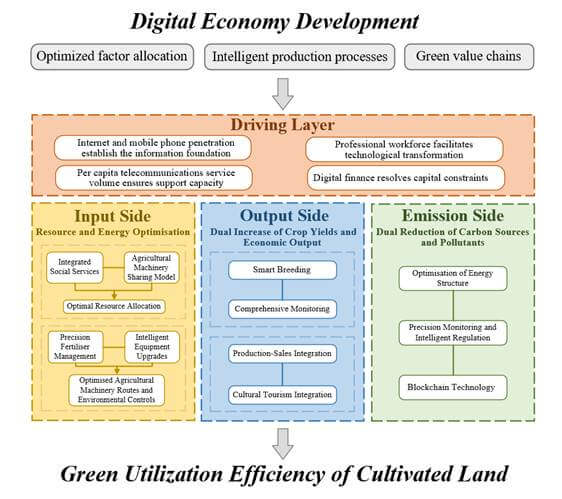
Figure 1. Theoretical framework of the research.
2.1. Driving Layer
Establishing a Multi-dimensional Foundational Support System. The digital economy’s driving force for green agriculture stems from its construction of a multi-tiered, robustly supportive foundational system. Firstly, the comprehensive coverage of digital infrastructure, such as the internet and mobile telephony, forms a crucial “information base.” This enables real-time collection and high-speed transmission of vast datasets on cultivated land, climate, crops, and markets, thereby facilitating subsequent intelligent decision-making (Amara et al., 2024). Secondly, digital technology professionals are pivotal in activating this foundation. Beyond technological R&D, they actively promote industry-technology integration, applying cutting-edge algorithms and models to specific agricultural scenarios to resolve production challenges (Yao et al., 2025; Y. Li et al., 2025). Thirdly, the increase in per capita telecommunications services signifies a comprehensive leap in digital service capabilities, ensuring seamless connectivity from cloud computing to terminal applications while enhancing the stability and penetration of the entire system. Fourthly, digital finance precisely targets the funding constraints encountered in the agricultural green transition. Through innovative tools such as big data credit assessment, supply chain finance, and green credit, digital finance can identify and support new business entities genuinely engaged in green production. This addresses their financing challenges stemming from high initial investment and long return cycles, injecting capital vitality into the adoption and application of green technologies (An et al., 2025).
2.2. Input Side
Achieving precise and intensive allocation of production factors. On the input side, the digital economy profoundly reshapes traditional production factors through two primary pathways.
(1) Factor restructuring and efficiency enhancement pathway. This pathway aims to reduce redundancy and waste in factor inputs through optimized resource allocation. Firstly, the digital economy transforms data into a new production factor (F. Wang et al., 2023), significantly reducing information asymmetry (C. Yang et al., 2024). Big data platforms integrate land transfer information, agricultural machinery service demands, and agricultural product price forecasts, enabling efficient matching between supply and demand. This facilitates the concentration of cultivated land resources towards more efficient operators, achieving spatial optimization. Online platforms consolidate dispersed agricultural machinery resources, enabling cross-regional and cross-operator deployment. This not only substantially increases the utilization rate of fixed assets like large agricultural machinery but also prevents duplicate investment and resource idleness, representing a fundamentally digitalized, asset-light operation and resource optimization approach (Jones & Tonetti, 2020). Furthermore, digital platforms integrate full-chain socialized services—including sowing, crop protection, and harvesting—enabling smallholder farmers to access professional support through service procurement. This effectively reduces household labor intensity and costs while alleviating pressures from an ageing agricultural workforce and part-time farming practices (Rana et al., 2024).
(2) Technology-enabled pathways for green transformation. This approach focuses on precision management throughout production processes, directly reducing resource consumption and environmental impacts at source. Its core lies in the precise control of inputs such as fertilizers and pesticides (Ci, 2022; Delgado et al., 2019). Through Internet of Things sensors deployed in fields, the system monitors soil moisture, nutrient levels, and crop pests and diseases situation in real time. Integrating crop growth models, it generates variable fertilization and prescription spraying decisions executed by intelligent equipment. This minimizes indiscriminate pesticide use and excessive fertilization, controlling agricultural non-point source pollution at its source while safeguarding yields. This precision agriculture framework robustly underpins the advancement and adoption of intelligent equipment, such as unmanned tractors and automated irrigation systems (Tian et al., 2014; Y. Yang & Wang, 2025). These devices serve not only as execution terminals for precision agriculture but also as conduits for energy-saving technology diffusion (Ge et al., 2025). At a deeper level, digital technologies achieve energy conservation and reduced consumption by optimizing machinery routes and environmental controls. Leveraging the BeiDou navigation system and algorithmic optimization, it plans the shortest, least repetitive operational routes for agricultural machinery, reducing empty-run mileage and non-productive energy consumption. Intelligent irrigation systems, meanwhile, deliver a precise water supply based on real-time meteorological data and evaporation rates, preventing water wastage. Collectively, these measures significantly reduce direct energy consumption and carbon emissions in agricultural production (Q. Jiang et al., 2022; Y.-f. Zhang et al., 2023).
2.3. Output Side
Achieving dual objectives of “Enhancing Quality and Efficiency” and “Adding Value.” Following factor optimization at the input end, the digital economy gives rise to a “dual increase” effect at the output side, simultaneously elevating agricultural production efficiency and the market value of agricultural products. Firstly, it enhances agricultural production efficiency and quality. Digital technologies, integrated with intelligent breeding and comprehensive monitoring (L. Yin & Zhang, 2023), fundamentally strengthen the output foundation. Genome sequencing and big data-driven selection accelerate the breeding of high-yielding, stress-resistant, and premium new varieties (Y. Zhang et al., 2025). Comprehensive monitoring via drone remote sensing and satellite imagery enables macro-level oversight and early warning of crop growth and pest or disease outbreaks, guiding field management to systematically enhance yield per unit area and quality. This safeguards basic agricultural supply and ensures product safety. Secondly, expanding the value and industrial boundaries of agricultural products. In post-harvest stages, the digital economy significantly enhances the premium potential of agricultural goods. E-commerce platforms overcome geographical barriers, enabling premium produce to reach consumers nationwide and globally. This reduces multiple intermediate links, allowing producers to capture greater profits (Fang & Shen, 2025; Xiong et al., 2023; C. Zhang & Liu, 2023). Traceability systems built on blockchain and IoT provide tamper-proof digital credentials for agricultural products, visually conveying green and safety information from production processes to consumers. These build trust and secure brand premiums (M. Liu et al., 2025; Sheng et al., 2024). Furthermore, the digital economy significantly expands economic boundaries through the integration of agriculture, culture, and tourism (K. Guo & Ma, 2025; Z. Jiang, 2024). Digital media such as live streaming and short videos can comprehensively showcase and market pastoral landscapes, agricultural culture, and rural homestays, attracting consumers to offline experiences. This promotes the integration of agriculture with tourism, culture, and other industries, forming distinctive rural industrial chains that generate additional economic growth points for villages (R. Sun, 2025).
2.4. Emissions Side
Establishing a comprehensive environmental governance system spanning “source-process-end.” At the emissions end, the digital economy drives a “dual reduction” framework of concurrent carbon and pollution reduction, with mechanisms spanning the entire pollution generation process. Firstly, at the energy structure level, digitalized energy management systems enable the intelligent scheduling of the photovoltaic, energy storage, and traditional energy sources within farms. This optimizes energy consumption patterns, increases the share of clean energy, and directly reduces carbon emissions from mechanical power (L. Jiang et al., 2025). Secondly, its role is most critical in pollution control. The aforementioned precision fertilization and pesticide application, alongside intelligent management at the input stage, inherently constitute the most effective method for reducing non-point source pollution at its source, minimizing runoff and leaching of nutrients such as nitrogen and phosphorus, as well as chemical substances (L. Zhang et al., 2025). Moreover, sensor networks and AI image recognition enable continuous, precise monitoring and intelligent regulation of discharge points and waterways. Upon detecting anomalies, immediate alerts pinpoint pollution sources, facilitating rapid response and strengthening containment of pollution spread (Oladele, 2025; Hou et al., 2025). Finally, at the institutional incentive level, blockchain technology establishes a trustworthy environmental data recording platform. Every environmental action can be recorded, certified, and converted into digital assets (Villafranca et al., 2025). This immutable, traceable nature reinforces environmental accountability constraints. Simultaneously, market-based trading mechanisms provide direct economic incentives for emission reduction activities, shifting green production from being “morally driven” to “profit-driven,” thereby establishing a long-term governance mechanism.
In summary, enhancing the green utilization efficiency of cultivated land through the digital economy is not achieved by improving a single technology or isolated process, but rather through a multi-dimensional and full-chain process of coordinated evolution. The driving layer forms the foundation, the input side represents the core pathway, the output side manifests economic benefits, and the emissions side signifies environmental outcomes. Through organic linkage and synergistic enhancement across all stages, this mechanism systematically advances the transformation of cultivated land utilization towards green and intensive practices, laying a solid foundation for high-quality agricultural development.
It should be further emphasized that the actual operation of this systemic mechanism does not unfold within a homogeneous spatial context. The enabling effect of the digital economy on the green utilization efficiency of cultivated land does not manifest uniformly across all regions. Its spatial heterogeneity stems from disparities in regional digital infrastructure endowments, industrial structure characteristics, and institutional environments. Fundamentally, this reflects divergent manifestations of foundational elements at the driving layer, core functional pathways at the input end, and value realization mechanisms at the output and emissions end under varying regional conditions. In terms of supporting conditions, significant gradient differences exist across Jiangsu, Zhejiang, and Anhui in digital infrastructure, depth of technological integration, financial inclusion, and talent concentration. This leads to marked divergence in the pathways and effects through which the digital economy influences arable land utilization efficiency via mechanisms such as factor optimization, intelligent production, and green value-added. In most cities of Zhejiang and parts of Jiangsu, robust digital foundations and seamless industry-academia-research conversion enable systematic embedding of digital technologies throughout the entire arable land utilization process. This facilitates precise input management, optimized agricultural machinery operations, and traceability systems, effectively achieving green empowerment. Conversely, in most cities of Anhui and certain transition-phase regions, insufficient digital penetration and disjointed transitions between traditional industries and emerging sectors constrain technological optimization. This may even result in weak or negative short-term empowerment effects.
Based on this, the paper proposes a targeted research hypothesis: the positive promotional effect of digital economy development on the green utilization efficiency of cultivated land exhibits significant spatial heterogeneity. At the inter-provincial level, provinces with superior digital economic foundations and deeper industrial integration demonstrate stronger promotional effects. At the intra-provincial level, cities with a high degree of agricultural structural modernization and robust digital development foundations are better positioned to fully leverage the green enabling value of the digital economy than cities characterized by a higher proportion of traditional agriculture and lagging digital infrastructure.
3. Overview of Study Areas and Data Sources
3.1. Overview of the Study Area
This study selects Jiangsu, Zhejiang, and Anhui provinces as its research area. Situated within the Yangtze River Delta world-class urban cluster, this region exhibits pioneering and exemplary effects nationally in terms of socio-economic development and resource-environment utilization patterns. In recent years, its digital economy has experienced rapid growth, becoming a core engine driving regional high-quality development. According to the 2023 China Digital Economy Development Report, Jiangsu and Zhejiang both rank among the top tier in digital economy development. Zhejiang’s digital economy value-added has consistently exceeded 50% of its GDP for multiple consecutive years. In 2022, Jiangsu’s core digital industries accounted for approximately 11% of its GDP. Anhui, emerging as a rapidly catching-up province, has consistently ranked among the nation’s leaders in digital economic growth rates. The robust yet differentiated digital economy development across these three provinces provides a crucial foundation for this study’s examination of the spatial heterogeneity in the impact of digital economy development on the green utilization efficiency of cultivated land.
Concurrently, Jiangsu, Zhejiang, and Anhui face acute pressures on cultivated land resources and pronounced land-population tensions. Together, they support nearly a quarter of China’s economic output despite occupying less than 4% of the nation’s total land area. The Yangtze River Delta urban cluster, bound by the river, has undergone sustained integration and rapid economic growth. Since the Reform and Opening up, urban construction land in the region has expanded rapidly, leading to extensive conversion of agricultural land for non-agricultural purposes (Y. Sun et al., 2024). Against the backdrop of ensuring food security and sustainable agricultural development, effectively enhancing the green utilization efficiency of cultivated land has become a critical issue for the modernization of agriculture in Jiangsu, Zhejiang, and Anhui. Consequently, examining the impact of digital economy development on the green utilization efficiency of cultivated land holds significant importance.
3.2. Data Sources and Explanation
This study covers the period from 2013 to 2023. Data used to measure each city’s digital economy development index and green utilization efficiency index of cultivated land are sourced from the 2014–2024 Jiangsu Statistical Yearbook, Zhejiang Statistical Yearbook, Anhui Statistical Yearbook, and the EPS Statistical Data Retrieval and Forecasting Platform (https://www.epsnet.com.cn/index.html). Missing individual data points were supplemented using interpolation methods. Vector data for spatial distribution mapping was sourced from the National Centre for Basic Geographic Information (https://www.ngcc.cn/).
4. Variable Selection and Model Specification
4.1. Variable Configuration
4.1.1. Dependent Variables
The dependent variable is the green utilization efficiency of cultivated land (GUECL). Integrating the conceptual framework of GUECL with life-cycle spatial convergence analysis, and drawing upon existing research (M. Li et al., 2024; Lu et al., 2025; Lyu et al., 2023; Wu et al., 2021), the production phase incorporates traditional input factors selected from resource and power dimensions: cultivated land resources, fixed assets, chemical inputs, labor, mechanical power, and energy consumption. In the output phase, positive externalities were selected from the socio-economic dimension, with cultivated land economic output and crop yield serving as desired output indicators; negative externalities were selected from the carbon source and pollution emission dimensions, with cultivated land carbon emissions and non-point source pollution representing unexpected outputs. Specific details are presented in Table 1.
Table 1. Evaluation index system for green utilization efficiency of cultivated land
|
Category |
Indicator Name |
Variable |
Indicator Variable |
Unit |
|
Production Input Stage |
Resource Input |
Cultivated Land Resources |
Area sown to food crops |
1,000 ha |
|
Fixed Assets |
Agricultural fixed asset investment |
10,000 yuan |
||
|
Chemical products |
Pesticide, fertilizer and agricultural film usage |
t |
||
|
Power input |
Labor |
Agricultural workers |
10,000 people |
|
|
Mechanical Power |
Total agricultural machinery power |
10,000 kilowatts |
||
|
Energy consumption |
Agricultural diesel consumption |
t |
||
|
Expected Output Stage |
Socio-economic |
Economic output from cultivated land |
Agricultural output value |
10,000 yuan |
|
Crop yield from cultivated land |
Grain production |
10,000 t |
||
|
Unexpected Output Phase |
Carbon |
Carbon emissions from cultivated land |
Total carbon emissions from fertilizers, pesticides, agricultural films, machinery, irrigation, and tillage a |
kg CO2 |
|
Pollutant Emissions |
Groundwater pollution from cultivated land |
Loss of nitrogen and phosphorus from chemical fertilizers, inefficient utilization of pesticides, total residual agricultural film b |
t |
Note: Relevant coefficients reference corresponding data for the Southern Humid Plains Region from the First National Pollutant Source Census: Agricultural Pollutant Source Fertilizer Loss Coefficient Manual; the First National Pollutant Source Census: Agricultural Plastic Mulch Residue Coefficient Manual; and the First National Pollutant Source Census: Pesticide Loss Coefficient Manual. The calculation process accounts for the impact of regional natural geographical variations.
a
 and
and  denote
carbon emissions from the i-th carbon source.
denote
carbon emissions from the i-th carbon source.  and
and represent
the respective carbon source quantities and emission coefficients, which are:
fertilizers 0.8956 kg/kg, pesticides 4.3941 kg/kg, agricultural film 5.18
kg/kg, agricultural machinery 0.18 kg/kW, irrigation 266.48 kg/hm², ploughing:
312.60 kg/km²; coefficient sources: Oak Ridge National Laboratory (USA),
Institute of Agricultural Resources and Environmental Sciences at Nanjing
Agricultural University, and other websites.
represent
the respective carbon source quantities and emission coefficients, which are:
fertilizers 0.8956 kg/kg, pesticides 4.3941 kg/kg, agricultural film 5.18
kg/kg, agricultural machinery 0.18 kg/kW, irrigation 266.48 kg/hm², ploughing:
312.60 kg/km²; coefficient sources: Oak Ridge National Laboratory (USA),
Institute of Agricultural Resources and Environmental Sciences at Nanjing
Agricultural University, and other websites.
b Fertilizer nitrogen loss  fertilizer application
 nitrogen loss
coefficient; Fertilizer phosphorus loss fertilizer application
nitrogen loss
coefficient; Fertilizer phosphorus loss fertilizer application  phosphorus loss coefficient; pesticide loss pesticide application pesticide loss coefficient; agricultural film residue agricultural film application film residue coefficient.
Data Envelopment Analysis (DEA) focuses on evaluating the input-output efficiency of multiple decision-making units (DMUs; Hu & He, 2000), offering advantages such as handling numerous input and output indicators, reducing subjective judgments, and providing directions for efficiency improvements. However, traditional DEA models may yield multiple DMUs as equally efficient, a phenomenon that limits the model’s ability to distinguish efficiency in the green utilization of cultivated land in practical applications. To address this issue, this paper introduces the Super-SBM model (Tone, 2002), which permits efficiency values exceeding 1. This model is extensively applied in evaluating farmland utilization efficiency, significantly enhancing the model’s precision in identifying and ranking highly efficient decision units. The calculation formula is:
|
|
(1) |
|
|
(2) |
|
|
(3) |
|
|
(4) |
|
|
(5) |
|
|
(6) |
|
|
(7) |
|
|
(8) |


In the formula:  denotes the number of DUMs;
  represents the inputs for each DUM;
  denotes
expected outputs,
denotes
expected outputs,  denotes
non-expected outputs.
denotes
non-expected outputs.  ; Matrix
  .
.
4.1.2. Explanatory Variables
The explanatory variable is digital economy development (DED). Following the methodology of Zhao et al. (2020) and considering data availability at the prefecture-level city tier, this study measures the digital economy development level across Jiangsu, Zhejiang, and Anhui prefecture-level cities through two dimensions: internet development and digital finance penetration. For digital financial inclusion, the China Digital Inclusive Finance Index (F. Guo et al., 2020), jointly developed by Peking University’s Digital Finance Research Centre and Ant Group, is employed. This study standardizes data from the following five indicators using the entropy method before applying dimensionality reduction to comprehensively evaluate digital economy development (Table 2).
Table 2. Indicator System for the Digital Economy Development.
|
Primary Indicator |
Secondary Indicator |
Measurement Indicator |
Weighting |
|
Level of digital economy development |
Internet penetration rate |
Number of broadband internet users per 100 persons |
0.260 |
|
Number of internet industry personnel |
Proportion of personnel in computer services and software |
0.210 |
|
|
Mobile telephone penetration rate |
Number of mobile telephone users per 100 persons |
0.203 |
|
|
Internet-related output |
Telecommunications services volume per capita |
0.216 |
|
|
Digital financial inclusion development |
China Digital Financial Inclusion Index |
0.111 |
4.1.3. Control Variables
To control for the potential influence of other factors on the efficiency of green utilization of cultivated land, this study selected the rural revitalization index, level of economic development, and intensity of agricultural fiscal support as control variables. This choice synthesizes the selection of control variables from relevant literature (T. Jiang et al., 2024; Y. Li et al., 2025; Lu et al., 2025; Lyu et al., 2023;) while considering data availability. The measurement methods for these variables are detailed in Table 3.
Table 3. Design of Relevant Variables and Indicators.
|
Variable Type |
Variable Name |
Variable Abbreviation |
Variable Description |
|
Dependent variable |
Green utilization efficiency of cultivated land |
GUECL |
Super-SBM model estimated efficiency value |
|
Core explanatory variable |
Digital economy development |
DED |
Peking University China Digital Inclusive Finance Index |
|
Control variable |
Rural Revitalization Index, |
RRI |
Calculated per Xu Xue and Wang Yongyu’s methodology (Xu & Wang, 2022) |
|
|
Level of Economic Development |
ED |
Per capita income of villagers |
|
|
Strength of Agricultural Fiscal Support |
AFS |
The proportion of investment in agricultural fixed assets relative to total investment |
4.1.4. Mechanism Verification Variable
To thoroughly validate the theoretical framework’s mechanism whereby the digital economy influences the green utilization efficiency of arable land through four dimensions—the driving layer, input side, output side, and emission side—this paper constructs two sets of variables for mechanism testing based on the benchmark model.
(1) Four-Dimensional Proxy Variables
Based on the theoretical analytical framework and data availability, the following indicators (Table 4) were selected as proxy variables for the four dimensions, to be used in subsequent semi-unrelated (SUR) regression analysis.
Table 4. Four-Dimensional Proxy Variable Indicator Design Table.
|
Theoretical Dimension |
Variable Name |
Variable Symbol |
Measurement Method |
|
Driving Layer |
Digital Financial Inclusion Level |
DFI |
Peking University Digital Inclusive Finance Index |
|
Input Side |
Chemical Input Intensity |
CII |
Pesticide, Fertilizer, and Agricultural Film Use per Unit Area (tons/1,000 ha) |
|
Output Side |
Agricultural Output Benefit |
AOB |
Agricultural output value per unit area (¥10,000/1,000 ha) |
|
Emission En |
Carbon Emission Intensity of Cultivated Land |
CEI |
Carbon emissions per unit area of cultivated land (kgCO₂/1,000 ha) |
(2) Slack Variables
To identify specific pathways through which the digital economy improves inefficient aspects of cultivated land utilization at the micro level, this study analyzes slack values calculated using the Super-SBM model. These slack values measure the degree of inefficiency relative to the production frontier for each decision unit, with higher values indicating greater potential for improvement. The selected slack variables are presented in Table 5.
Table 5. Slack Variable Indicator Design Table.
|
Slack Variable |
Variable Symbol |
Corresponding Original Indicator |
|
Chemical Input Slack |
CIS |
Pesticide, Fertilizer, and Agricultural Film Usage |
|
Energy Consumption Slack |
EUS |
Agricultural Diesel Usage |
|
Economic Output Slack |
EOS |
Agricultural Output Value |
|
Cultivated Land Carbon Emissions Slack |
CES |
Total Cultivated Land Carbon Emissions |
4.2. Model Setting
4.2.1. Benchmark Model
As the efficiency scores generated by the Super-SBM model are always positive, the dependent variable data exhibit a truncated form. When handling truncated data, the assumptions of continuity and normality inherent in the OLS method are invalid. Therefore, this study employs the Tobit model (Wu et al., 2021), which is well-suited for treating constrained dependent variables. The model specification is as follows:
|
|
(9) |

In the equation:  denotes the green utilization efficiency index of cultivated land;
  denotes the digital economy development index;
  denotes the control variable;
  denotes the
marginal utility of digital economy development level on green utilization
efficiency of cultivated land when other control variables remain constant;
denotes the
marginal utility of digital economy development level on green utilization
efficiency of cultivated land when other control variables remain constant;  denotes the
marginal effect of control variable
denotes the
marginal effect of control variable  on green utilization efficiency of cultivated land when the core
explanatory variable and other control variables remain constant;
on green utilization efficiency of cultivated land when the core
explanatory variable and other control variables remain constant;  denotes the
random error term;
denotes the
random error term;  and
and  denote prefecture-level city and year, respectively.
4.2.2. Endogeneity Treatment Model
Considering the potential endogeneity issues in the model arising from bidirectional causality or omitted variables, this paper employs the instrumental variable (IV) method for estimation and correction. The number of landline telephones per hundred people and the number of post offices per million people in each city in 1984 are selected as instrumental variables for the level of digital economy development. These historical variables satisfy the relevance and exogeneity requirements and have been extended into a panel format. The following two-stage regression model is constructed:
First stage:
|
|
(10) |

Second stage:
|
|
(11) |

In the equation:  denotes the green utilization efficiency index of cultivated land;
  denotes the digital economy development index;
  denotes the predicted value of the digital economy development level
obtained from the first-stage regression;
denotes the predicted value of the digital economy development level
obtained from the first-stage regression;  denotes the instrumental variable, representing the
telecommunications infrastructure level of each city in 1984;
denotes the instrumental variable, representing the
telecommunications infrastructure level of each city in 1984;  denotes the -th control variable;
  and
and  denote individual fixed effects and time
fixed effects, respectively;
denote individual fixed effects and time
fixed effects, respectively;  and
and denote random error terms; and represent prefecture-level city and year,
respectively.
denote random error terms; and represent prefecture-level city and year,
respectively.
4.2.3. Spatial Econometric Model
To examine whether the impact of digital economy development on the green utilization efficiency of cultivated land exhibits spatial spillover effects, this study introduces spatial econometric analysis based on the benchmark regression. First, the Global Moran’s I index is employed to test the spatial autocorrelation of the efficiency values. The formula is as follows:
|
|
(12) |

In the formula:  represents
the number of cities,
represents
the number of cities,  and
and
 denote the
observed values, and
denote the
observed values, and  is an
element of the spatial weight matrix W.Given the close ties between regional
governance and the economy, this study employs an administrative adjacency
spatial weight matrix for the calculation.
is an
element of the spatial weight matrix W.Given the close ties between regional
governance and the economy, this study employs an administrative adjacency
spatial weight matrix for the calculation.
Additionally, since the dependent variable (green utilization efficiency of cultivated land) is a non‑negative value measured by the Super‑SBM model, the data exhibit a truncated distribution. Therefore, a panel Tobit model capable of effectively handling limited dependent variables is adopted, with a spatial lag term embedded into it. The following spatial lag panel Tobit model is ultimately constructed:
|
|
(13) |

In the formula: represents
the green utilization efficiency index of cultivated land;
represents
the green utilization efficiency index of cultivated land; represents
the digital economy development index;
represents
the digital economy development index;  and
and  denote the corresponding spatial lag terms, used to capture spatial
spillover effects;
denote the corresponding spatial lag terms, used to capture spatial
spillover effects; refers to the
control variables; indicates the marginal effect of control variable j on the green utilization efficiency of cultivated land when other
variables remain unchanged;
refers to the
control variables; indicates the marginal effect of control variable j on the green utilization efficiency of cultivated land when other
variables remain unchanged;  is the random
error term; i and t denote
prefecture-level city and year, respectively.
is the random
error term; i and t denote
prefecture-level city and year, respectively.
5. Results Analysis
5.1. Benchmark Regression Results
To examine the impact of Digital Economy Development on the Green Utilization Efficiency of Cultivated Land, this study employs a Tobit model for benchmark regression. The estimation results are presented in Table 6. Column (1), which does not include control variables, shows that the coefficient for digital economy development is 0.338 and significant at the 1% level, preliminarily indicating a positive promoting effect of the digital economy on the green utilization efficiency of cultivated land. In Column (2), after further incorporating control variables such as the Rural Revitalization Index, education level, and agricultural operation scale, the coefficient for digital economy development increases to 0.537 and remains highly significant at the 1% level. This suggests that the promoting effect remains robust after controlling for related factors, confirming the mechanism through which the digital economy systematically enhances the green utilization efficiency of cultivated land via optimized factor allocation, intelligent production processes, and greening of the cultivated land value chain.
The estimation results for the control variables do not pass the significance tests, indicating that they do not exhibit stable independent effects under the current model specification. However, controlling for these variables aids in more accurately identifying the net effect of the digital economy on the green utilization efficiency of cultivated land.
Table 6. Estimation of the total effect of digital economy development on empowering green utilization efficiency of cultivated land
|
Variable |
(1) GUECL |
(2) GUECL |
|
DED |
0.338***(3.72) |
0.537***(5.00) |
|
In_ RRI |
|
1.018(0.37) |
|
In_ ED |
|
−1.305(−0.47) |
|
AFS |
|
−0.089(−0.59) |
|
Constant term |
0.823***(16.83) |
0.633***(8.65) |
|
N |
440 |
440 |
Note: The statistics in parentheses represent coefficient estimates.
*, **, *** denote significance at the 10%, 5%, and 1% levels respectively.
5.2. Endogeneity Test
This study employs the instrumental variables approach for testing and correction, selecting the number of landline telephones per hundred people and the number of post offices per million people in each city in 1984 as instrumental variables for the level of digital economy development. These historical variables satisfy the relevance and exogeneity requirements and have been extended into a panel format. Table 7 reports the estimation results of the instrumental variables approach (IV-Tobit) along with the corresponding diagnostic tests.
Table 7. Instrumental Variable Estimation Results
|
Variable |
Benchmark Tobit Model |
IV-Tobit Model |
|
DED |
0.458***(6.22) |
0.458***(6.22) |
|
In_ RRI |
2.684(0.70) |
2.684(0.70) |
|
In_ ED |
−2.829(−0.74) |
−2.829(−0.74) |
|
AFS |
−0.171(−0.99) |
−0.171(−0.99) |
|
Constant term |
0.717***(17.58) |
0.717***(17.58) |
|
N |
440 |
440 |
|
First-stage F-statistic |
|
0.458***(6.22) |
|
Over-identification test p-value |
|
2.684(0.70) |
|
Endogeneity Wald test p-value |
|
−2.829(−0.74) |
Note: The statistics in parentheses represent coefficient estimates.
*, **, *** denote significance at the 10%, 5%, and 1% levels respectively.
The test results show that the F-statistic in the first-stage regression (89.41) is well above the critical value, indicating sufficient correlation between the instrumental variables and the endogenous variable. The p-value of the over-identification test is 0.9999, supporting that the instrumental variables satisfy the exclusion restriction. The p-value of the endogeneity Wald test is 0.0001, rejecting the null hypothesis of exogeneity for the core explanatory variable at the 1% level, confirming the existence of endogeneity. After controlling for endogeneity, the estimated coefficient for digital economy development rises significantly from 0.458 to 1.348, while remaining statistically significant at the 1% level, indicating that the benchmark regression underestimated the true promoting effect of the digital economy on the green utilization efficiency of cultivated land due to endogeneity bias.
5.3. Heterogeneity Analysis
5.3.1. Regional Heterogeneity
Given the significant disparities in economic foundations, industrial structures, and digital development levels among Jiangsu, Zhejiang, and Anhui provinces, this study further conducts regional heterogeneity analysis to investigate provincial and intra-provincial urban variations in the impact of digital economy development on the green utilization efficiency of cultivated land.
(1) Inter-provincial Regional Heterogeneity.
To better identify regional differences in the impact, grouped regressions were performed for Jiangsu, Zhejiang, and Anhui provinces separately, with estimation results reported in Table 8. From an overall perspective, the digital economy shows a significant positive impact on the green utilization efficiency of cultivated land in the combined sample of the three provinces (coefficient = 0.537, significant at the 1% level), confirming its universal enabling effect. Examining the results by province further reveals a clear gradient of differentiated characteristics.
Table 8. Estimation results of the regional heterogeneity of green utilization efficiency of cultivated land enabled by the development of the digital economy
|
Variable |
Different partitions |
|||
|
(1) Jiangsu, Zhejiang, and Anhui |
(2) Jiangsu |
(3) Zhejiang |
(4) Anhui |
|
|
DED |
0.537***(5.00) |
0.473**(2.46) |
0.889**(2.49) |
0.179*(1.79) |
|
In_ RRI |
1.018(0.37) |
7.503**(2.08) |
−10.412(−1.53) |
0.659(0.24) |
|
In_ ED |
−1.305(−0.47) |
−7.816**(−2.18) |
9.715(1.43) |
−0.847(−0.31) |
|
AFS |
−0.089(−0.59) |
−0.148(−1.64) |
−0.739***(−5.24) |
0.241**(2.44) |
|
Constant term |
0.633***(8.65) |
0.672***(5.45) |
0.630***(3.29) |
0.849***(12.81) |
|
N |
440 |
143 |
121 |
176 |
Note: The statistics in parentheses represent coefficient estimates.
*, **, *** denote significance at the 10%, 5%, and 1% levels respectively.
The promoting effect is most prominent in Zhejiang Province, with a coefficient of 0.889, significant at the 5% level. This is mainly attributed to its advanced digital infrastructure, dynamic digital industry ecosystem, and efficient agricultural digital application systems, which enable digital technologies to be deeply integrated into the entire chain of green cultivated land production. Jiangsu Province also exhibits a stable positive effect, with a coefficient of 0.473 (significant at the 5% level), reflecting its phased achievements in promoting the synergy between manufacturing digitalization and agricultural green transformation. In Anhui Province, the impact coefficient of the digital economy is relatively small (0.179), showing marginal significance at the 10% level, indicating that its digital economy development has begun to exert a preliminary promoting effect on the green utilization efficiency of cultivated land. This result may be attributed to the rapid construction of digital infrastructure and the promotion of characteristic models such as agricultural e-commerce in recent years. However, due to insufficient depth in the integration of digital technologies with agricultural production and limited overall penetration of green technologies, its enabling intensity remains significantly lower than that of Jiangsu and Zhejiang provinces. The differentiated performance of control variables across the models further highlights the complexity of the influencing mechanisms related to rural revitalization priorities, human capital structure, and agricultural operation scale in the three provinces.
(2) Intra-provincial heterogeneity.
From the perspective of cities within provinces, the differences in the impact of digital economy development on the green utilization efficiency of cultivated land become more pronounced. Even within the same province, the effects vary significantly across cities (Figure 2). Figure 3 further reveals through temporal trends that this heterogeneity persists in dynamic evolution.
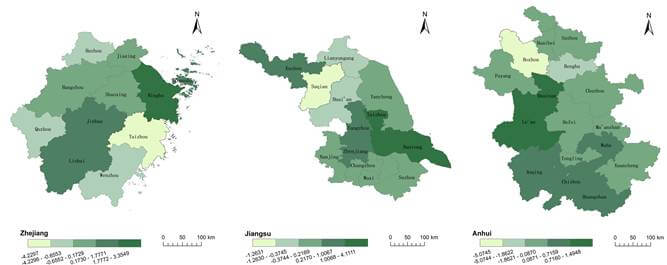
Figure 2. Spatial distribution of the degree of green utilization efficiency of cultivated land enabled by the digital economy development within the three provinces.
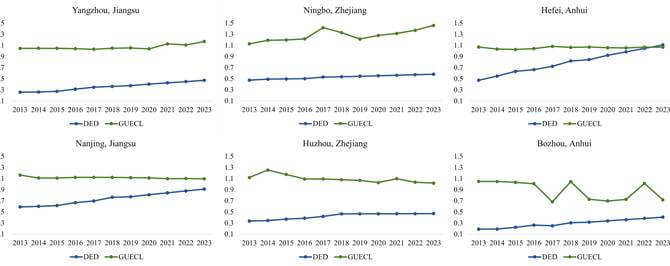
Figure 3. Synergistic Evolution Trend of Digital Economy Level and Green Utilization Efficiency of Cultivated Land in Representative Cities.
In Jiangsu Province, some cities exhibit significant positive effects. For example, Yangzhou City promotes the application of agricultural Internet of Things (IoT), smart irrigation, and precision fertilization systems, and has established a regional agricultural product quality and safety traceability platform, directly empowering agricultural production and management through digital technologies. As a result, the green utilization efficiency of its cultivated land increased from 1.05 in 2014 to 1.17 in 2023. Cities such as Nantong and Taizhou also show positive influences. However, transitional cities like Nanjing and Wuxi display insignificant or even negative effects, which stem from the disconnect between the phase-out of traditional high-energy-consuming industries and the cultivation of digital-green industries, with short-term transition pains suppressing the enabling effect.
In Zhejiang Province, most cities demonstrate significant positive effects. The development of the digital economy in cities like Ningbo and Jinhua has effectively promoted the green utilization efficiency of cultivated land. Ningbo is a particularly notable case. Leveraging its dual advantages in port economy and digital industries, the city has vigorously advanced agricultural digital transformation. By building smart agricultural management platforms and promoting precision farming technologies, it has effectively optimized the allocation of cultivated land resources and integrated green production technologies. Consequently, the green utilization efficiency of cultivated land increased significantly from 1.128 in 2013 to 1.458 in 2023. In contrast, cities like Huzhou show negative effects, which may be attributed to the high proportion of traditional agriculture and insufficient penetration of digital technologies.
Within Anhui Province, the divergence among cities is even more pronounced. Hefei, Tongling, Anqing, and Lu’an exhibit significant positive effects, while Wuhu, Ma’anshan, and Bozhou show significant negative impacts. This reflects considerable gaps across cities within the province in terms of digital infrastructure, technology application, and policy coordination.
5.3.2. Temporal Heterogeneity
To explore the dynamic characteristics of the impact of digital economy development on the green utilization efficiency of cultivated land, this study analyzes time-series data from 2013 to 2023. The regression coefficients for different years are shown in Figure 4. From an overall trend perspective, the influence of digital economy development on the green utilization efficiency of cultivated land exhibits significant temporal heterogeneity, showing a pattern of first rising, then falling, and then rising again, with certain periodic fluctuations. From 2013 to 2015, the regression coefficients increased notably, indicating that the promoting effect of the digital economy on the green utilization efficiency of cultivated land continued to strengthen during this period. This was mainly due to the initial application of digital technologies in the agricultural sector, which promoted the transformation of agricultural production methods toward greener and smarter practices.
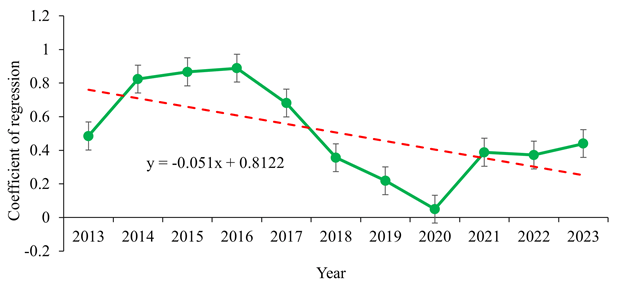
Figure 4. Temporal differentiation of the degree of green utilization efficiency of cultivated land empowered by the digital economy development.
From 2016 to 2020, the coefficients showed an overall downward trend, reaching their lowest point in 2020. On the one hand, this was related to the digital economy entering a stage of deepening integration, where marginal effects gradually weakened; on the other hand, the impact of the COVID-19 pandemic in 2020 disrupted the construction of digital infrastructure and the offline promotion of technologies. In response to economic pressures, some regions temporarily relaxed green development constraints, which significantly reduced the enabling effect of the digital economy on the green utilization efficiency of cultivated land, forming a special low point in the time series. From 2021 to 2023, the promoting effect of the digital economy on the green utilization efficiency of cultivated land strengthened once again, showing an overall recovery and positive trend.
5.4. Mechanism Tests
5.4.1. Mechanism Tests Based on SUR
To systematically verify the pathways proposed in the theoretical framework, this study employs the Seemingly Unrelated Regression (SUR) framework to separately examine the independent effects of four dimensions—driving layer, input side, output side, and emission side—on the green utilization efficiency of cultivated land. Variables in each dimension have been standardized to ensure comparability of the estimated effects. The estimation results are reported in Table 9.
Table 9. SUR Regression Results of the Impacts of Four Dimensions on Green Utilization Efficiency of Cultivated Land
|
Variable |
GUECL |
GUECL |
GUECL |
GUECL |
|
DFI |
0.028*(1.90) |
|
|
|
|
CII |
|
−0.032**(−2.50) |
|
|
|
AOB |
|
|
0.059***(3.92) |
|
|
CEI |
|
|
|
0.020(1.56) |
|
In_ RRI |
3.585(0.91) |
4.218(1.07) |
3.427(0.88) |
4.210(1.06) |
|
In_ ED |
−3.758(−0.95) |
−4.293(−1.09) |
−3.663(−0.94) |
−4.336(−1.10) |
|
AFS |
−0.252(−1.37) |
−0.243(−1.35) |
−0.075(−0.42) |
−0.150(−0.83) |
|
Constant term |
0.901***(33.00) |
0.935***(36.49) |
0.870***(31.04) |
0.912***(35.27) |
|
N |
440 |
440 |
440 |
440 |
Note: The statistics in parentheses represent coefficient estimates.
*, **, *** denote significance at the 10%, 5%, and 1% levels respectively.
According to the estimation results in Table 9, the impacts of the four dimensions exhibit clear differentiation. For every one‑standard‑deviation increase in the Digital Financial Inclusion index (DFI), the green utilization efficiency of cultivated land improves by 0.0281 units, an effect that is significant at the 10% statistical level. This finding provides empirical support for the theoretical proposition that digital finance drives agricultural green transformation by alleviating financing constraints. The coefficient for Chemical Input Intensity (CII) is significantly negative at the 5% level, indicating that for every one‑standard‑deviation reduction in this variable, the green utilization efficiency of cultivated land increases by 0.0324 units. This aligns fully with theoretical expectations and confirms that reducing chemical inputs is a crucial pathway for achieving pollution reduction at the source and enhancing the green performance of cultivated land use.
Agricultural Output Benefit (AOB) exhibits the strongest positive effect, with its coefficient highly significant at the 1% level. Specifically, a one‑standard‑deviation improvement in agricultural output benefit leads to a 0.0593‑unit increase in the green utilization efficiency of cultivated land. This result not only highlights the central role of economic returns in green agricultural development but also confirms that “improving quality and efficiency” constitutes the fundamental driving force for transforming cultivated land use patterns at the current stage. In contrast, the impact of Cultivated Land Carbon Emission Intensity (CEI) does not pass conventional significance tests, and its positive coefficient diverges from the theoretical expectation of low‑carbon transition. This outcome may suggest that, within the regions and development stages covered by the sample, the relationship between carbon emissions and the green utilization efficiency of cultivated land is not a simple linear negative correlation; its effect may be moderated by technological transition thresholds, lagged effects, or complex nonlinear mechanisms.
5.4.2. Micro-level Pathway Analysis Based on Slack Variables
To identify the pathways through which the digital economy operates in specific production processes, this study examines the impact of digital economy development on four key slack variables, confirming the mechanism by which it enhances the green utilization efficiency of cultivated land through reducing micro-level inefficiencies. The results are presented in Table 10.
Table 10. Tobit regression results for the impact of the digital economy on slack variables
|
Variable |
CIS |
EUS |
EOS |
CES |
|
DED |
−12.824***(−6.35) |
−7.531 **(−2.57) |
−12.133***(−3.60) |
−12.112***(−6.57) |
|
In_ RRI |
−9.108(−0.15) |
42.388(0.38) |
−186.972(−1.48) |
−52.121(−0.90) |
|
In_ ED |
12.374(0.20) |
−33.158(−0.30) |
193.832(1.54) |
54.867(0.95) |
|
AFS |
5.341**(2.07) |
8.495*(1.90) |
9.007*(1.89) |
4.527*(1.83) |
|
Constant term |
3.230***(4.42) |
−0.033 (−0.03) |
1.244(0.95) |
3.248***(4.81) |
|
N |
440 |
440 |
440 |
440 |
Note: The statistics in parentheses represent coefficient estimates.
*, **, *** denote significance at the 10%, 5%, and 1% levels respectively.
The results in Table 10 show that the development of the digital economy has a significantly negative impact on slack variables across all dimensions. For every one‑unit increase in the level of digital economy development, the slack values for the driving layer, input side, output side, and emission side decrease by 12.824, 7.531, 12.133, and 12.112 units, respectively, all of which are significant at the 5% or 1% level. This indicates that the digital economy, by improving digital financial support, promoting precision agriculture technologies, optimizing production‑sales linkages, and strengthening carbon emission management, effectively alleviates financing constraints, reduces redundancy in chemical inputs, suppresses output conversion losses, and compresses inefficient carbon emission space. These findings echo the significant effects of the respective dimensional variables on efficiency as presented in Section 5.4.1, and further reveal, from the perspective of reducing micro-level inefficiencies, the specific pathways through which the digital economy improves cultivated land use processes and enhances green efficiency.
5.5. Analysis of Spatial Spillover Effects
To examine the spatial mechanisms through which digital economy development affects the green utilization efficiency of cultivated land, and based on the model specification outlined earlier, this study first conducted a test of spatial autocorrelation. Table 11 reports the Global Moran’s I results for GUECL in the Yangtze River Delta region from 2013 to 2023. The test shows that the index is positive for all years, rising steadily from 0.187 in 2013 to 0.242 in 2023, indicating an overall upward trend. This suggests that during the study period, the regional GUECL exhibits significant positive spatial autocorrelation, with the degree of spatial clustering increasing over time. High-efficiency areas and low-efficiency areas each tend to cluster spatially, highlighting the growing synergy of regional green development.
Table 11. Global Moran’s I Test Results for Green Utilization Efficiency of Cultivated Land
|
Year |
Moran’s I |
Year |
Moran’s I |
|
2013 |
0.187**(2.16) |
2019 |
0.216**(2.47) |
|
2014 |
0.179**(2.09) |
2020 |
0.222**(2.53) |
|
2015 |
0.192**(2.21) |
2021 |
0.229***(2.61) |
|
2016 |
0.200**(2.30) |
2022 |
0.235***(2.68) |
|
2017 |
0.213**(2.43) |
2023 |
0.242***(2.75) |
|
2018 |
0.209**(2.38) |
|
|
Note: The statistics in parentheses represent coefficient estimates.
*, **, *** denote significance at the 10%, 5%, and 1% levels respectively.
After confirming the presence of spatial correlation, this study further estimates a spatial lag panel Tobit model, with regression results reported in Table 12. The results show that the coefficient for local digital economy development is 0.3287 and significant at the 1% level, which robustly reaffirms the direct enabling effect of the digital economy on improving local green utilization efficiency of cultivated land. It is noteworthy that the coefficient for the spatially lagged term of digital economy development (W_DED) is 0.2154 and significantly positive at the 1% level. This indicates that the digital economy development in neighboring cities also exerts a significant positive spatial spillover effect on the local region, suggesting that digital technologies, knowledge, and associated green management models can diffuse effectively across adjacent areas, forming a regionally linked enabling pattern.
Table 12. Regression Results of the Spatial Econometric Model.
|
Variable |
GUECL |
|
W_GUECL |
0.589*** (6.74) |
|
DED |
0.329*** (5.78) |
|
W_DED |
0.215*** (2.75) |
|
Constant term |
0.413*** (6.50) |
|
N |
440 |
Note: The statistics in parentheses represent coefficient estimates.
*, **, *** denote significance at the 10%, 5%, and 1% levels respectively.
Furthermore, the spatially lagged term of green utilization efficiency of cultivated land itself (W_GUECL) displays a coefficient as high as 0.5892, which is highly significant at the 1% level. This result reveals a strong spatial linkage and synergistic effect in the enhancement of green efficiency within the region. The magnitude of this influence far exceeds both the direct and indirect effects of the digital economy, indicating that integrated practices such as cross-border ecological co-governance and industrial coordination among neighboring areas constitute the core driving force for regional green transformation as a whole.
In summary, the spatial econometric analysis demonstrates that the impact of digital economy development on the green utilization efficiency of cultivated land possesses a significant spatial dimension. It manifests not only as a direct local effect but also generates positive regional spillovers. Moreover, the strong spatial synergy of green efficiency itself highlights the profound implications and substantial potential of breaking down administrative boundaries and promoting cross‑regional coordination of green development policies and actions in the context of integrated development of the Yangtze River Delta.
5.6. Robustness Checks
To ensure the robustness and reliability of the research findings, this study conducts robustness checks on the benchmark regression results through multiple approaches, including replacing control variables, winsorisation, subsample analysis, and changing the estimation model.
First, at the level of control variables, the benchmark model is re-estimated by replacing “rural per capita income” with “per capita GDP.” Second, to exclude potential interference from outliers, all continuous variables in the full sample are winsorized at the top and bottom 1%. Third, considering possible structural changes during the study period, the full sample is divided into two subperiods—2013–2017 and 2018–2023—for separate regressions. Finally, to examine potential bias introduced by the model specification, a panel fixed‑effects model is further employed for estimation. The results of each test are presented in Table 13, and the core conclusions remain valid throughout.
Table 13. Regression results of robustness test.
|
Model |
(1) |
(2) |
(3) |
(4) |
(5) |
(6) |
|
Benchmark Tobit Regression |
Replace Control |
1% Winsorization |
Subsample: 2013–2017 |
Subsample: 2018–2023 |
FE Model |
|
|
DED |
0.537***(5.00) |
0.775***(5.24) |
0.606***(5.69) |
0.555***(2.96) |
0.568***(3.79) |
0.649**(2.17) |
|
In_ RRI |
1.018(0.37) |
−0.122(−1.11) |
1.293(0.50) |
4.588(1.33) |
−0.268(−0.08) |
0.644(0.16) |
|
In_ GDP |
|
−0.152**(−2.31) |
|
|
|
|
|
In_ ED |
−1.305(−0.47) |
|
−1.619(−0.62) |
−4.756(−1.38) |
0.086(0.03) |
−1.053(−0.26) |
|
AFS |
−0.089(−0.59) |
−0.082(−0.54) |
−0.674***(−2.89) |
−0.899*(−1.76) |
0.177(1.25) |
−0.050(−0.15) |
|
Constant term |
0.633***(8.65) |
0.438***(3.86) |
0.612***(8.48) |
0.709***(7.14) |
0.635***(6.96) |
0.539***(2.71) |
|
N |
440 |
440 |
440 |
440 |
440 |
440 |
Note: The statistics in parentheses represent coefficient estimates.
*, **, *** denote significance at the 10%, 5%, and 1% levels respectively.
Thus, whether modifications are made in
terms of variable measurement, sample scope, or model specification, the
positive promoting effect of digital economy development on the green
utilization efficiency of cultivated land remains consistent, which fully
confirms the robustness and reliability of the core findings of this study.
6. Results and Discussion
6.1. Results
With the state’s increasing support for developing the digital economy and the growing prominence of cultivated land issues, leveraging digital economic growth to promote the green utilization of cultivated land and thereby accelerate agricultural development represents both an effective means of achieving rural revitalization and an urgent practical challenge requiring resolution. This study employs panel data from 40 prefecture-level cities across Jiangsu, Zhejiang, and Anhui provinces spanning 2013–2023. Utilizing the Super-SBM model and other methodologies, it quantitatively analyses the impact of digital economy development on the efficiency of green cultivated land utilization, alongside the spatial heterogeneity of these effects. Key findings are as follows:
(1) An integrated analytical framework encompassing the driving layer, input end, output end, and emission end has been constructed, revealing multidimensional synergistic enabling pathways. Unlike existing studies that predominantly focus on singular technologies or stages, this framework elucidates, from a systemic perspective, the interconnected mechanisms through which the digital economy optimizes factor allocation, enhances production process intelligence, and promotes the greening of the value chain. These mechanisms have been empirically validated through Seemingly Unrelated Regression (SUR) and slack variable analysis, providing a new theoretical paradigm for understanding the complexities of agricultural green transformation.
(2) The study confirms that the digital economy exerts a robust promoting effect on the green utilization efficiency of cultivated land, with city-level analyses offering new evidence for precise policymaking. This conclusion holds after controlling for endogeneity and remains valid across a series of robustness checks, including variable substitution and winsorization. Unlike most research conducted at the macro level, this paper focuses on the city-level scale, uncovering significant variations in effects across individual cities. These findings indicate that a uniform policy approach may be ineffective and provide direct micro-level evidence for local governments to formulate differentiated and targeted digital agriculture policies.
(3) The study reveals that the enabling effect of the digital economy exhibits complex spatial heterogeneity, with its intensity profoundly dependent on regional foundational conditions. At the inter-provincial level, the impact follows a gradient pattern, with Zhejiang outperforming Jiangsu, and Jiangsu outperforming Anhui. Significant differentiation is also observed among cities within each province. Notably, the relatively weak promoting effect in Anhui contrasts with the view held in some studies that the digital economy yields universal and homogeneous benefits. This suggests that in regions with inadequate digital infrastructure and integration depth, mere expansion in scale may not effectively translate into green benefits. This finding underscores the constraining role of the digital divide in agricultural transformation and highlights the priority of strengthening digital foundations and deepening sectoral integration.
6.2. Discussion
Given the role of digital economy development in enhancing the green utilization efficiency of cultivated land, coupled with the spatial heterogeneity of its impact across Jiangsu, Zhejiang, and Anhui provinces, the following policy recommendations are proposed:
(1) First, target provincial differences by implementing precise and tailored strategies. For Anhui Province, policies should focus on strengthening the digital foundation and expanding the application of technology. In counties and cities primarily engaged in grain production and regions specialized in cash crops such as tea and medicinal herbs, priority should be given to deploying infrastructure such as farmland IoT and remote sensing monitoring. Additionally, targeted subsidies for applicable technologies like smart irrigation and drone-based plant protection should be provided, while systematic skills training should be conducted for new agricultural entities such as family farms and cooperatives to effectively lower the threshold for technology adoption. For Jiangsu Province, efforts should be directed toward promoting industrial transition and enhancing transformation efficiency. In cities like Nanjing and Wuxi, which are in the midst of industrial transformation, special funds could be established to support the green transformation of agriculture-related industries and workforce skills upgrading. In areas with a strong foundation in digital agriculture, such as Nantong and Taizhou, support should be given to establish provincial-level comprehensive smart agriculture demonstration zones, creating replicable and scalable technological and management models. For Zhejiang Province, the focus should be on innovation leadership and regional service outreach. Support should be provided to cities like Hangzhou and Ningbo for breakthroughs and integrated demonstrations of cutting-edge technologies such as agricultural artificial intelligence and low-carbon models. At the same time, a provincial-level agricultural digital service platform should be developed to provide data, technology, and market information services for the province and surrounding regions, actively leveraging its role in regional radiation and driving influence.
(2) Build cross-provincial collaboration mechanisms to amplify regional overall effectiveness. Under the framework of integrated development in the Yangtze River Delta, establish a digital agriculture coordination mechanism to jointly build and open a regional agricultural data platform. Priority should be given to promoting the standardization and sharing of data across the three provinces, with particular emphasis on supporting Anhui Province in deploying data collection terminals in major grain-producing counties to enhance its foundational data capabilities. Concurrently, establish joint research and demonstration projects, leveraging Zhejiang’s research strengths, Jiangsu’s manufacturing enterprises, and Anhui’s typical agricultural regions to conduct technology adaptation and application validation, accelerating the promotion of advanced applicable technologies in areas with weaker foundations.
(3) Improve a universal policy support system to solidify the foundation for long-term development. On the incentive side, reform the assessment systems of local governments and relevant departments by incorporating key indicators such as the green utilization efficiency of cultivated land and the adoption rate of digital technologies into evaluations. On the capacity-building side, implement targeted training programs for digital agricultural technicians, relying on agricultural universities and leading enterprises to effectively enhance support for grassroots technology implementation.
Due to data limitations, this study operates at the meso-level of prefecture-level cities. Future research should expand data coverage to examine county-level impact effects, enhancing data accuracy and specificity. This will facilitate the formulation of more practical policy recommendations to support green agricultural development.
CRediT Author Statement: Peixin Zhu: Conceptualization and Methodology; Yaxuan Wang: Data curation and Writing – original draft; Yingying Wang: Investigation; Jun Ruan: Visualization and Investigation; Shugao Lin: Writing – review & editing.
Data Availability Statement: This study covers the period from 2013 to 2023. Data used to measure each city’s digital economy development index and green utilization efficiency index of cultivated land are sourced from the 2014–2024 Jiangsu Statistical Yearbook (http://tj.jiangsu.gov.cn/col/col86296/index.html), Zhejiang Statistical Yearbook (http://tjj.zj.gov.cn/col/col1525563/index.html), Anhui Statistical Yearbook (https://tjj.ah.gov.cn/ssah/qwfbjd/tjnj/index.html), and the EPS Statistical Data Retrieval and Forecasting Platform (https://www.epsnet.com.cn/index.html). Missing individual data points were supplemented using interpolation methods. Vector data for spatial distribution mapping was sourced from the National Centre for Basic Geographic Information (https://www.ngcc.cn/).
Funding: This research received no external funding.
Conflicts of Interest: The authors declare no conflict of interest.
IRB Statement: Not applicable.
Informed Consent Statement: Not applicable.
Acknowledgments: Not applicable.
Abbreviations
The following abbreviations are used in this manuscript:
|
GUECL |
Green utilization efficiency of cultivated land |
|
DED |
Digital economy development |
|
CIS |
Chemical Input Slack |
|
EUS |
Energy Consumption Slack |
|
EOS |
Economic Output Slack |
|
CES |
Cultivated Land Carbon Emissions Slack |
|
RRI |
Rural Revitalization Index, |
|
ED |
Level of Economic Development |
|
AFS |
Strength of Agricultural Fiscal Support |
|
DFI |
Digital Financial Inclusion Level |
|
CII |
Chemical Input Intensity |
|
AOB |
Agricultural Output Benefit |
|
CEI |
Carbon Emission Intensity of Cultivated Land |
References
Amara, A., Johnson, A., Ngegba, P. M., & Oladele, O. I. (2024). Determinants of information needs on climate-smart agriculture among male and female farmers across farming systems and agroecological zones in Sierra Leone: Implications for anticipatory actions. Agricultural & Rural Studies, 2(3), 16. https://doi.org/10.59978/ar02030014
An,
M., Zhang, C., & Zhu, G. (2025). Research on the pollution reduction effect
of digital economy development—Empirical evidence from 277 prefecture-level
cities. Statistics and Decision, 41(16), 24–29.
https://doi.org/10.13546/j.cnki.tjyjc.2025.16.004
Basso, B., & Antle, J. (2020). Digital agriculture to design sustainable agricultural systems. Nature Sustainability, 3, 254–256. https://doi.org/10.1038/s41893-020-0510-0
Chu, M. (2020). Research on the problems and countermeasures of high-quality development of agricultural productive services in the digital economy. Theory Monthly, (8), 64–69. https://doi.org/10.14180/j.cnki.1004-0544.2020.08.007
Delgado, J. A., Short, N. M., Jr., Roberts, D. P., & Vandenberg, B. (2019). Big data analysis for sustainable agriculture on a geospatial cloud framework. Frontiers in Sustainable Food Systems, 3. https://doi.org/10.3389/fsufs.2019.00054
Du, J., Zhang, Y., Liu, B., Dong, R. (2023). Impact of digital village construction on agricultural green total factor productivity and its mechanisms. China Population, Resources and Environment, 33(2), 165–175. https://doi.org/10.12062/cpre.20221013
Fang,
L., & Shen, Y. (2025). Digital economy enabling high-quality development of
agricultural Enterprises: Interaction, inner mechanism and strategic
orientation. International Review of Economics &
Finance, 103,
104393.
https://doi.org/10.1016/j.iref.2025.104393
Fu, S., Zhu, L., Lyu, T., & Wang,
L.(2024). Research
on the influence mechanism and threshold effect of rural digital transformation
on cultivated land green use efficiency. China Land Science, 38(4),
90–100, 112.
http://dx.doi.org/10.11994/zgtdkx.20240422.143046
Gebbers, R., & Adamchuk, V. I. (2010). Precision agriculture and food security. Science, 327(5967), 828–831. https://doi.org/10.1126/science.1183899
Ge, S., Li, W., Liu, J., & Zeng, G. (2025). The evaluation of coordinated development of digital economy, ecological protection, and cultural tourism integration in the Yellow River Basin and its obstacle factors. Journal of Northwest University (Natural Science Edition), 55(4), 808–821. https://doi.org/10.16152/j.cnki.xdxbzr.2025-04-010
Guo,
F., Wang, J., Wang, F., Kong,
T., Zhang, X., &
Cheng, Z. (2020). Measuring
China’s digital financial inclusion: Index compilation and
spatial characteristics. China
Economic Quarterly, 19(4),
1401–1418.
https://doi.org/10.13821/j.cnki.ceq.2020.03.12
Guo, K., & Ma, M. (2025). Research on impact of rural digital economy on green utilization efficiency of cropland. Journal of Taiyuan Normal University (Natural Science Edition), 24(2), 75–85.
Han, J., Chen, X., & Feng, X. (2022). The real challenges and path of enabling green development of digital economy. Reform, 343(9), 11–23. https://link.cnki.net/urlid/50.1012.f.20220830.1527.002
Hou, M., Shen, Y., Bai, J., Rong,
F., Lu,
W., & Xi, Z. (2025). Digital economy and the synergy
of pollution control and carbon reduction in agriculture: Dual heterogeneity
perspective. Energy Strategy Reviews,
62, 101992.
https://doi.org/10.1016/j.esr.2025.101992
Huang, X., & Nie, F. (2023). Research on the
mechanism of digitalization driving farmers’
agricultural green and low-carbon transformation. Journal of Northwest
A&F University (Social Science Edition), 23(1), 30–37.
https://doi.org/10.13968/j.cnki.1009-9107.2023.01.04
Hu, Y., & He, S. (2000). Comprehensive evaluation method. Science Press.
Jiang, K., Ke, X., & Wang, P. (2025). Research on zoning-based regulation of farmland protection in China for the “dual security” of food and ecological. Journal of Huazhong Agricultural University (Social Sciences Edition), (5), 190–201. https://link.cnki.net/urlid/42.1558.C.20250902.0940.002
Jiang, L., Hu, J., & Zhang, Z. (2025). “Carbon reduction and efficiency enhancement” effects of the digital economy and their realization pathways: An empirical study of 88 countries. China Population, Resources and Environment, 35(6), 1–15.
Jiang, Q., Li, J., Si, H., & Su, Y. (2022). The impact of the digital economy on agricultural green development: Evidence from China. Agriculture, 12(8), 1107. https://doi.org/10.3390/agriculture12081107
Jiang, T., Zhong, M., & Ma, G. (2024). Impact
of digital economy on agricultural green total factor productivity: An mediation analysis based
on land operation efficiency. Journal of China Agricultural
University, 29(4), 27–39.
https://doi.org/10.11841/j.issn.1007-4333.2024.04.03
Jiang,
Z. (2024). Empirical research
and mechanism of digital economy empowering high-quality
agricultural development in Shandong Province. [Master’s
thesis, Shandong University of Technology].
https://doi.org/10.27276/d.cnki.gsdgc.2024.000792
Jones, C. I., & Tonetti, C. (2020). Nonrivalry and the economics of data. American Economic Review, 110(9), 2819–2858. https://doi.org/10.1257/aer.20191330
Klerkx, L., Jakku, E., & Labarthe, P. (2019).
A review of social science on digital agriculture, smart farming, and
agriculture 4.0: New contributions and a future research agenda. NJAS: Wageningen Journal of Life Sciences, 90–91(1), 1–16.
https://doi.org/10.1016/j.njas.2019.100315
Li, M., Xu, J., Zhang, H., & Zhou, J. (2024). Study on the temporal and spatial differentiation of the green utilization efficiency of cultivated land in rocky desertification area of Guangxi under the ‘dual carbon’ goal. Research of Soil and Water Conservation, 31(6), 365–374. https://link.cnki.net/doi/10.13869/j.cnki.rswc.2024.06.020
Liu, M., Wang, J., & Li, H. (2025). Can farmers’ digital economy participation promote their conservation tillage behavior under the perspective of agricultural industry chain? Land Use Policy, 159, 107776. https://doi.org/10.1016/j.landusepol.2025.107776
Liu, Y., Li, J., & Yang, Y. (2018). Strategic adjustment of land use policy under the economic transformation. Land Use Policy, 74, 5–14. https://doi.org/10.1016/j.landusepol.2017.07.005
Li, Y., You, X., Fu, J., & Zhou, W.
(2025). Mechanisms and effects of the digital economy on agricultural
modernization: A sustainable development perspective. Journal
of Environmental Management,
392, 126790.
https://doi.org/10.1016/j.jenvman.2025.126790
Lu, Y., Liu, Y., Meng, Y., Wei, Y., Liang, Y., & Zhang, L. (2025). Spatiotemporal pattern and influencing factors of green use efficiency of cultivated land in Guangxi Zhuang Autonomous Region. Bulletin of Soil and Water Conservation, 45(2), 325–336, 396. https://doi.org/10.13961/j.cnki.stbctb.2025.02.033
Lyu, T., Fu, S., Hu, H., Wang, L., & Geng, C. (2023). Dynamic evolution and convergence characteristics of cultivated land green use efficiency based on the constraint of agricultural green transition: Taking the main grain producing areas in the middle reaches of the Yangtze River as an example. China Land Science, 37(4), 107–118. https://doi.org/10.11994/zgtdkx.20230413.121902
Oladele, O. I. (2025). Communicating cleaner production among
value-chain actors through actionable guidelines for climate-smart agriculture
implementation in South Africa: A content analysis. Agricultural & Rural
Studies, 3(1), 11.
https://doi.org/10.59978/ar03010006
People’s Daily. (2021, October 20). Seize the trends and patterns of digital economic development and promote the healthy development of China's digital economy. https://doi.org/10.28655/n.cnki.nrmrb.2021.010982
Rana, S., Halim, M. A., Mohiuddin, M., Rahman, M. S., & Rana, M. M. (2024). Role of farmer information and advice center in technology transfer and farm business development of smallholder farmers: Insights from Bangladesh. Agricultural & Rural Studies, 2(1), 13. https://doi.org/10.59978/ar02010001
Sheng, J., Gao, X., Diao, M., & Gerasimova, K. (2024). Discussion of consumers’ preference for food product traceability information: Beijing traceable tomato case study. Agricultural & Rural Studies, 2(3), 14. https://doi.org/10.59978/ar02030017
Sun,
J. (2023, July 6). Global digital economy white paper released. Beijing
Daily.
https://link.cnki.net/doi/10.28033/n.cnki.nbjrb.2023.003847
Sun, Y., Wu, L., Jin, X., Fu, H., Fan, Y., & Ma, G. (2024). Spatial synergistic effect of regional integration on urban land use efficiency in Yangtze River Delta urban agglomeration. Geographical Research, 43(8), 2104–2120.
Tian, Y., Cong, J., Shen, S., Chai, Y., Yan, L., Wang, S., & Sun, Y. (2014). Electric control of magnetism in a multiferroic metal-organic framework. Physica Status Solidi - Rapid Research Letters, 8(1), 91–94. https://doi.org/10.1002/pssr.201308230
Tilman, D., Balzer, C., Hill, J., & Befort, B. L. (2011). Global food demand and the sustainable intensification of agriculture. Proceedings of the National Academy of Sciences, 108(50), 20260–20264. https://doi.org/10.1073/pnas.1116437108
Tone, K. (2002). A slacks-based measure of super-efficiency in data envelopment analysis. European Journal of Operational Research, 143(1), 32–41. https://doi.org/10.1016/S0377-2217(01)00324-1
Villafranca, A., Tasić, I., Gallegos, V., Gimenez, A., Rego, G. A., Fernández, J. A., & Cano, M.-D. (2025). Comparing blockchain and DAG technologies for smart agriculture traceability in terms of efficiency and latency. Simulation Modelling Practice and Theory, 142, 103131. https://doi.org/10.1016/j.simpat.2025.103131
Wang,
F., Sun, S., & Liu, T. (2023). Has the development of digital economy promoted changes in agricultural production methods? Evidence from prefecture-level cities in the Yellow
River Basin. Chinese Rural Economy, (9), 122–143.
https://doi.org/10.20077/j.cnki.11-1262/f.2023.09.007
Wang, X., & Zhang, Q. (2014). Study on distribution mode of agricultural products based on online and offline integration: Framework and trend of agricultural products O2O . Journal of Beijing Technology and Business University (Social Sciences Edition), 29(3), 18–25. https://doi.org/10.16299/j.1009-6116.2014.03.003
Wolfert, S., Ge, L., Verdouw, C., & Bogaardt, M.-J. (2017). Big data in smart farming – A review. Agricultural Systems, 153, 69–80. https://doi.org/10.1016/j.agsy.2017.01.023
Wu,
Y., Zhang, P., & Li, J. (2021). The
spatio-temporal evolution characteristics and improvement path of farmland utilization efficiency in the Yangtze River economic
belt. Research of Agricultural Modernization, 42(4),
579–588.
https://doi.org/10.13872/j.1000-0275.2021.0081
Xie, H., Chen, Q., Wang, W., & He, Y. (2018). Analyzing the green efficiency of arable land use in China. Technological Forecasting and Social Change, 133, 15–28. https://doi.org/10.1016/j.techfore.2018.03.015
Xiong, M., Zhang, F., Zhang, H., & Wang, H. (2023). Digital economy, credit expansion, and modernization of industrial structure in China. Finance Research Letters, 58, 104500. https://doi.org/10.1016/j.frl.2023.104500
Xu,
X., & Wang, Y. (2022). Measurement, regional difference and dynamic evolution
of rural revitalization level of China.
Journal of Quantitative & Technical Economics, 39(5), 64–83.
https://doi.org/10.13653/j.cnki.jqte.2022.05.009
Yang, C., Ji, X., Cheng, C., Liao, S., Obuobi, B., & Zhang, Y. (2024). Digital economy empowers sustainable agriculture: Implications for farmers’ adoption of ecological agricultural technologies. Ecological Indicators, 159, 111723. https://doi.org/10.1016/j.ecolind.2024.111723
Yang, Y., & Wang, P.
(2025). The impact of rural digital economy development on agricultural carbon
emissions: A study based on
prefecture-level cities in China.
Resources, Conservation
& Recycling Advances, 28,
200290.
https://doi.org/10.1016/j.rcradv.2025.200290
Yao, F., Zhao, K., & Xia, J. (2025). Research on the sustainable mechanism of digital economy enabling green development. Modern Economic Science, 47(4), 36–50. https://doi.org/10.20069/j.cnki.DJKX.202504003
Yin, H., Huo, P., & Wang, S. (2020). Digital transformation of agriculture and rural areas: Realistic representation, impact mechanism and promotion strategy. Reform, 322(12), 48–56.
Zhang, C., & Liu, L. (2023). Corporate inventory and cash holdings in digital economy strategy: Evidence from China. Finance Research Letters, 53, 103607. https://doi.org/10.1016/j.frl.2022.103607
Zhang, L., Chen, K., & Zhang, Y. (2025). How the digital economy enhances green land use efficiency: Empirical analysis based on 108 cities in the Yangtze River Economic Belt. Research on Financial and Economic Issues, (5), 104–117. https://doi.org/10.19654/j.cnki.cjwtyj.2025.05.009
Zhang, Q., & Pan, C. (2025). Analysis of the spatio-temporal evolution and influencing factors of the coupling coordination between digital economy and comprehensive rural revitalization. Statistics and Decision, 41(17), 111–115. https://doi.org/10.13546/j.cnki.tjyjc.2025.17.019
Zhang,
Y., Huang, G., Zhao, Y., Lu, X., Wang, Y., Wang, C., Guo, X., & Zhao, C. (2025). Revolutionizing crop breeding: Next-generation
artificial intelligence and big data-driven intelligent design. Engineering, 44, 245–255.
https://doi.org/10.1016/j.eng.2024.11.034
Zhang, Y.-f., Ji, M.-x., & Zheng, X.-z. (2023). Digital economy, agricultural technology innovation, and agricultural green total factor productivity. Sage Open, 13(3). https://doi.org/10.1177/21582440231194388
Zhang, Z., & Mao, X. (2020). “Internet +” remodeling Chinese agriculture: Representation, mechanism and essence. Reform, 317(7), 134–144. https://link.cnki.net/urlid/50.1012.F.20200619.1328.002
Zhao, T., Zhang, Z., & Liang, S. (2020). Digital economy, entrepreneurship, and high-quality economic development: Empirical evidence from urban China. Management World, 36(10), 65–76. https://doi.org/10.19744/j.cnki.11-1235/f.2020.0154
Zhou, M., & Han, Y. (2024). Research on the
influence of digital village construction on green
utilization efficiency of cultivated land. Journal of Guangdong University of Finance &
Economics, 39(6), 32–44.
https://doi.org/10.20209/j.gcxb.441711.2024.06.004